
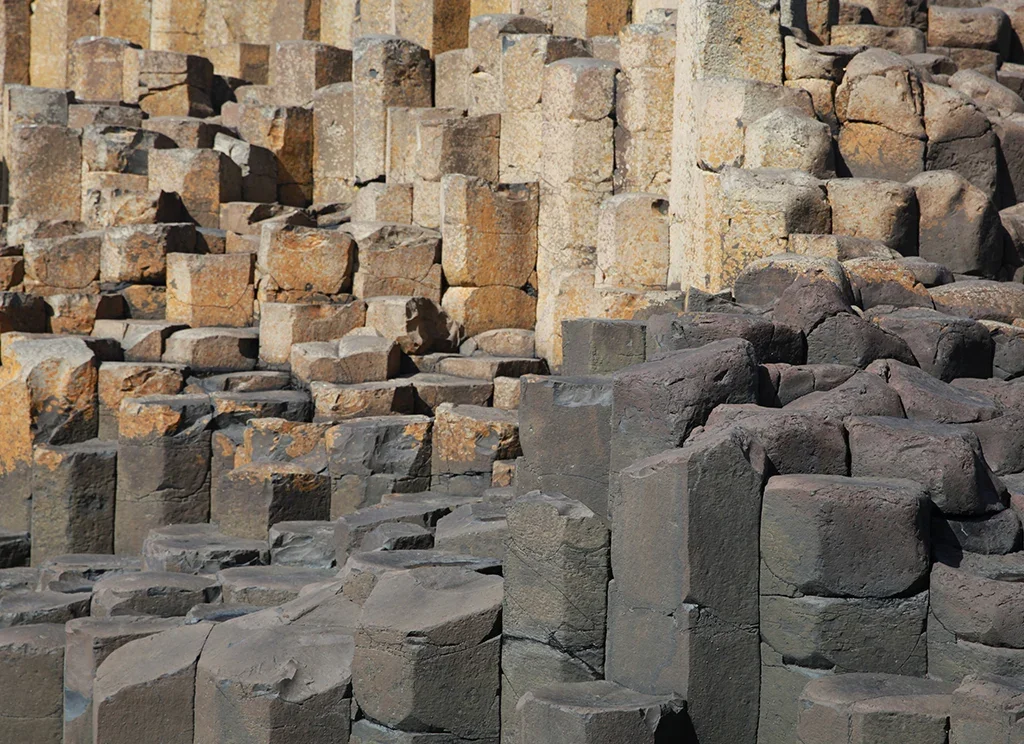
Underwater volcanic landscapes, geometric rock formations, and the geological secrets of the Aegean.
A Hidden Landscape Beneath the Sea
The Aegean Sea is more than a network of islands, beaches, and shipping routes. Beneath its surface lies a complex geological landscape shaped by tectonic movement, volcanic activity, sedimentation, and the gradual transformation of the Mediterranean basin. Seamounts, underwater ridges, and submerged rock formations preserve evidence of processes that are difficult to observe from shore.
Basalt columns are among the most striking formations produced by volcanic activity. When thick masses of basaltic lava cool, they contract and fracture, sometimes creating long, polygonal columns. These formations can resemble enormous stone organ pipes, with geometric patterns that appear almost deliberately constructed.
The idea of basalt columns hidden around the Sporades seamounts combines two fascinating subjects: submarine geology and the unusual geometry of volcanic rock. However, the existence of a specific field of basalt columns at these locations requires confirmation through geological surveys and underwater imaging.
How Basalt Columns Form
Basalt is a dark volcanic rock created when relatively low-viscosity lava cools and solidifies. Its mineral composition commonly includes plagioclase feldspar and pyroxene, with other minerals depending on the original magma and conditions of formation.
As a thick lava body cools, it contracts. Stress develops within the rock, and fractures propagate through the cooling material. Under suitable conditions, these cracks form columnar joints, often producing hexagonal or polygonal cross-sections.
The dimensions of the columns depend on several factors, including cooling rate, temperature gradients, lava thickness, and the movement of heat through the rock. Rapid cooling near a surface can produce smaller columns, while slower cooling may allow larger structures to develop.
Although basalt columns are frequently associated with exposed cliffs, similar structures can form in volcanic environments that later become submerged. Sea-level changes, tectonic movements, and erosion can place ancient volcanic formations beneath modern waters.
The Geological Setting of the Sporades
The Sporades form part of the northern Aegean region, where the geological history includes complex interactions between tectonic plates, faults, uplift, and subsidence. The wider Aegean has experienced substantial geological change over millions of years, although not every part of the region shares the same volcanic history.
A seamount is an underwater elevation that rises significantly above the surrounding seafloor. Some seamounts originate from volcanic activity, while others may consist of uplifted or structurally deformed rock. Their appearance alone does not establish that they are made of basalt.
To determine whether columnar basalt exists at a particular Sporades seamount, researchers would need bathymetric maps, remotely operated vehicle footage, rock samples, or other geological observations. Detailed mapping could reveal whether the underwater structures are volcanic columns, fractured bedrock, or unrelated formations.
Exploring the Underwater Architecture
Modern marine geology uses sonar to map the shape of the seafloor and remotely operated vehicles to investigate areas that divers cannot safely reach. High-resolution imagery can document rock surfaces, while sampling and laboratory analysis can identify mineral composition and geological age.
If columnar basalt were confirmed at a Sporades seamount, researchers could investigate when the lava formed, how it cooled, and whether later tectonic activity altered its original structure. The results could contribute to a broader understanding of the Aegean's volcanic and tectonic evolution.
Until such evidence is available, the proposed columns remain a geological possibility rather than a confirmed local discovery. The actual seafloor may contain equally fascinating features that have yet to be documented.
Aegean Geology Beyond the Shoreline
Submerged landscapes remind us that familiar islands reveal only part of a region's geological history. Ancient coastlines may now lie underwater, volcanic rocks may be concealed by sediment, and underwater ridges may preserve traces of processes that occurred long before the modern Aegean took shape.
The prospect of basalt columns beneath the Sporades is therefore a compelling starting point for marine exploration. Its scientific value ultimately depends not on the mystery of the name, but on the evidence that careful mapping, sampling, and observation can uncover.







