
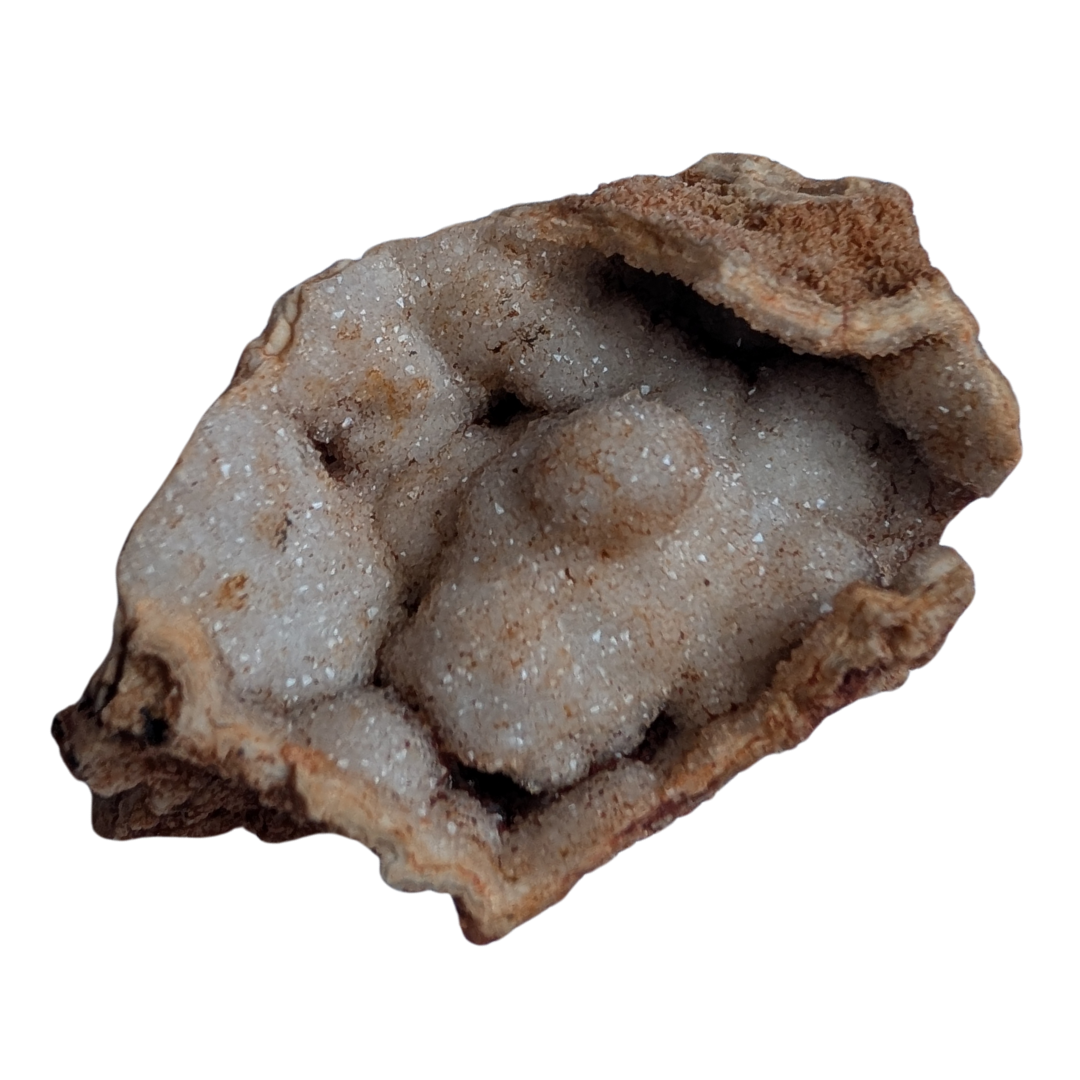
Silica-rich minerals, river erosion, and the geological journey of stones through northern Greece.
The Stones Carried by a River
Rivers transport more than water. As they move through landscapes, they carry sand, gravel, fragments of bedrock, and minerals released by weathering. Each stone records part of a journey: the rock from which it originated, the forces that loosened it, and the currents that moved it downstream.
The Evros River, known as the Maritsa in other parts of its course, flows through a broad region of southeastern Europe before reaching the Aegean Sea. Its drainage basin connects different geological environments, making its sediments a potentially valuable source of information about regional erosion and mineral transport.
Chalcedony nodules would add another dimension to this story. Chalcedony is a microcrystalline form of silica that can appear in waxy, translucent, or opaque masses. Yet specific deposits of chalcedony nodules along the Evros riverbeds should not be claimed without documented mineralogical evidence.
What Makes Chalcedony Different?
Chalcedony consists mainly of very fine intergrowths of silica minerals. Unlike large, easily visible quartz crystals, its crystal structure is so fine that individual crystals generally cannot be distinguished without specialized examination.
Its colors vary according to impurities and microscopic structure. White, gray, pale blue, brown, and reddish varieties are common. Carnelian and chrysoprase are familiar varieties of chalcedony, while agate is distinguished by its characteristic bands.
Chalcedony can form when silica-rich fluids move through cavities, fractures, or porous rocks. As conditions change, silica precipitates and gradually fills the available space. Depending on the setting, the result may be a solid mass, a vein, or a rounded nodule.
The presence of chalcedony depends on the local geological environment. A river cannot create the mineral simply by carrying ordinary stones; it can, however, transport chalcedony fragments from an upstream source.
How Riverbeds Concentrate Minerals
River sediments are constantly sorted by moving water. Large, dense particles behave differently from fine sand, and the speed of the current determines which materials are deposited and which continue downstream.
Hard minerals can survive long periods of transport, although their edges may become rounded through repeated collisions. A stone found in a riverbed may therefore have traveled a considerable distance from its original source.
Geologists study river sediments by examining grain size, mineral composition, surface texture, and the distribution of different rock types. These observations can help identify the geological formations contributing material to the river.
If chalcedony nodules were found along the Evros, researchers would need to determine whether they originated in nearby bedrock, arrived from upstream, or were introduced through human activity. Rounded surfaces alone would not establish their origin.
Identifying a Genuine Nodule
A suspected chalcedony nodule can be examined through its texture, fracture patterns, hardness, and optical properties. Laboratory methods such as X-ray diffraction or Raman spectroscopy can help identify the material more reliably than appearance alone.
Field documentation is equally important. The exact location, surrounding sediments, nearby rock formations, and number of specimens all help researchers understand whether a discovery represents an isolated object or a meaningful geological occurrence.
Collectors should also avoid assuming that every smooth, waxy, or translucent river stone is chalcedony. Quartz, calcite, glass, and other materials can resemble it under certain conditions.
The Geological Memory of the Evros
A riverbed can act as a natural archive of the landscapes connected to it. Its sediments preserve clues about erosion, flood events, changing channels, and the mineral composition of upstream terrain.
Investigating possible chalcedony along the Evros would therefore involve more than searching for attractive stones. It would mean tracing the mineral's source, establishing its identity, and understanding how it entered the river system.
The possibility is intriguing, but the strongest account will be one built around verified samples and geological mapping. Until such evidence is documented, the title should be treated as a research lead rather than proof of a forgotten mineral deposit.







