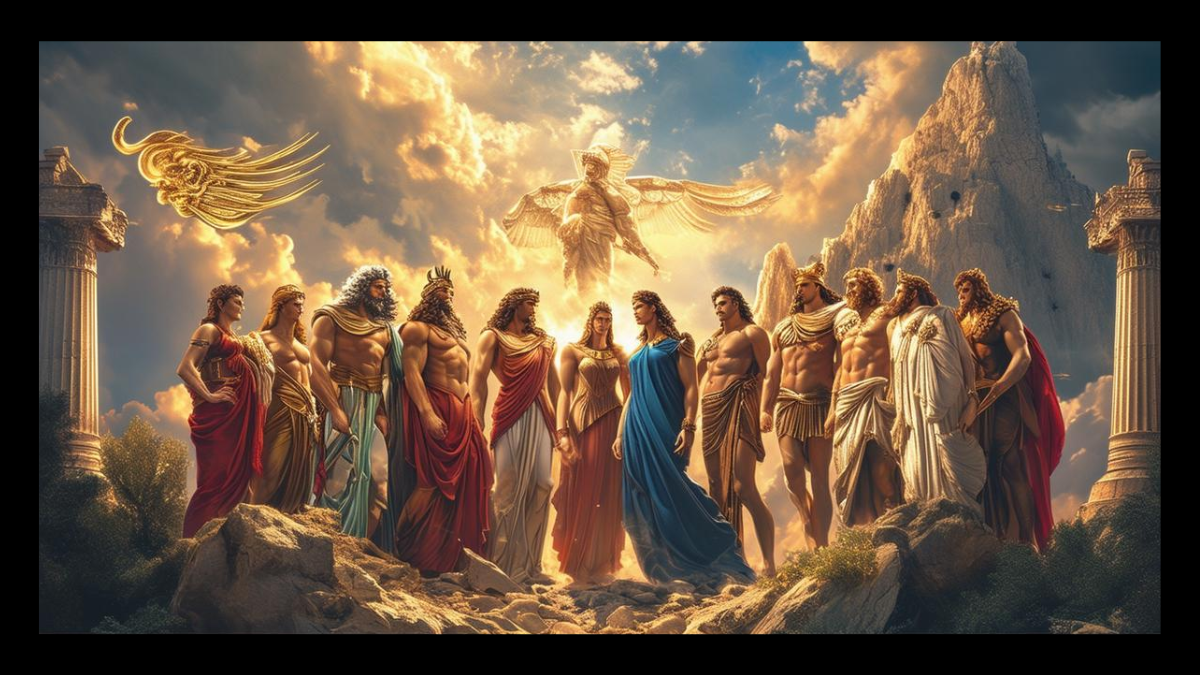
The endurance of Greek mythology in modern storytelling isn't just about nostalgia; it’s about the fact that these myths provide a universal "source code" for exploring human nature. Because the Greek gods were essentially humans with "volume turned up to eleven," they remain the perfect archetypes for our modern demigods: superheroes, wizards, and tragic protagonists.
1. The Superhero as the Modern Demigod
The most direct descendant of the Greek myth is the modern superhero. The structure of the "Hero's Journey" remains virtually unchanged from the days of Heracles and Perseus.
Wonder Woman: Perhaps the most literal connection, Diana Prince is an Amazonian princess whose origins are rooted in the Greek pantheon. Her stories frequently feature Ares and Zeus, exploring the tension between divine destiny and human choice.
The "Kryptonite" Factor: Just as Achilles had his heel and Icarus had his wax wings, every modern hero has a "Hamartia"—a specific, often fatal weakness. This concept humanizes god-like power, a tradition started by the Greeks to make their myths relatable.
The Marvel Pantheon: While many Marvel characters are based on Norse myths (Thor, Loki), their narrative structure—gods living among humans and bickering over earthly affairs—is deeply Homeric.
2. Literature: The "Reclamation" Movement
In recent years, literature has seen a massive surge in "reclamation" narratives. Modern authors are shifting the focus from the traditional male "hero" to the sidelined characters of the original myths.
Madeline Miller’s Circe and The Song of Achilles: These works retell ancient stories through the eyes of the "villain" or the secondary character. By doing so, they explore contemporary themes of female agency, marginalized love, and the cost of immortality.
Rick Riordan’s Percy Jackson: This series modernized the myths by imagining the Greek gods living in 21st-century America. It cleverly reframed neurodiversity—like ADHD and dyslexia—as "demigod traits" (heightened battle reflexes and a brain wired for Ancient Greek), making the myths a tool for empowerment for a new generation.
Hero journey story realization infographic circles flowchart
3. Film and the Cinematic Tragedy
Hollywood often uses Greek mythology to heighten the emotional stakes of a story, utilizing the concept of Ananke (inevitable fate).
The Tragedy of Choice: Films like The Killing of a Sacred Deer are direct modern adaptations of Greek tragedies (in this case, Euripides’ Iphigenia at Aulis). They lean into the "impossible choice" that was a staple of the Greek stage.
Epic Spectacle: Movies like Troy, 300, and Clash of the Titans focus on the Aristeia—the moment of a hero's greatest glory in battle. Even when they deviate from historical or mythological accuracy, they maintain the Greek focus on "Kleon" (eternal fame) as the ultimate human goal.
4. Why They Still Resonate
Greek myths survive because they are archetypal. They deal with fundamental human conflicts that haven't changed in three millennia:
Parent-Child Conflict: (Cronus eating his children / Zeus overthrowing his father).
The Price of Knowledge: (Prometheus stealing fire / Pandora’s Box).
The Inevitability of Loss: (Orpheus and Eurydice).
Unlike many modern stories that offer clear "good vs. evil" binaries, Greek myths are morally complex. The gods are petty, the heroes are flawed, and the endings are often bittersweet. In a complicated modern world, these "gray" narratives feel more honest and human than a simple happy ending.
Whether we are watching a block-buster movie or reading a novel, we are participating in a cultural tradition that began around a campfire in the Bronze Age. The gods haven't gone away; they’ve just moved into our apps, our cinemas, and our bookstores.