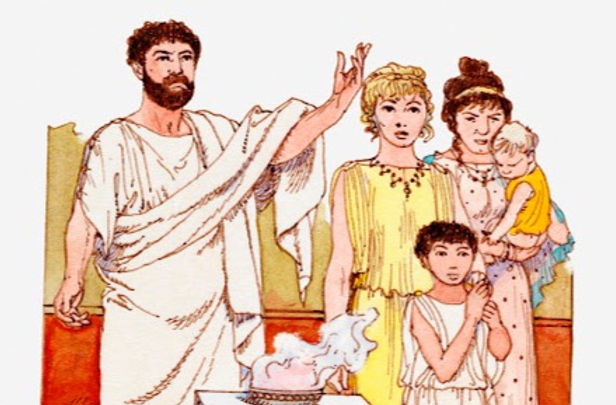
How Ancient Greeks Named Their Children reveals an important aspect of ancient Greek family structure, religion, ancestry, and social identity.
Names were rarely chosen randomly.
They could preserve family traditions, honor ancestors, reference gods, express hopes for children, or identify individuals through their father's name and place of origin.
Naming and Identity
A Greek person's name could contain information about:
family;
ancestry;
birthplace;
social identity;
and religious connections.
A person's full identification might include their personal name, father's name, and community.
Patronymics
Ancient Greeks commonly identified people through their fathers.
For example, someone might be identified as:
X, son of Y.
This was called a patronymic system.
It helped distinguish people who shared common personal names.
Common Names
Many Greek names were compounds containing meaningful elements.
For example:
Alexandros can be understood as connected with defending or protecting people.
Nikolaos contains elements associated with victory and people.
Theodoros means something like “gift of the god.”
Names and the Gods
Parents sometimes gave children names containing divine references.
Names could invoke:
Zeus;
Apollo;
Athena;
Dionysus;
Artemis;
or other gods.
This could express religious devotion or hope for divine protection.
Family Names
Ancient Greeks generally did not use hereditary surnames in the modern sense.
Instead, individuals could be distinguished by:
father's name;
birthplace;
deme;
occupation;
nickname;
or notable characteristics.
Athenian Demes
Athenians could be identified through their deme, a local political community.
A citizen might therefore be identified not simply as an individual but as someone belonging to a particular local community.
Reusing Family Names
Families could reuse names across generations.
This helped preserve ancestral memory.
A grandfather's or other relative's name might be given to a child.
Names and Gender
Greek naming conventions differed for boys and girls.
Male and female forms were often grammatically related.
For example, masculine names could have feminine counterparts.
Childhood and Recognition
Children were formally incorporated into their communities through family and religious practices.
In Athens, recognition of legitimate children had important legal and social implications.
Names and Social Status
Names themselves could sometimes reveal cultural background.
Foreigners might retain names from their native languages, while Greeks could adopt names reflecting local customs.
Nicknames
Some individuals acquired descriptive names or epithets.
These could refer to:
physical appearance;
personality;
achievements;
ancestry;
or place.
Mythological Names
Many mythological characters have names with meaningful linguistic associations.
Their names can therefore provide clues about how Greek audiences understood them.
Conclusion
How Ancient Greeks Named Their Children demonstrates that names were closely connected with identity.
A name could preserve family memory, invoke a god, express parental hopes, distinguish social relationships, or connect a person to a particular community.
Ancient Greek naming practices therefore reveal something much deeper than vocabulary: they show how individuals understood themselves as members of families, communities, religious traditions, and generations.