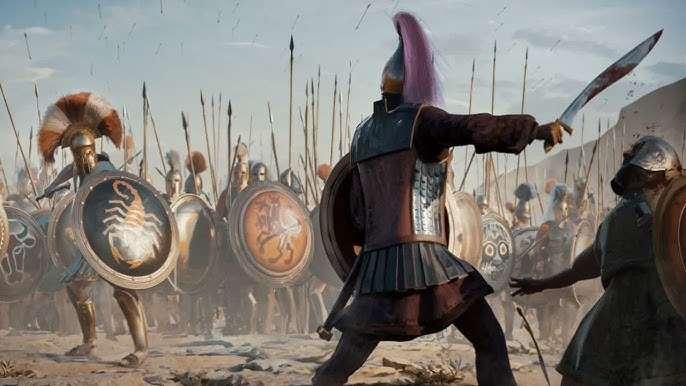
The Role of War Drums and Music in Greek Battles
Introduction
In Ancient Greece, music played an important role in warfare, but not in the same way as later armies with formal “drum corps.” Greek battle music was mainly used to regulate movement, boost morale, and maintain unity—especially during large infantry engagements like the hoplite phalanx formations.
Did the Greeks Use War Drums?
Unlike some later civilizations, the Greeks did not rely heavily on war drums in battle.
Drums existed, but were not the primary battlefield instrument
Percussion was used more in rituals and ceremonies
The main military instruments were wind-based rather than drum-based
Instead of drum rhythms, Greeks depended on vocal commands and melodic instruments.
The Aulos: The Main Battlefield Instrument
The most important instrument in Greek warfare was the aulos.
Its Role in Battle:
Played to set marching rhythm
Helped soldiers maintain phalanx coordination
Provided psychological focus under stress
Accompanied advancing troops
The aulos produced a sharp, penetrating sound suitable for noisy battlefields.
The Salpinx: The War Trumpet
Another key instrument was the salpinx.
Uses:
Signaling charges and retreats
Communicating commands across the battlefield
Coordinating troop movements
Marking key moments in battle
Unlike the aulos, the salpinx was strictly military.
Music and the Hoplite Phalanx
Music was essential for maintaining order in the phalanx formation:
Soldiers needed perfect timing and alignment
Musical rhythm helped regulate marching speed
Unified movement reduced gaps in formation
Coordination increased combat effectiveness
\text{Phalanx effectiveness} \propto \text{coordination and timing}
Even small disruptions in rhythm could weaken the entire formation.
Psychological Effects of Battle Music
Music also affected the minds of soldiers:
Reduced fear and panic before engagement
Created a sense of unity and shared purpose
Increased aggression and focus during combat
Helped maintain discipline under pressure
Sound was as much psychological as tactical.
Religious and Cultural Meaning
Greek battle music also had religious significance:
Linked to gods such as Apollo
Victory rituals often included music and song
Music was believed to bring divine favor in war
War songs reinforced collective identity
Music was seen as part of cosmic order and discipline.
Differences Among City-States
Athens
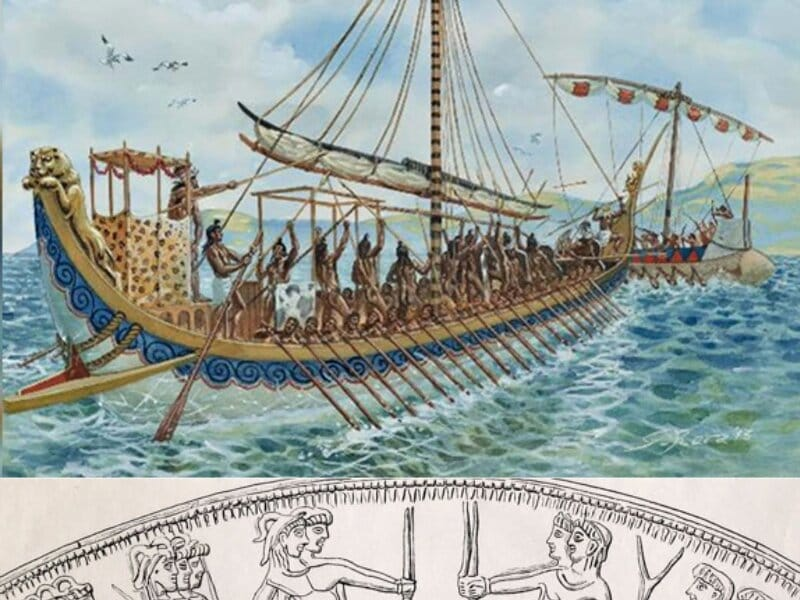
More use of coordinated musical signaling in naval and land forces
Strong cultural connection between music and civic identity
Sparta
Less emphasis on musical complexity
Focused on marching rhythm, discipline, and unity
Music used more for regulation than expression
Limitations of Battlefield Music
Music had practical limits:
Could be drowned out by combat noise
Required trained musicians in the army
Not effective in chaotic close combat
Not always used consistently across all battles
Thus, commands and visual signals were still essential.
Conclusion
While the Greeks did not rely heavily on war drums, music still played a crucial role in battle through instruments like the aulos and salpinx. These sounds helped organize troops, maintain the phalanx, and strengthen morale. In Greek warfare, music was less about rhythm alone and more about discipline, coordination, and psychological control on the battlefield.