The Battle of Chaeronea: Philip II’s Greatest Victory
Introduction
The Battle of Chaeronea was a decisive confrontation that marked the end of independent Greek city-state dominance. Fought in 338 BCE, it was the greatest victory of Philip II of Macedon, who established Macedonian supremacy over Greece.
Background of the Conflict
By the 4th century BCE, Greek city-states were weakened by constant warfare, especially after the Peloponnesian War.
Key Developments:
Athens and Thebes formed an alliance against Macedon
Philip II had already expanded Macedonian power through diplomacy and conquest
Greek city-states feared Macedonian dominance
This tension led to a final decisive battle near Chaeronea in Boeotia.
The Armies
Macedonian Forces:
Highly trained professional army
Famous Macedonian phalanx with long sarissas (pikes)
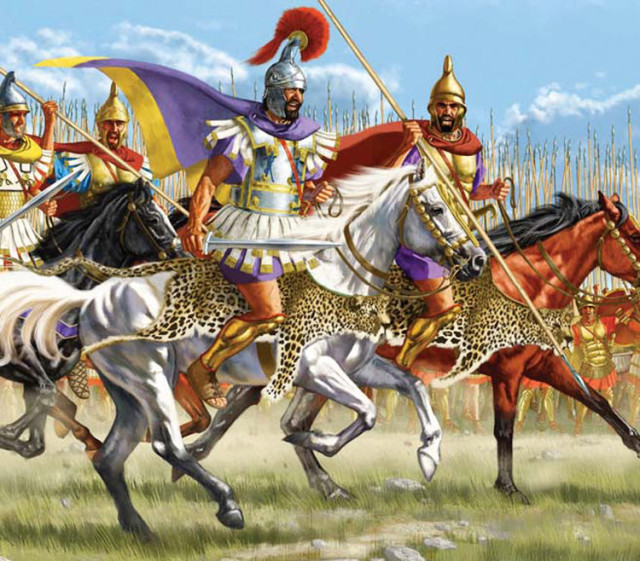
Strong cavalry led by the elite Companion Cavalry
Unified command under Philip II and young Alexander
Greek Allied Forces:
Coalition of Athens and Thebes
Traditional hoplite formations
Strong but less flexible coordination
High morale but less tactical innovation
The Macedonian Military Innovation
Philip II transformed Greek warfare:
Extended spears (sarissas) for greater reach
Deeper phalanx formations
Coordinated infantry and cavalry tactics
Flexible battlefield strategy
\text{Combat advantage} = \text{training} + \text{equipment innovation} + \text{coordination}
These reforms gave Macedon a major tactical edge.
Course of the Battle
Initial Engagement:
The Greek forces held strong defensive positions
The Macedonian phalanx advanced steadily
Fighting was intense and evenly matched at first
Turning Point:
Philip II deliberately weakened one flank
Greek forces advanced to exploit the gap
Alexander led a decisive cavalry charge on the opposite side
Collapse:
The Greek line broke under coordinated attack
Panic spread among allied troops
The Theban Sacred Band was destroyed
The Sacred Band of Thebes
A key elite unit in the battle was the Sacred Band of Thebes.
Composed of highly trained warriors
Known for discipline and bravery
Fought to the last man during the battle
Symbolized Theban military excellence
Their defeat marked the end of major resistance.
Outcome of the Battle
Decisive Macedonian victory
Athens and Thebes defeated
Greek city-states lost independence
Macedon became dominant power in Greece
Philip II effectively unified Greece under Macedonian leadership.
Historical Significance
Political Impact:
End of classical Greek city-state independence
Rise of Macedonian hegemony
Formation of the Corinthian League under Philip
Military Impact:
Demonstrated superiority of Macedonian tactics
Marked shift from traditional hoplite warfare
Showed importance of combined arms strategy
Role of Alexander the Great
The battle also marked the rise of Alexander the Great:
Led the decisive cavalry assault
Showed exceptional military leadership
Gained recognition as a future commander
This was his first major historical victory.
Conclusion
The Battle of Chaeronea was a turning point in Greek history. Philip II’s military reforms and strategic brilliance led to a decisive victory that ended the independence of the Greek city-states. It also marked the emergence of Macedon as the dominant power in the Greek world and set the stage for Alexander the Great’s future conquests.