The Use of Hidden Weapons in Ancient Greek Combat
Introduction
In Ancient Greece, warfare was generally formalized, especially in hoplite battles fought in open formation. However, alongside conventional weapons like spears and shields, there is evidence that Greeks also used concealed or unexpected weapons in certain contexts—especially in ambushes, skirmishes, and irregular warfare.
These “hidden weapons” were not the norm in set-piece battles, but they did appear in espionage, guerrilla tactics, and personal combat situations.
Concealed Weapons in Personal Combat
Daggers and Short Blades
Small daggers could be hidden under cloaks or armor
Used in close combat or assassination
More common in urban or political violence than battlefield warfare
These weapons were practical for situations where larger weapons were impractical.
Hidden Weapons in Warfare Contexts
Surprise and Ambush Tactics
Greek commanders sometimes relied on concealment rather than direct confrontation:
Troops hiding in terrain before an ambush
Weapons kept ready but out of sight until attack
Use of narrow passes or forests for surprise strikes
Such tactics were especially useful in uneven terrain where phalanx formation was ineffective.
Light Troops and Irregular Fighters
Units like peltasts and skirmishers sometimes used unconventional tactics:
Javelins carried in concealed or bundled form
Quick-release weapons for rapid attacks
Hit-and-run tactics instead of direct engagement
These forces relied more on mobility than heavy armor.
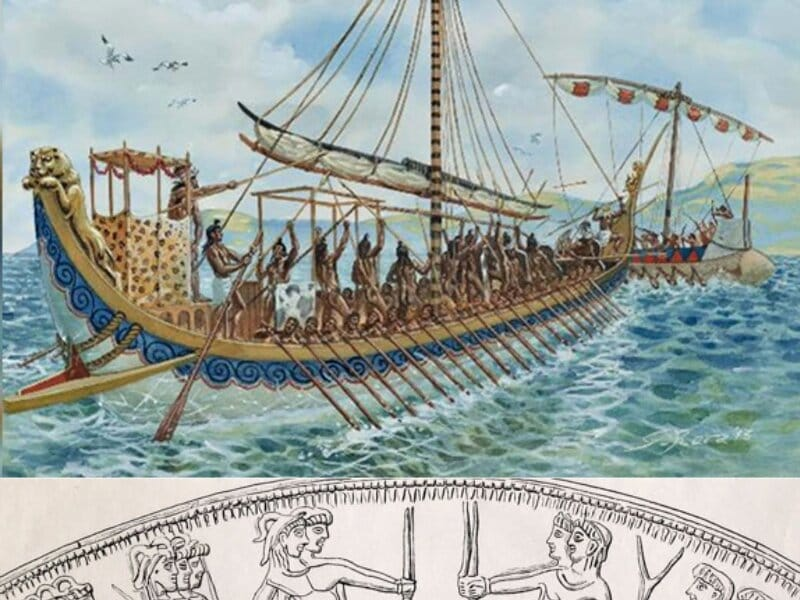
Naval Warfare and Concealment
In maritime warfare, surprise was a key tactic:
Ships hidden behind islands or coastlines
Sudden emergence during naval ambushes
Concealed ramming strategies in tight waters
Even without “hidden weapons,” concealment played a similar strategic role.
Political and Assassination Context
Outside battlefield warfare, concealed weapons were more commonly used in political violence:
Hidden daggers in assassinations
Secret weapons used in coups or internal conflicts
Elite personal guards carrying concealed arms
These actions were often tied to political instability rather than formal war.
Psychological Warfare
Hidden weapons also had psychological effects:
Fear of betrayal or surprise attacks
Uncertainty about enemy tactics
Increased caution in close encounters
Reputation of cunning commanders using deception
Greek warfare was not only physical but also psychological.
Limitations in Greek Military Culture
Despite these examples, hidden weapons were limited because:
Hoplite warfare emphasized open, honorable combat
Military success depended on visible formation strength
Deception was less valued in traditional battlefield ethics
Large-scale battles made concealment difficult
Thus, hidden weapons were secondary to standard armaments.
Comparison with Other Forms of Warfare
Compared to later or non-Greek systems:
Less reliance on covert weapons than guerrilla warfare traditions
More emphasis on formation discipline than stealth
Some influence from Eastern Mediterranean tactics through contact
Greek warfare remained primarily open and structured.
Conclusion
Hidden weapons in ancient Greek combat were not a central feature of hoplite warfare but were used in specific situations such as ambushes, personal combat, and political violence. While Greek military culture emphasized open battle and discipline, deception and concealment still played a supporting role, especially in irregular warfare and strategic surprise.