The Naval Battle of Arginusae: Athenian Triumph and Tragedy
Introduction
The Battle of Arginusae was one of the most dramatic clashes of the Peloponnesian War. It ended in a major Athenian victory at sea, yet paradoxically became a political disaster at home, exposing deep tensions within Athenian society during the final phase of the war.
Background of the Conflict
By 406 BCE, Athens was under severe pressure:
Sparta had rebuilt its navy with Persian support
Athens had lost several key commanders and ships
The war had dragged on for nearly 25 years
Morale in Athens was unstable
Despite exhaustion, Athens still relied heavily on its naval strength.
The Forces Involved
Athenian Fleet:
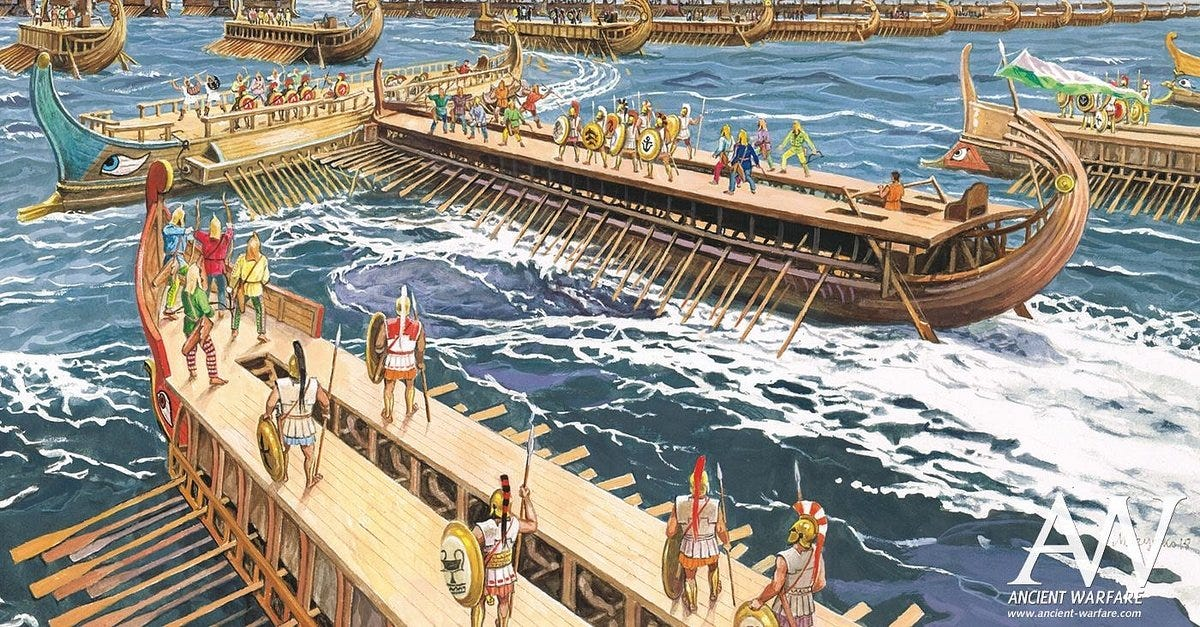
Newly assembled fleet of triremes
Commanded by several inexperienced but capable generals
Motivated by urgency and survival
Spartan Fleet:
Experienced commanders under Callicratidas
Supported indirectly by Persian resources
Blockading Athenian forces near Lesbos
The Battle
Location and Strategy
The battle took place near the Arginusae islands:
Athenians aimed to break the Spartan blockade
Spartans attempted to maintain control of sea routes
Both sides deployed large trireme fleets
Course of Combat:
Intense ramming and maneuvering between ships
Athenians used better coordination and multiple lines of attack
Spartan fleet was gradually pushed back
Spartan commander Callicratidas was killed in battle
The Athenian fleet achieved a clear tactical victory.
The Athenian Victory
Sparta suffered heavy ship losses
The blockade was broken
Athens temporarily regained naval dominance
Spartan naval leadership was weakened
At sea, Athens had clearly succeeded.
The Tragedy After the Battle
Despite victory, a storm created disaster:
Many Athenian ships were damaged or sinking
Thousands of sailors were stranded at sea
Generals failed to organize a proper rescue operation
Storm conditions prevented immediate recovery
As a result, many Athenian sailors drowned.
Political Fallout in Athens
Public Reaction:
Anger over failure to rescue survivors
Mourning for lost sailors
Political outrage against commanders
Trial of the Generals:
Eight Athenian generals were accused of negligence
Six were executed after a controversial trial
The decision was driven by political pressure and emotion
This event deeply damaged Athenian leadership.
Strategic Consequences
Athens lost experienced military commanders
Internal political division increased
Sparta eventually rebuilt its navy
Athens’ long-term strategic position weakened
Even after victory, Athens was strategically destabilized.
Significance of Arginusae
Military Importance:
One of Athens’ last major naval victories
Demonstrated effectiveness of Athenian trireme tactics
Showed continued naval strength despite decline
Political Importance:
Exposed weaknesses in Athenian democracy under crisis
Showed tension between justice, emotion, and military necessity
Highlighted instability during wartime decision-making
Conclusion
The Battle of Arginusae was both a triumph and a tragedy for Athens. While the navy achieved a decisive victory over Sparta, the aftermath revealed deep political and emotional fractures within the city-state. It stands as one of the most powerful examples in Greek history of how military success can be overshadowed by political failure.