In the arid and rocky landscapes of ancient Greece, managing water was both a necessity and a mark of advanced civilization. From complex irrigation systems to public fountains and underground channels, the Greeks developed ingenious hydraulic technologies that not only sustained agriculture but also supported urban life, religious rituals, and sanitation.
Water as a Sacred and Practical Element
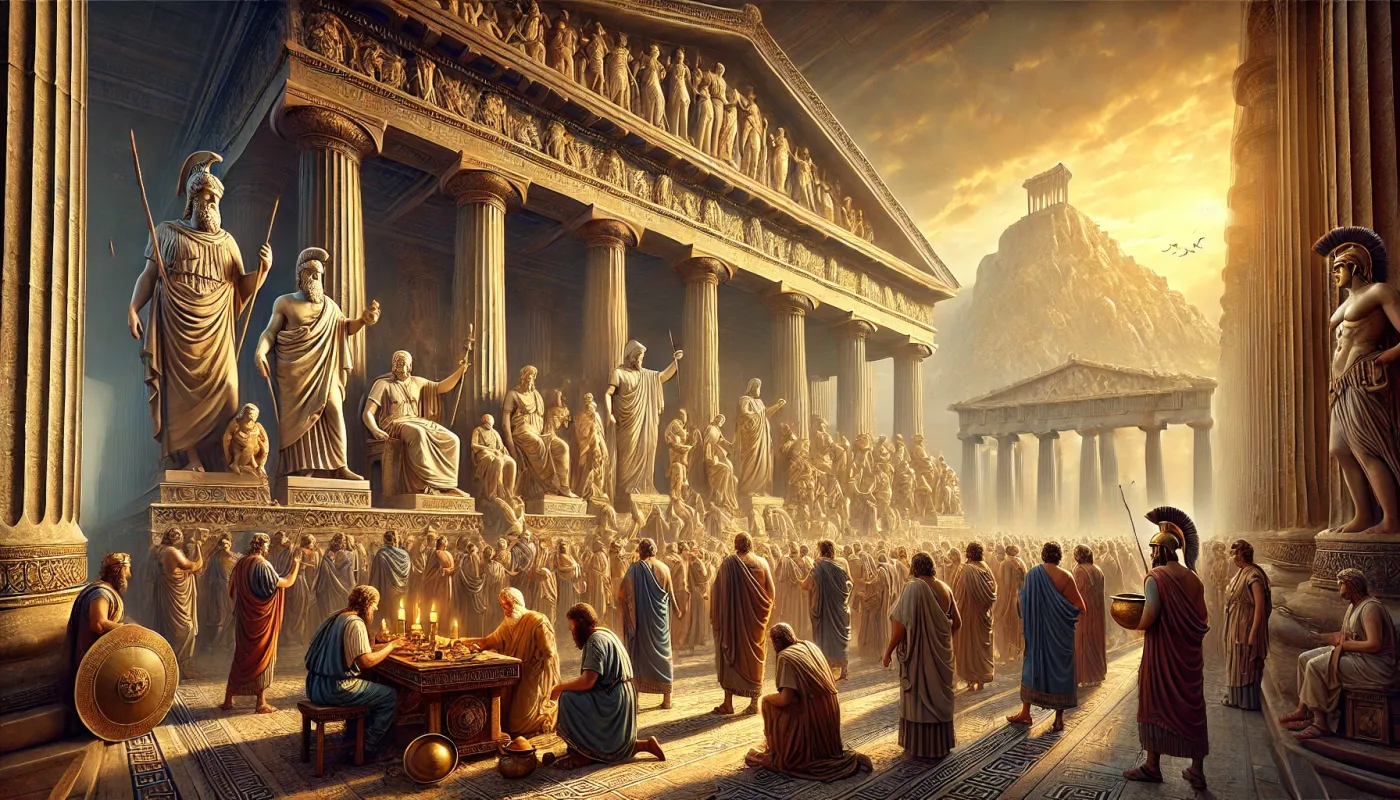
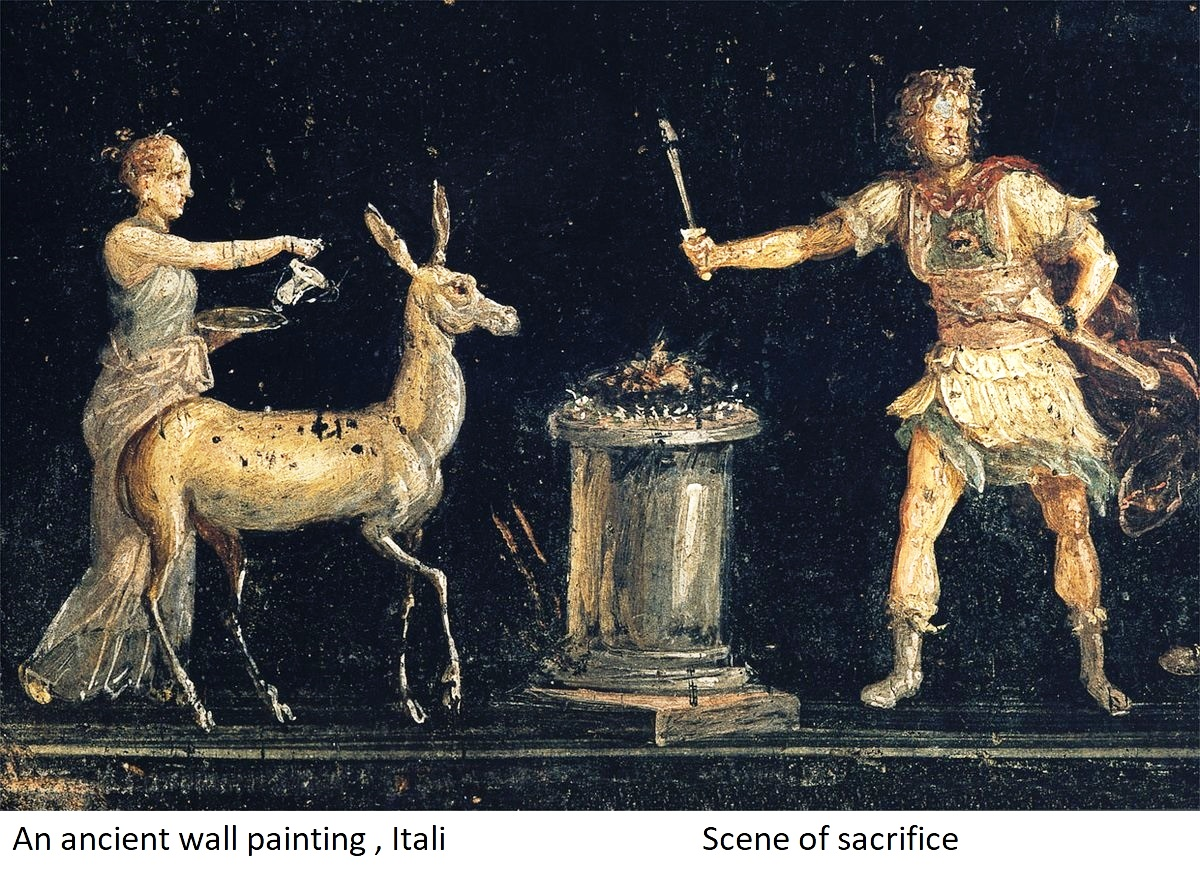
Water wasn’t just essential—it was sacred. Springs and rivers were often dedicated to gods and nymphs, and many sanctuaries were built near natural water sources. But beyond its spiritual symbolism, water had to be captured, stored, purified, and distributed—and the Greeks rose to the challenge with remarkable innovation.
Key Hydraulic Systems in Ancient Greece
1. Aqueducts and Canals
Used to transport water from springs or rivers to cities and sanctuaries.
Often made of terracotta pipes or stone channels with precision gradients to maintain flow.
Notable example: The Peisistratean aqueduct in Athens (6th century BCE), which brought water from Mount Hymettus via a tunnel and clay pipes.
2. Wells and Cisterns
Common in homes, temples, and public spaces.
Wells tapped into underground aquifers, while cisterns collected rainwater from roofs.
Some cisterns were part of larger hydraulic complexes, like those found in Delos and Knossos.
3. The Eupalinos Tunnel
A masterpiece of ancient engineering on the island of Samos (6th century BCE).
Dug simultaneously from both ends of Mount Kastro and met almost perfectly in the middle.
Delivered fresh spring water to the city of Samos through a 1-kilometer-long tunnel, an early example of subterranean water transport.
4. Irrigation Systems
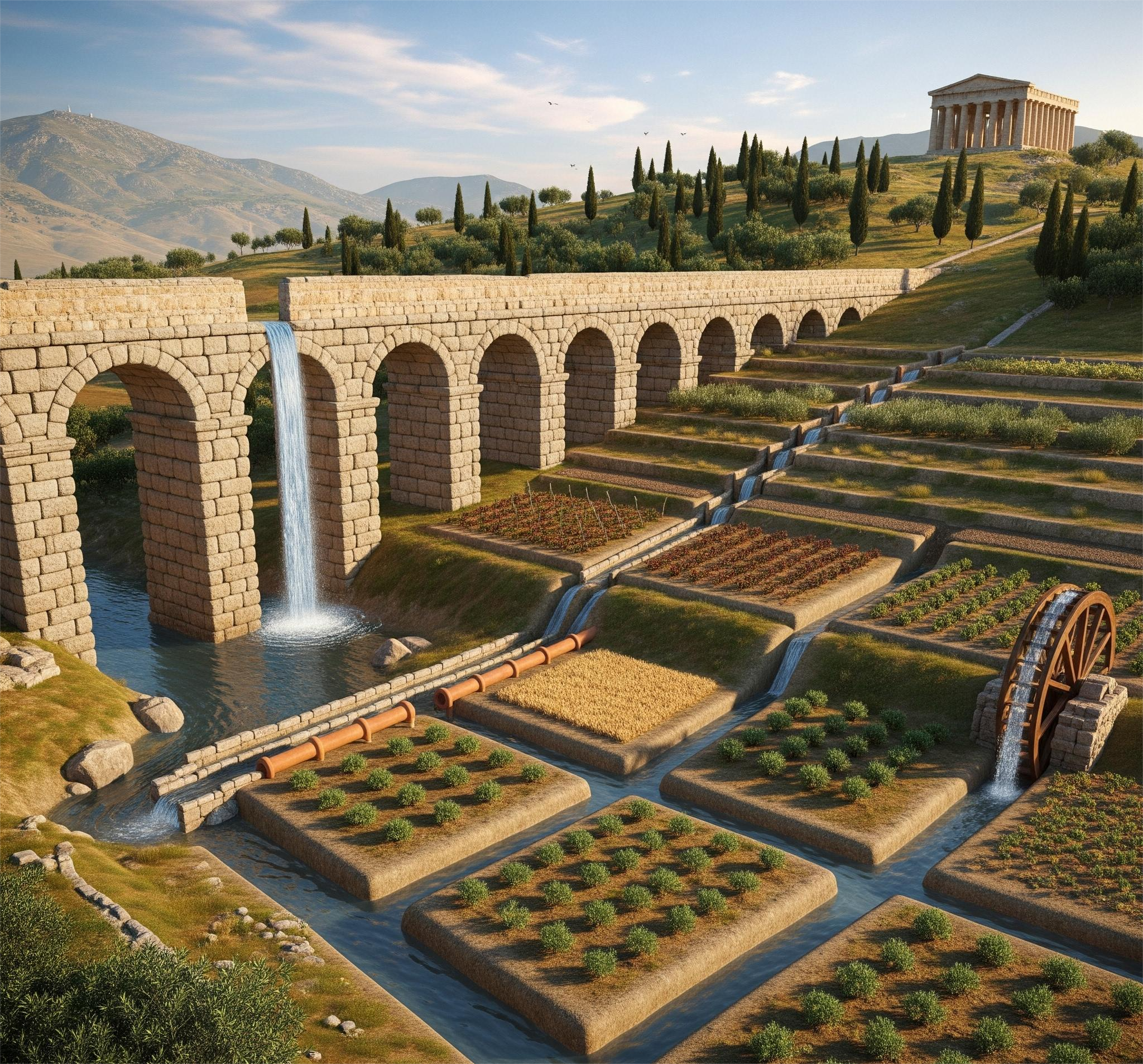
Used gravity-based channels and sluice gates to irrigate farmland.
Fields were often terraced on hillsides to maximize water use and reduce runoff.
Water wheels and Archimedean screws (later adopted from Hellenistic innovations) were used to lift water to higher elevations for crops.
5. Public Fountains and Nymphaea
Served both functional and aesthetic purposes.
Fountains like those in the Agora of Athens offered access to drinking water and became social gathering spots.
Nymphaea (monumental fountains) often honored water deities and were part of urban beautification.
Innovations and Technology
Clay pipe networks with joints sealed by olive oil or resin.
Check dams and weirs controlled flow in streams.
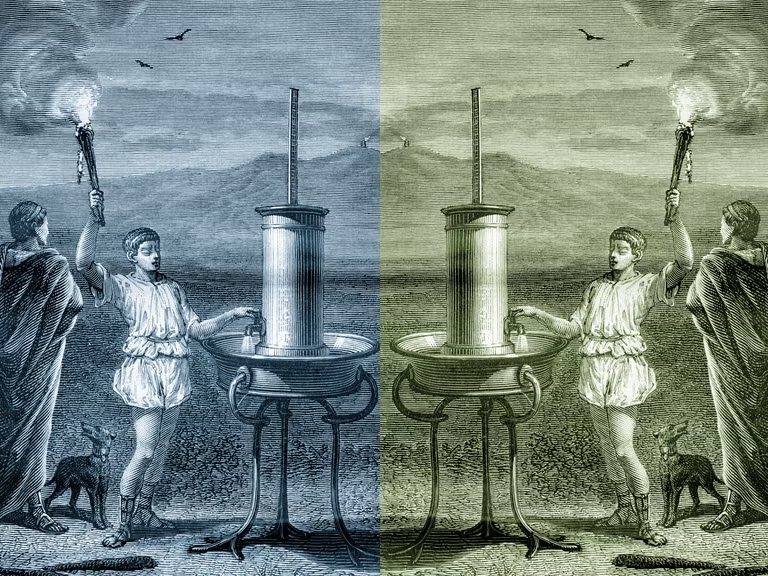
Hydraulic automata, like self-opening temple doors or animated fountains, created by engineers like Hero of Alexandria, showcased the blend of utility and spectacle.
Sustainability and Civic Planning
Greek cities were often built with water in mind:
Urban planning included drainage systems and runoff control.
Bathhouses and gymnasiums featured complex plumbing for heating and waste removal.
Sacred groves and gardens were irrigated using stored or diverted water.
Legacy and Influence
Greek hydraulic systems influenced Roman engineering, which carried the knowledge across the empire. The Greek approach to harmonizing nature, utility, and beauty in water management remains admired in modern civil engineering and landscape architecture.