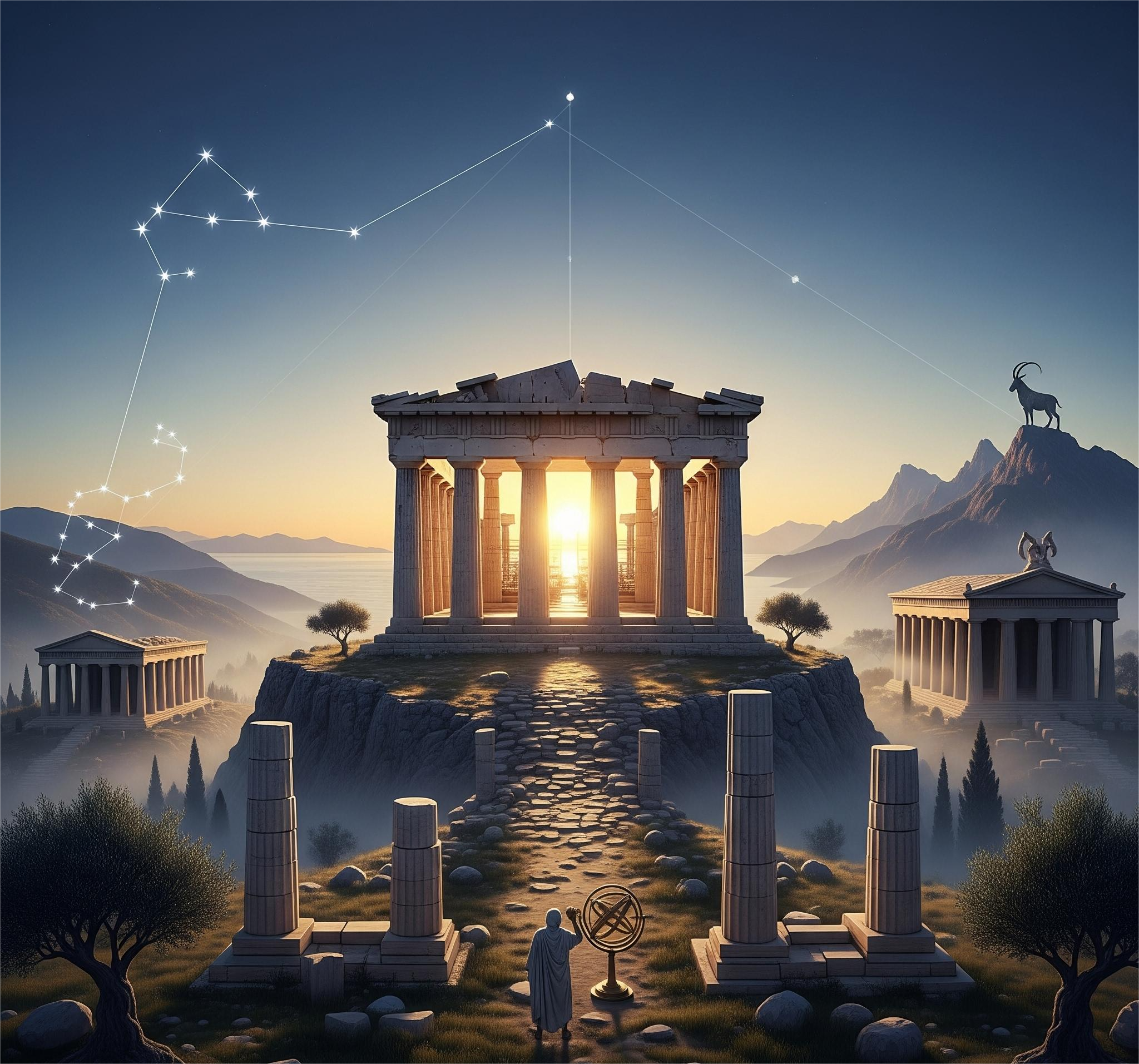
In ancient Greece, temples were more than places of worship—they were powerful expressions of cosmology, geography, and cultural identity. Built not only to honor the gods but also to reflect their connection to the natural world, Greek temples were deliberately positioned and oriented with precision. From sunrises over mountaintops to alignments with sacred landscapes, the layout of these ancient sanctuaries reveals a deep reverence for both symbolism and the surrounding environment.
Let’s explore how Greek temples were aligned with natural features—and why those choices mattered.
Sacred Geography: Choosing the Right Spot
The first step in temple construction was location. Ancient Greeks believed that certain sites held inherent sacred energy, often associated with myths or natural phenomena. Temples were commonly built on:
Hilltops or Acropolises – providing both prominence and proximity to the heavens (e.g., the Acropolis of Athens).
Coastal Cliffs or Bays – where sea and sky merged, fitting for gods like Poseidon (e.g., Temple of Poseidon at Sounion).
Caves or Springs – tied to chthonic (underworld) deities or nymphs (e.g., the Oracle of Trophonius in Lebadeia).
Mountain slopes – symbolic of reaching toward the divine (e.g., Mount Parnassus and Delphi).
These locations were not chosen by chance—each was imbued with religious significance and mythological resonance.
Facing the Rising Sun: Temple Orientation
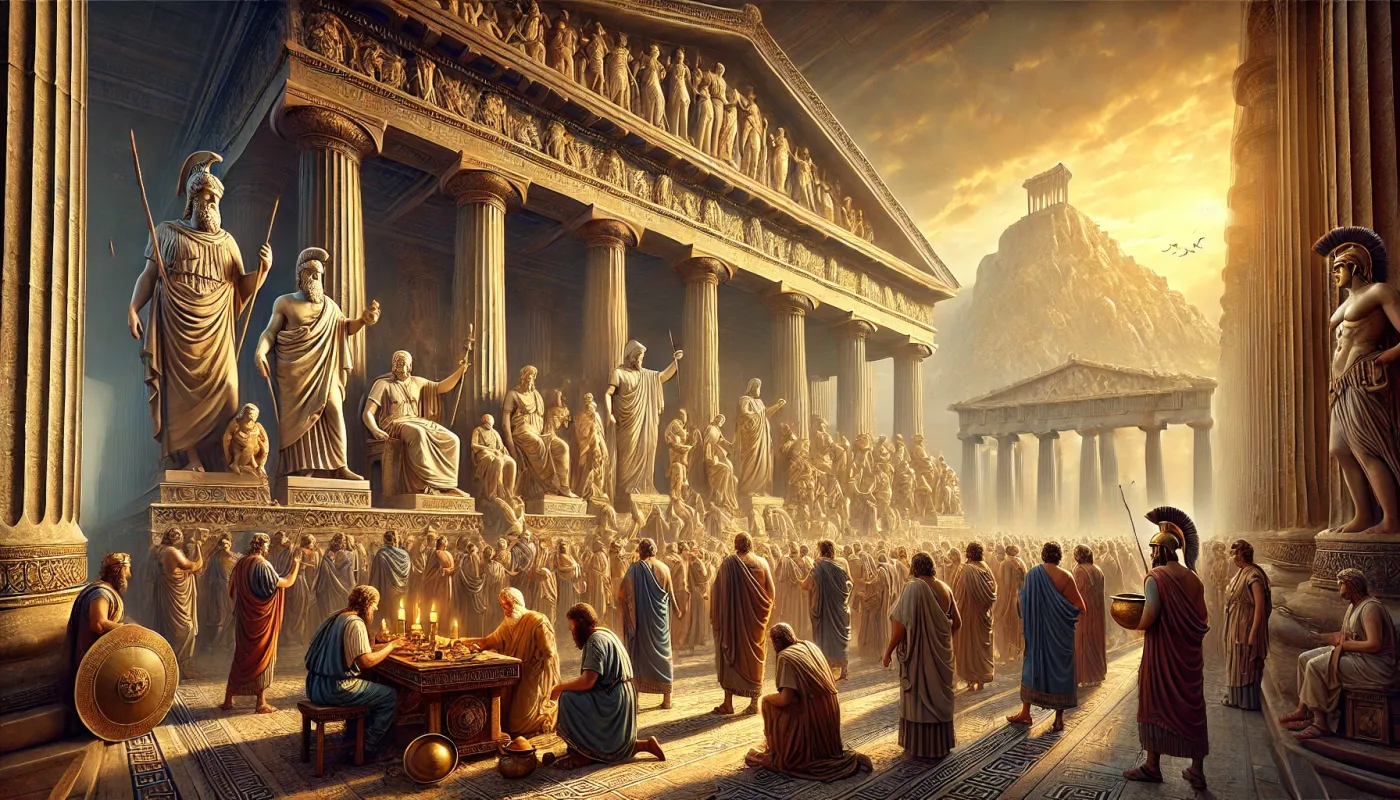
A striking feature of most ancient Greek temples is their eastward orientation. The temple’s entrance typically faced east, allowing the first rays of the morning sun to illuminate the cult statue inside the cella (naos). This served both practical and symbolic purposes:
Sunrise Alignment: The rising sun represented life, rebirth, and divine presence. For deities like Apollo or Helios, this was especially meaningful.
Light and Revelation: Morning light entering the temple was believed to reveal the god each day—an architectural dramatization of divine epiphany.
Astronomical Timing: Some temples appear to be aligned with specific solar or lunar events, including equinoxes and solstices, possibly tied to festival calendars.
This consistent orientation also helped maintain ritual uniformity across the Greek world, connecting disparate communities through shared architectural cosmology.
Examples of Orientation and Natural Symbolism
1. Temple of Apollo at Delphi
Positioned on the slopes of Mount Parnassus, overlooking the valley of Phocis.
Faces east, with dramatic views at sunrise.
Surrounded by mythologically charged geography—Castalian Spring, Corycian Cave, and the navel stone (omphalos) marking the center of the world.
2. Temple of Athena Parthenos (Parthenon), Athens
Built atop the Acropolis, the highest point in the city.
Faces slightly southeast rather than due east—possibly aligned with Athena’s birthday sunrise or key astronomical events.
Overlooks the city Athena protects, the sea of Poseidon (her rival in myth), and Mount Lycabettus.
3. Temple of Poseidon, Cape Sounion
Perched on a cliffside promontory above the Aegean Sea.
Oriented toward the east, where the sun and sea meet—symbolic of Poseidon's dominion over oceans.
Served as both sanctuary and maritime landmark for incoming sailors.
4. Temple of Artemis at Ephesus
Faced east, allowing moonlight (as Artemis is also a lunar goddess) and sunrise to enter the temple.
Constructed near marshland, reinforcing Artemis’ role as protector of nature and wild animals.
Cosmological and Civic Significance
Beyond natural alignment, temples reflected order in both the cosmos and the polis:
Their placement and symmetry echoed Greek ideals of harmony, proportion, and balance.
They were aligned not just with celestial bodies, but also with urban planning—forming axes with public spaces, altars, and processional routes.
The Panathenaic Way in Athens, for example, led directly to the Parthenon, integrating ritual, topography, and civic identity.
Temples as Portals Between Worlds
To the ancient Greeks, architecture wasn’t merely functional—it was spiritual. A temple wasn’t just a building; it was a bridge between the mortal and the divine, the earthly and the cosmic. Its alignment with sun, stars, sea, and stone made the presence of the gods tangible and felt.