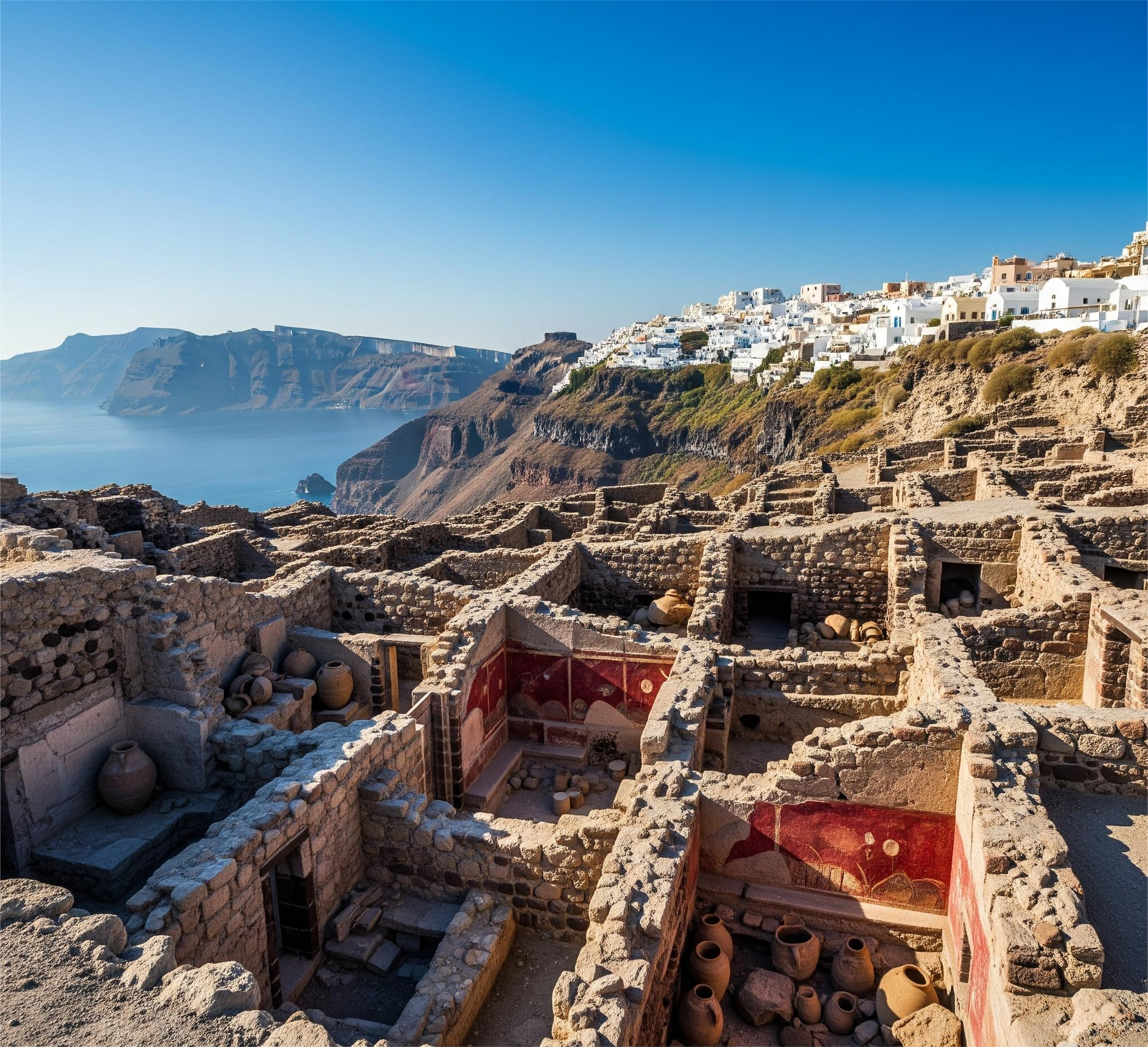
Beneath layers of volcanic ash on the Greek island of Santorini (ancient Thera) lies Akrotiri, a remarkably well-preserved Bronze Age settlement that has earned the nickname “Pompeii of the Aegean.” Like its Roman counterpart, Akrotiri was frozen in time by a catastrophic volcanic eruption. But instead of the 1st century CE, Akrotiri offers a window into life around 1600 BCE, during the height of the Minoan civilization.
Archaeological excavations reveal a thriving, cosmopolitan society—complete with multi-story buildings, advanced infrastructure, and vivid wall paintings—providing one of the most detailed glimpses into Aegean prehistory.
Parallels in Destruction: Akrotiri and Pompeii
Both Akrotiri and Pompeii were buried by massive volcanic eruptions—Akrotiri by the Thera eruption around 1600 BCE, and Pompeii by Mount Vesuvius in 79 CE. These events preserved the architecture and contents of each city with stunning detail.
Similarities include:
Volcanic Preservation: Ash encased buildings, furniture, and artworks, halting decay.
Urban Planning: Both sites feature organized street grids, multi-story houses, and public infrastructure.
Frozen Moments in Time: Artifacts remain in situ, giving archaeologists insight into daily life—from pots left on stoves to frescoes decorating interior walls.
However, there's one key difference: unlike Pompeii, no human remains have been found at Akrotiri. This suggests that the inhabitants successfully evacuated in advance, likely due to earthquakes or warning signs before the eruption.
Life in Akrotiri: Aegean Sophistication
Akrotiri was a flourishing port town with far-reaching trade connections, as evidenced by pottery from Egypt, Syria, and the Greek mainland. Homes featured elaborate frescoes, wooden furniture, indoor toilets with drainage systems, and storage jars that hint at both affluence and complexity.
Highlights of Akrotiri’s urban features:
Advanced Plumbing: Clay pipes for both fresh water and sewage—rare in the ancient world.
Multi-Level Architecture: Buildings up to three stories high, often with staircases and balconies.
Frescoes: Exquisite wall paintings depict not only religious scenes and nature but also urban life, women in fine dress, and naval expeditions, offering a colorful view of a sophisticated culture.
These findings reveal that Akrotiri was not an isolated village but an urbanized, wealthy community at the crossroads of Bronze Age trade networks.
Art as a Time Capsule
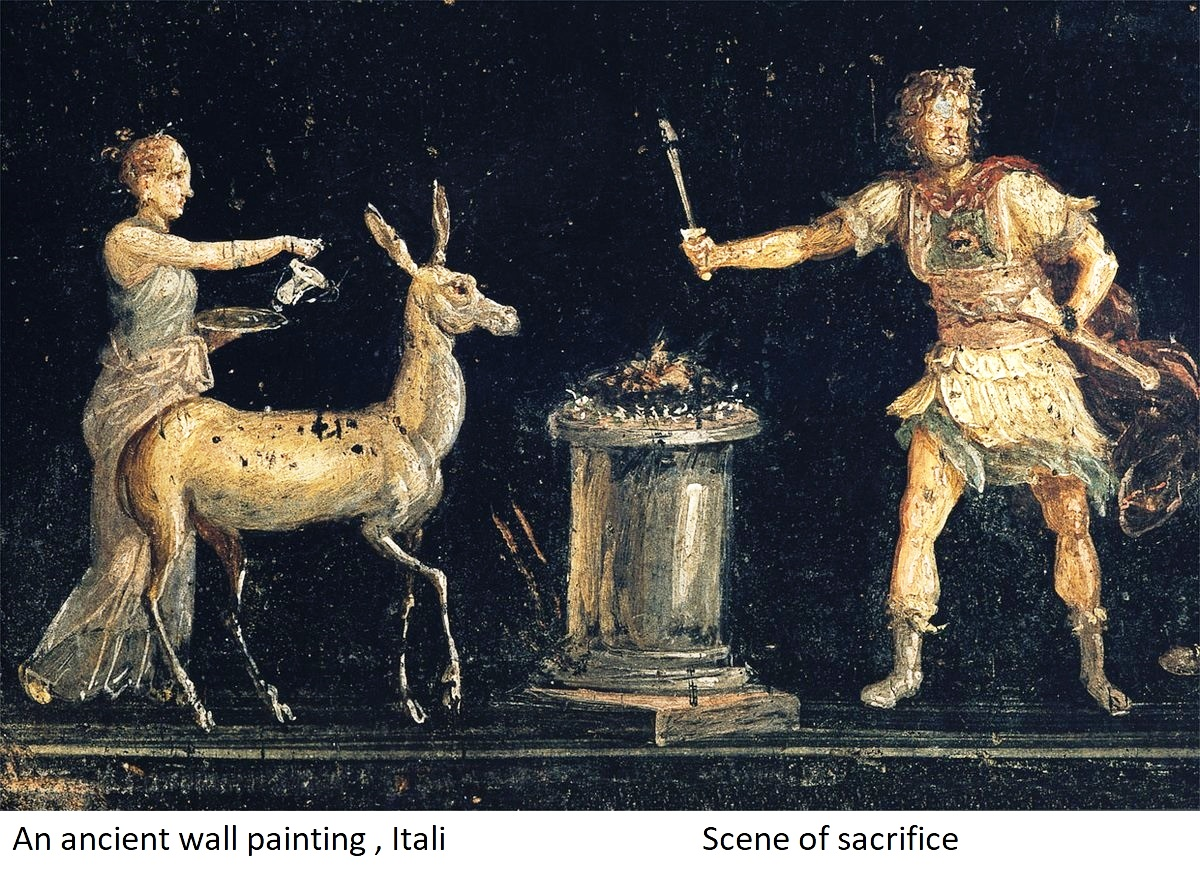
Like Pompeii, Akrotiri is renowned for its wall paintings, but while Pompeii’s frescoes reflect Roman myths, gods, and elite leisure, Akrotiri’s art leans heavily into naturalism, ritual, and social life. The famous “Spring Fresco”, with its vibrant lilies and swallows, is considered one of the earliest landscape paintings in history.
Other notable frescoes include:
The Fisherman: A young man proudly holding his catch, emphasizing daily life.
The Flotilla Fresco: Depicting ships, towns, and processions—possibly even showing different Aegean cities, suggesting a pan-Cycladic or even Minoan worldview.
These artworks not only decorate but communicate social values, aesthetic sensibilities, and religious practices.
Trade and Cultural Identity
Akrotiri was likely a Minoan colony or stronghold, sharing much in common with the palace-centered culture of Knossos in Crete. Linear A tablets have not been found at Akrotiri, but artistic and architectural similarities suggest cultural and political alignment with Minoan Crete.
The site also shows that Akrotiri’s residents were globally connected, trading with the Cyclades, Egypt, the Levant, and Anatolia. Their wealth wasn’t just material—it was cultural, reflecting a melting pot of maritime influence.
Legacy and Interpretation
While Pompeii is often a symbol of Roman luxury and sudden catastrophe, Akrotiri represents resilience, foresight, and a Bronze Age world on the cusp of transformation. The eruption of Thera may have indirectly contributed to the collapse of Minoan civilization, as tsunamis and ashfall disrupted nearby trade and agriculture.