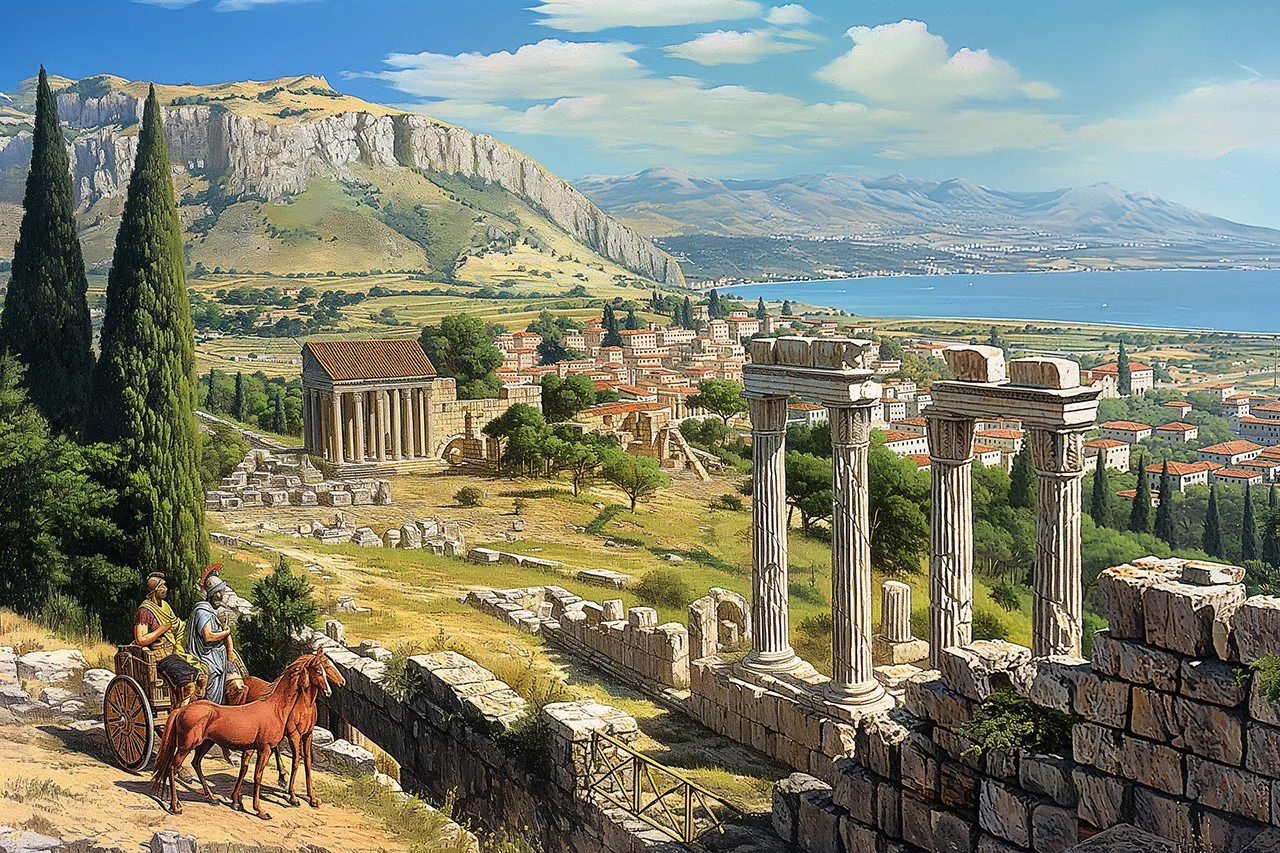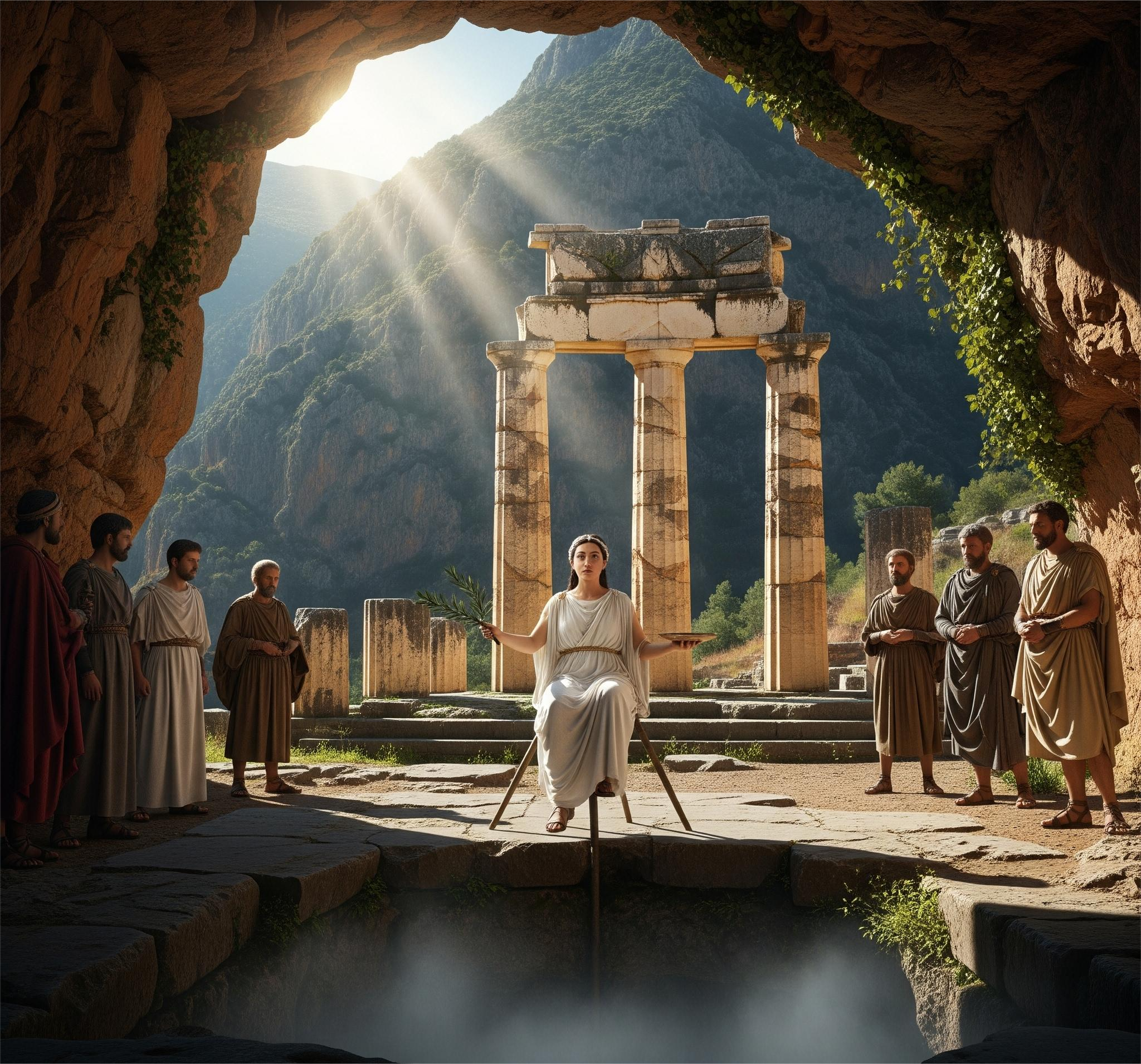
High on the slopes of Mount Parnassus, overlooking the olive-strewn valley of Phocis, lies Delphi—one of the most sacred sites of the ancient world. Revered as the navel (omphalos) of the Earth, Delphi was home to the Oracle of Apollo, where priestesses known as Pythia delivered cryptic prophecies that guided kings, generals, and commoners alike. Archaeological excavations over the past century have revealed not only the architectural splendor of Delphi but also the enduring cultural power it held over the Greek world.
The Sanctuary of Apollo
At the heart of Delphi was the Temple of Apollo, where the Pythia would enter a trance-like state, believed to be induced by divine possession, and utter prophecies. Surrounding the temple were a series of treasuries, monuments, and stoas built by Greek city-states to honor Apollo and display their wealth and piety.
Key structures include:
The Temple of Apollo: The centerpiece, built and rebuilt multiple times (most notably in the 4th century BCE), where the Oracle gave her pronouncements.
The Athenian Treasury: A beautifully preserved structure showcasing the victories of Athens and filled with dedications.
The Theater: With seating for 5,000, it offered stunning views and was used for musical and dramatic performances during religious festivals.
The Stadium: Host of the Pythian Games, second only to the Olympics in prestige.
Archaeological Discoveries
Delphi was first systematically excavated in the 1890s by the French School of Archaeology at Athens. The massive project involved relocating the village of Kastri, which sat atop the ruins. Since then, excavators have uncovered:
Hundreds of inscriptions, including oracular responses, dedications, and political decrees.
The Charioteer of Delphi, a life-size bronze statue from the 5th century BCE—one of the finest surviving examples of ancient Greek sculpture.
The Omphalos stone, symbolizing the myth that Zeus sent two eagles to find the center of the world—and they met at Delphi.
These finds shed light on the panhellenic importance of Delphi as both a religious and diplomatic hub.
The Pythia and the Oracle
The Oracle was not a single woman, but a succession of priestesses chosen from local families. Seated above a fissure in the earth, the Pythia was said to inhale vapors—possibly ethylene gases—and speak in tongues, which priests then interpreted. While modern science debates the geological basis of these gases, the mystical reputation of the Oracle remains intact.
Delphic prophecies were famously ambiguous, giving rise to both wise and tragic outcomes. One of the most famous examples is Croesus of Lydia, who was told, “If you cross the river, a great empire will fall.” He crossed—and it was his own.
A Center of the Ancient World
Beyond religion, Delphi was a political and cultural center. It hosted the Amphictyonic League, a council of Greek tribes, and was a neutral ground where city-states could display power without war. It also attracted pilgrims, diplomats, and artists from all over the Mediterranean.
Legacy and Modern Significance
Today, Delphi is a UNESCO World Heritage Site, and its ruins continue to inspire visitors with their breathtaking harmony between human achievement and natural landscape. The site reflects the ancient belief that wisdom, faith, and fate were intertwined—and that even the most powerful had to consult a higher power before acting.