In the shadow of Mycenae and Tiryns, the city of Orchomenos in central Greece quietly holds one of the most awe-inspiring architectural feats of the Bronze Age: the Treasury of Minyas. Often compared to the Treasury of Atreus at Mycenae, this monumental tholos tomb—named after the mythical founder-king Minyas—attests to the wealth, influence, and artistic sophistication of the Mycenaean elite outside the Peloponnesian heartland.
A Monumental Tholos Tomb
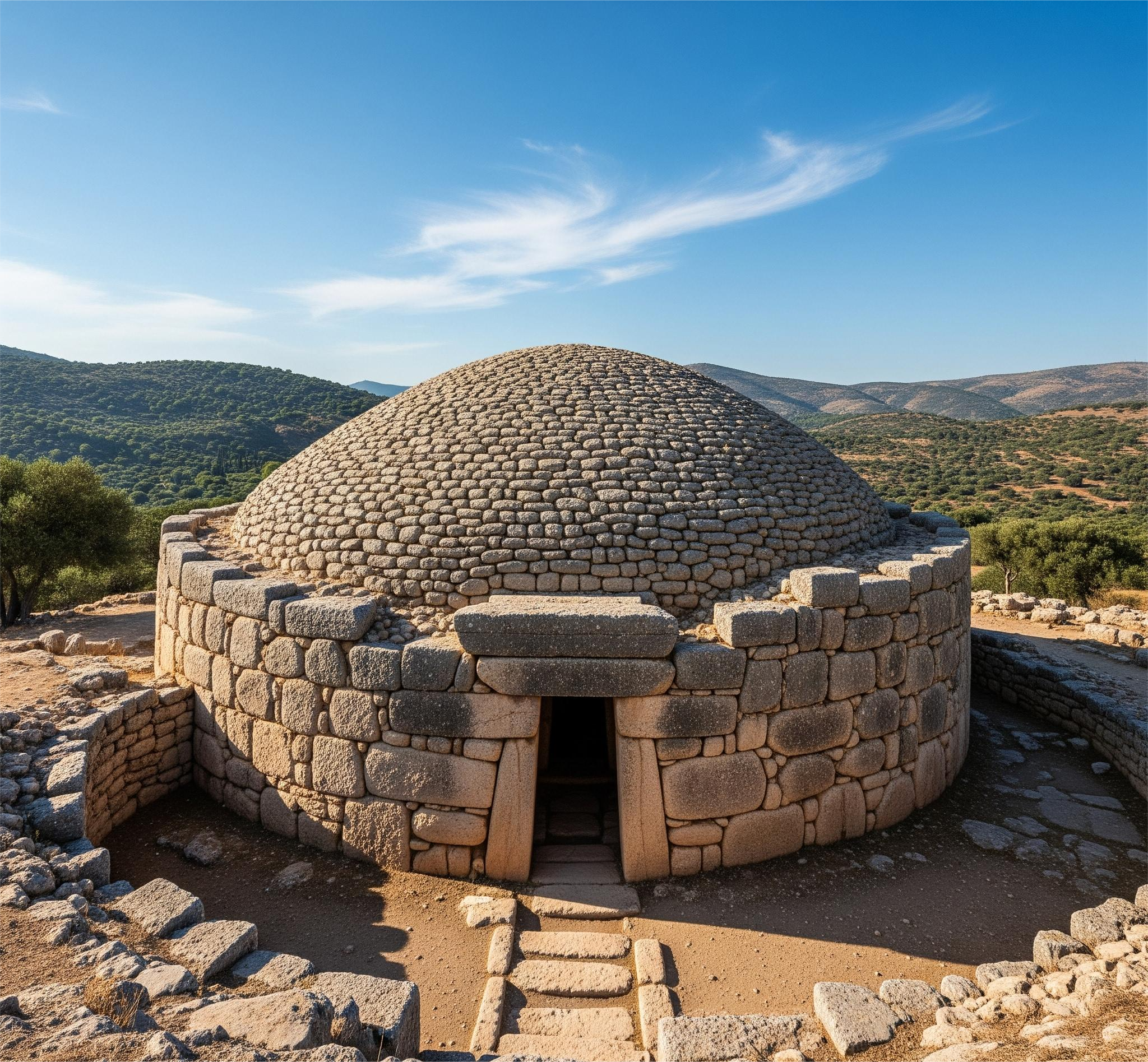
Dating to the 14th century BCE, the Treasury of Minyas stands as one of the finest examples of Mycenaean funerary architecture. It is a beehive-shaped tomb built into a hillside, featuring an elongated entrance passage (dromos), a massive circular burial chamber, and an interior side room whose decorative features have astonished archaeologists and visitors alike.
Key Features:
Dromos: The approach to the tomb is a long stone-lined corridor approximately 30 meters in length, dramatically framing the entrance.
Stomion (Entrance): The grand doorway was once adorned with rich decoration and likely flanked by half-columns of dark gray marble, decorated with spiral and floral motifs.
Tholos Chamber: The domed central chamber is over 14 meters high and nearly 15 meters wide, built with carefully cut ashlar blocks arranged in a corbelled fashion, giving it the appearance of a smooth beehive dome.
Side Chamber: A rectangular side room off the main chamber features one of the earliest examples of a coffered stone ceiling, intricately carved with rosettes and geometric patterns—a rare surviving specimen of Mycenaean artistic mastery.
Artifacts and Treasures
Although the tomb was looted in antiquity, a few precious artifacts have survived, shedding light on the tomb’s importance and the identity of those buried within. Orchomenos was a major center of Mycenaean wealth, especially during the 14th–13th centuries BCE, and the tomb likely served as the burial site for the city’s ruling dynasty.
Discovered items include:
Fragments of ceremonial vessels and pottery decorated in the Late Helladic style.
Traces of gold ornaments and bronze weapons, suggesting elite warrior burials.
Later Geometric period votive offerings, indicating the tomb may have become a hero shrine after its use as a burial site.
Orchomenos: The “Minyean” Rival of Thebes
While often overshadowed by other Mycenaean centers, Orchomenos—located in the fertile Cephissus River plain of Boeotia—was a powerful and independent kingdom. The Minyans, its mythical founding people, were credited with impressive engineering feats like draining Lake Copais for agriculture, and establishing trade links across the Aegean.
The monumental tomb at Orchomenos reflects this wealth and ambition. Much like Mycenae’s tholos tombs, the Treasury of Minyas would have served as both a royal mausoleum and a symbol of dynastic power and divine favor.
Cultural and Historical Significance
The Treasury of Minyas:
Proves that Mycenaean power and architectural innovation extended beyond the Peloponnese.
Offers a rare glimpse into elite funerary customs and beliefs about death and the afterlife.
Displays technical mastery in megalithic construction and decorative stone carving.
Helps map out the regional politics and cultural diversity of Late Bronze Age Greece.
Greek and Roman authors, including Pausanias, were still marveling at the tomb over a thousand years later, comparing its splendor to that of Mycenae.
Legacy and Preservation
Today, the Treasury of Minyas is partially restored and open to visitors. Though some of its original decorative elements are housed in museums like the National Archaeological Museum of Athens, the tomb itself continues to inspire awe for its precision, size, and enduring symbolism of ancient royal power.