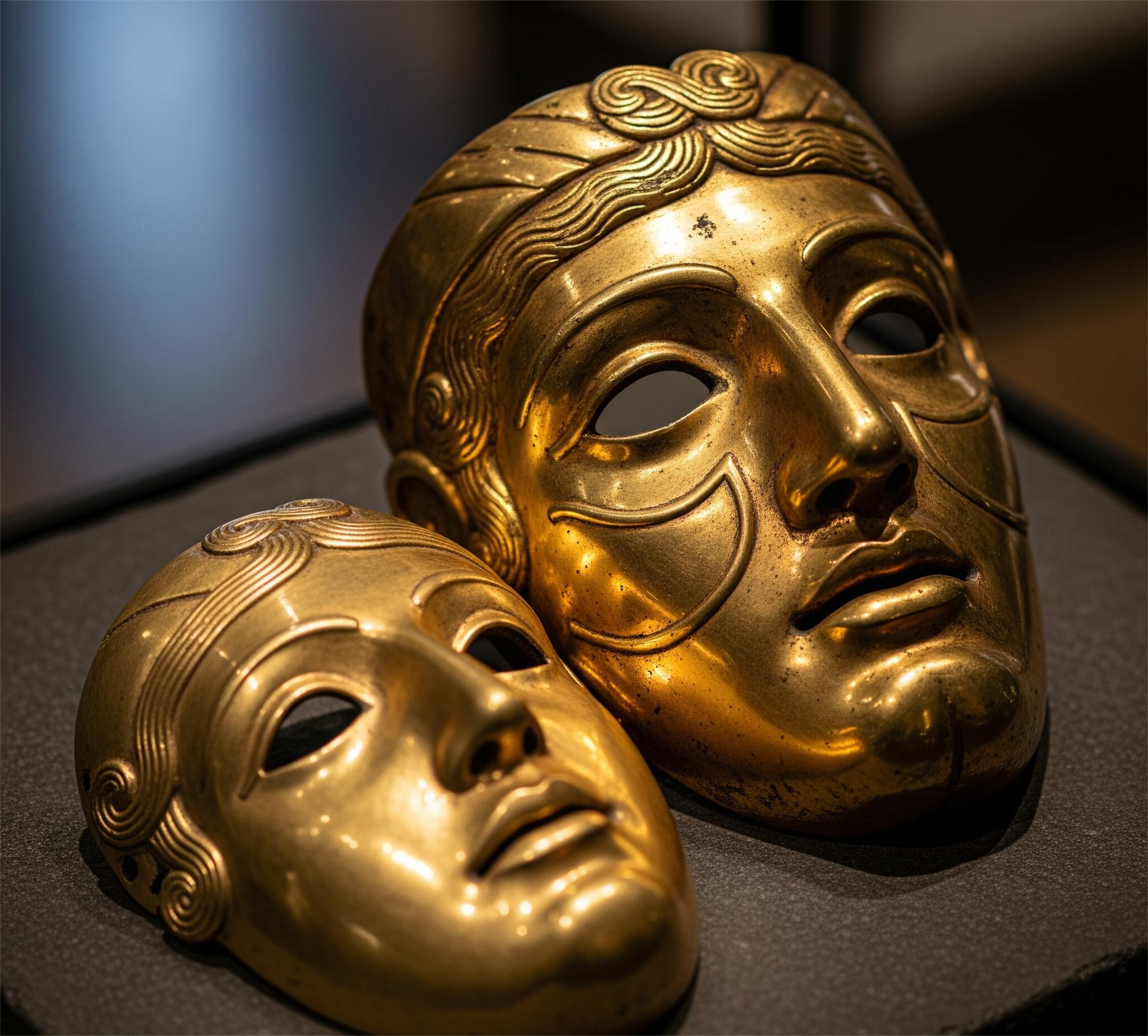
The discovery of the gold burial masks of Mycenae stunned the world of archaeology and offered a dazzling glimpse into one of the most powerful civilizations of the Late Bronze Age. These funerary artifacts—especially the so-called “Mask of Agamemnon”—have become iconic symbols of Mycenaean royalty, wealth, and artistic sophistication.
But what exactly do these masks tell us about Mycenaean society, and why do they continue to fascinate historians and visitors alike?
Discovery at Mycenae: A Golden Revelation
In 1876, German archaeologist Heinrich Schliemann, already famous for discovering what he believed was ancient Troy, turned his attention to Mycenae in southern Greece. Guided by Homer’s Iliad, Schliemann excavated a site that had long been associated with the legendary King Agamemnon, leader of the Greeks during the Trojan War.
In the royal Grave Circle A, Schliemann unearthed a series of shaft graves filled with luxurious burial goods—gold jewelry, weapons, ornate cups, and most famously, five intricately crafted gold funerary masks. These masks had been placed over the faces of deceased male elites, signifying their status in death as in life.
The “Mask of Agamemnon”: A Misnomer?
The most famous of these is the so-called Mask of Agamemnon, named by Schliemann himself. Crafted from a single sheet of gold and hammered into a lifelike image of a bearded man, the mask captured the imagination of scholars and the public alike.
However, modern archaeology has since shown that the graves in which the masks were found date to around 1550–1500 BCE—300 years before the traditional date of the Trojan War. Thus, while the mask may not belong to Agamemnon, it remains a powerful symbol of Mycenaean craftsmanship and funerary practice.
Symbolism and Function
The gold masks were more than just luxurious ornaments—they served ritual, symbolic, and political purposes:
Status Symbols: Gold was rare and precious. Only the most elite individuals—likely warrior-kings or high-ranking nobles—were buried with such wealth. The masks emphasized their divine or heroic status.
Funerary Rites: Covering the face of the dead may have served to preserve their identity or protect them in the afterlife. Similar customs are seen in ancient Egypt with mummy masks.
Ancestral Veneration: These masks may have helped link the deceased with divine ancestry, presenting them as timeless figures worthy of honor and memory.
Artistic Representation: Unlike Egyptian funerary masks, which were stylized, the Mycenaean masks exhibit individualized features, suggesting they may have been attempts at portraiture—an early step toward realistic representation in Greek art.
Debate and Authenticity
While the masks are universally accepted as genuine today, the Mask of Agamemnon has sparked debates for over a century. Some scholars once questioned whether Schliemann—or his team—could have altered or even forged it, given its unusual features compared to the others (e.g., detailed mustache, closed eyes, and a more expressive face).
However, most experts now agree that all the masks were created by Mycenaean artisans and reflect variations in workshop style and technique.
Legacy and Modern Significance
Today, the gold masks are preserved in the National Archaeological Museum in Athens, where they remain a highlight for visitors. Beyond their aesthetic beauty, they serve as powerful symbols of:
Mycenaean political power and wealth
The emergence of elite burial practices in Bronze Age Greece
The connection between myth and material culture, even when the historical Agamemnon himself remains elusive