What Are the Elgin Marbles?
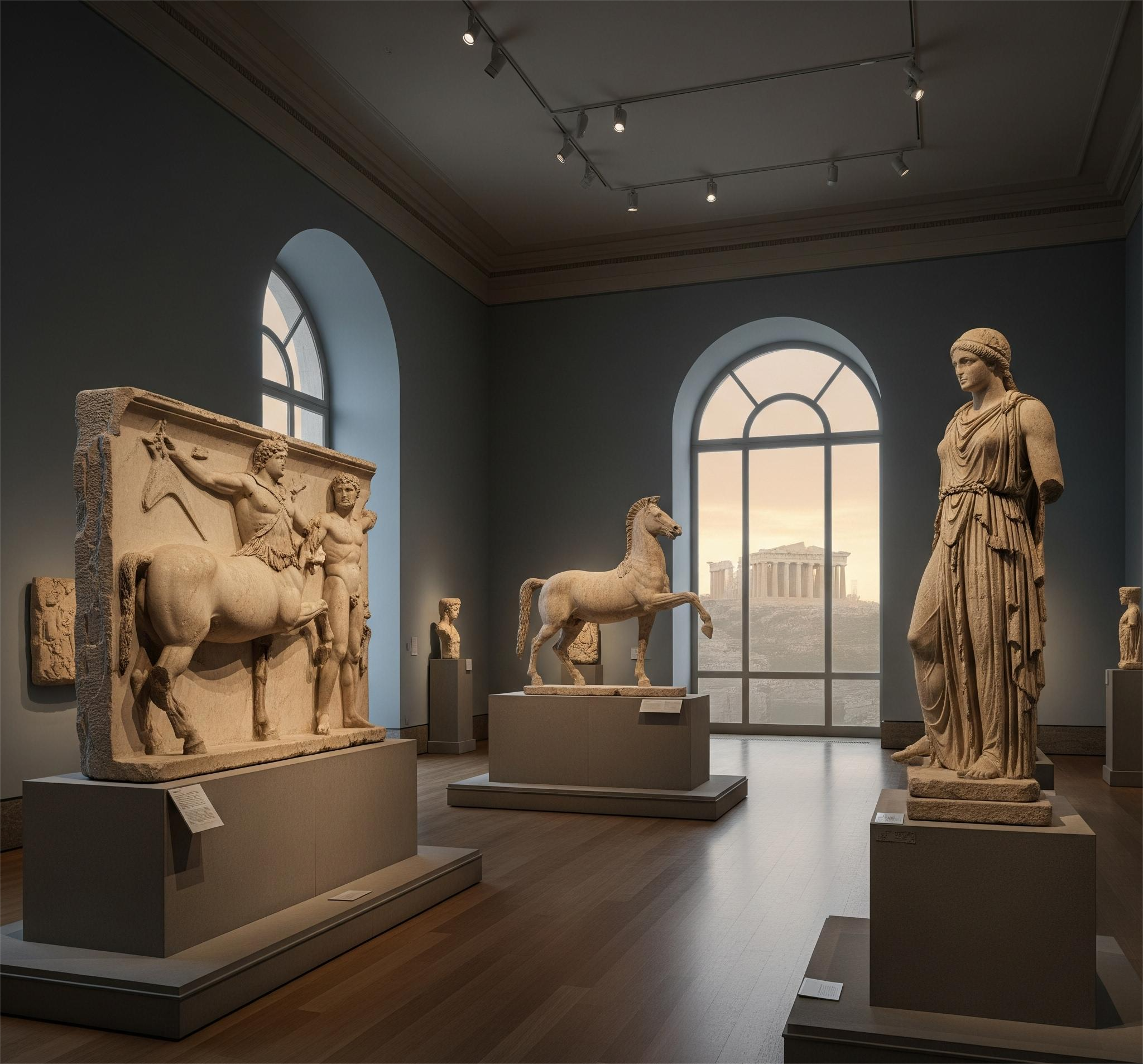
The Elgin Marbles (or Parthenon Marbles) are a series of classical Greek sculptures that once adorned the Parthenon and other buildings on the Acropolis of Athens. Created in the 5th century BCE under the direction of Phidias, they represent some of the finest examples of High Classical art.
The collection includes:
A portion of the Parthenon Frieze, depicting the Panathenaic procession.
Metopes showing scenes like the battle between Lapiths and Centaurs.
Several pediment sculptures, such as gods and mythical figures.
Architectural elements like triglyphs and capitals.
How Did They End Up in London?
In the early 1800s, Thomas Bruce, 7th Earl of Elgin, was the British ambassador to the Ottoman Empire, which then ruled Greece. Between 1801 and 1812, Elgin obtained a controversial firman (permit) from the Ottoman authorities and removed a significant portion of the Parthenon's sculptures.
He later sold the marbles to the British Museum, where they’ve remained on display since 1817.
Critics argue that Elgin exploited his position during a time of imperial power imbalance, while defenders claim he saved the sculptures from further destruction—citing prior damage from wars, earthquakes, and looting.
The Controversy: Should the Marbles Be Returned?
The Case for Returning to Greece
Cultural Repatriation: The marbles are an essential part of Greek heritage and identity. They belong to the cultural and historical context of Athens.
Fragmented Art: About 50% of the surviving Parthenon sculptures remain in Greece. Reuniting them would restore the integrity of the monument.
Modern Facilities: The Acropolis Museum in Athens, opened in 2009, was designed specifically to house the marbles, with climate control and direct views of the Parthenon.
Questionable Legality: There’s still debate over whether Elgin’s permit authorized removal or merely documentation. No original copy of the firman exists.
The Case for Keeping Them in the British Museum
Preservation: The British Museum argues it has preserved and protected the marbles for over two centuries, especially during times when Greece was unstable.
Global Accessibility: Housing them in London makes the sculptures accessible to a wider international audience, within a universal museum context.
Legal Ownership: The UK maintains that the purchase from Elgin was legal under Ottoman law and ratified by Parliament in 1816.
Precedent Concerns: Returning the marbles could open the floodgates for repatriation claims worldwide, potentially emptying major museum collections.
Conservation and Damage
In 1937–1938, the British Museum undertook an aggressive cleaning of the marbles using abrasive tools like copper brushes and wire wool—resulting in irreversible surface damage.
This incident is often cited by Greece as evidence that the marbles would be safer and better preserved under modern conservation standards in Athens.
Public Opinion and Diplomatic Pressure
Surveys across the UK and Europe consistently show that a majority of the public supports returning the marbles to Greece. UNESCO, the EU Parliament, and cultural figures like Stephen Fry and George Clooney have also voiced support for repatriation.
Recent cultural exchanges—like Italy returning a fragment of the Parthenon frieze—have added momentum to Greece’s cause.
In 2023, secret negotiations between Greece and the British Museum were reported, indicating that some form of long-term loan or compromise may be in progress.
A Deeper Ethical Question
At the heart of the debate lies a critical question:
Who owns the past?
Is it the country where the object originated? The nation that preserved it? Or the global community that shares in humanity’s collective history?