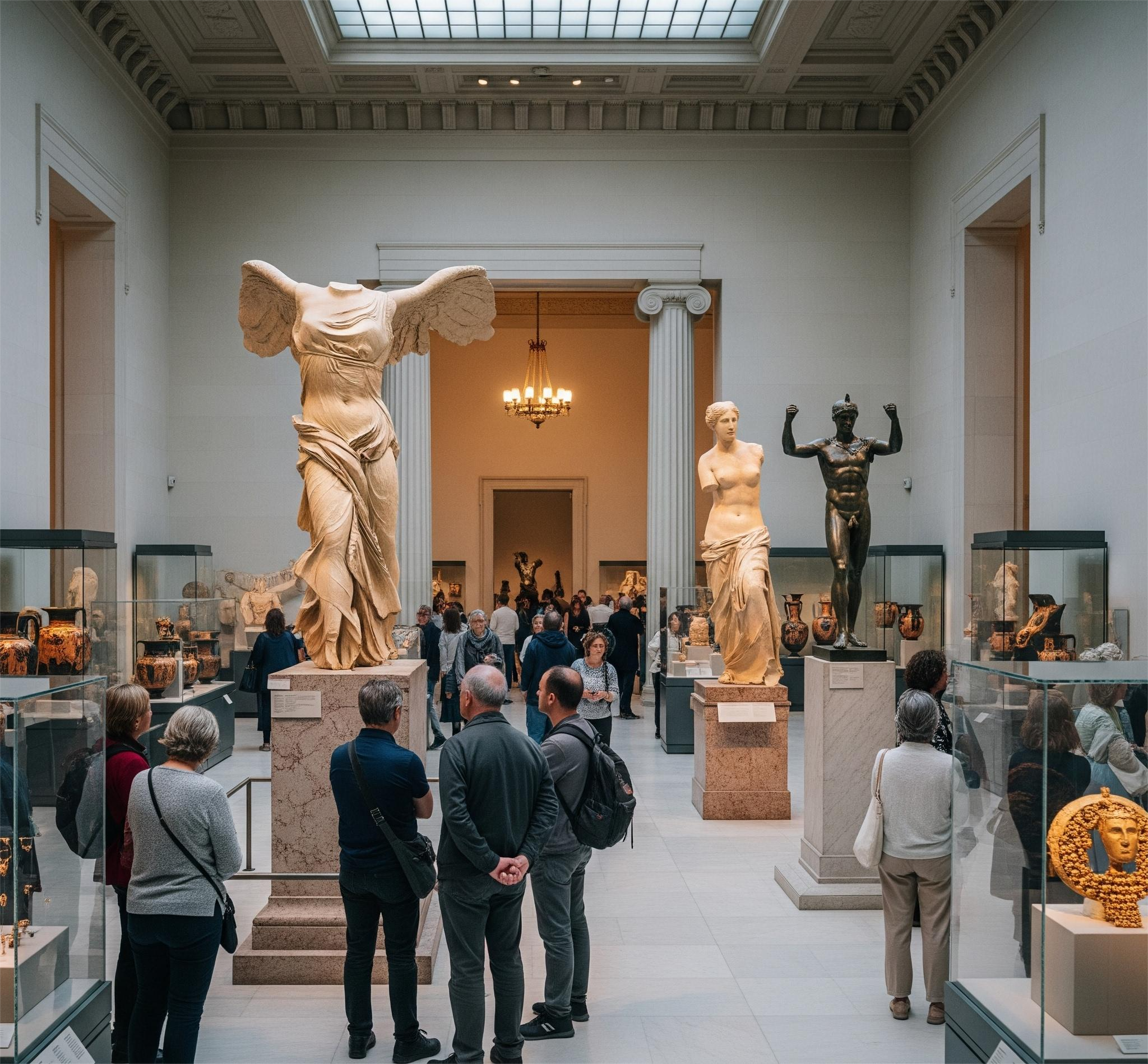
The legacy of ancient Greece lives on not only in ruins scattered across the Mediterranean but in the magnificent artifacts preserved in museums across the globe. These objects—some sacred, some monumental, some everyday—tell stories of gods, heroes, artisans, philosophers, and empires.
Whether you're walking through Athens or exploring galleries in Paris or London, here are the top Greek artifacts you absolutely must see, and where to find them.
1. The Mask of Agamemnon
Where: National Archaeological Museum, Athens (Greece)
This gold funeral mask, unearthed by Heinrich Schliemann at Mycenae in the 19th century, was believed (mistakenly) to belong to the mythical king Agamemnon. Whether or not it truly adorned a Homeric hero, its intricate craftsmanship and haunting gaze make it a must-see for fans of the Bronze Age and Greek mythology.
2. The Dipylon Amphora
Where: National Archaeological Museum, Athens (Greece)
Standing over 1.5 meters tall, this monumental Geometric-era funerary vase is a masterpiece of early Greek pottery. Its stylized funeral procession scenes are among the earliest known examples of Greek narrative art.
3. The Parthenon Marbles (Elgin Marbles)
Where: British Museum, London (UK)
These controversial and stunning reliefs were taken from the Parthenon temple in Athens in the early 19th century by Lord Elgin. They depict battle scenes, religious processions, and Olympian gods—offering unmatched insight into Classical Athenian art.
4. The Antikythera Mechanism
Where: National Archaeological Museum, Athens (Greece)
Dubbed the world’s first analog computer, this mind-blowing device from the 2nd century BCE was used to predict astronomical positions and eclipses. Its complexity wasn’t rivaled for over 1,000 years.
5. The Statue of Zeus or Poseidon (Artemision Bronze)
Where: National Archaeological Museum, Athens (Greece)
This powerful bronze statue, recovered from a shipwreck off Cape Artemision, depicts either Zeus hurling a thunderbolt or Poseidon about to throw a trident. Regardless of identity, it’s a dramatic showcase of early Classical sculpture in motion.
6. The Venus de Milo (Aphrodite of Milos)
Where: Louvre Museum, Paris (France)
Discovered on the island of Milos in 1820, this iconic statue of Aphrodite stands as a beacon of Hellenistic beauty and mystery. With her flowing drapery and missing arms, she exudes both sensuality and grace.
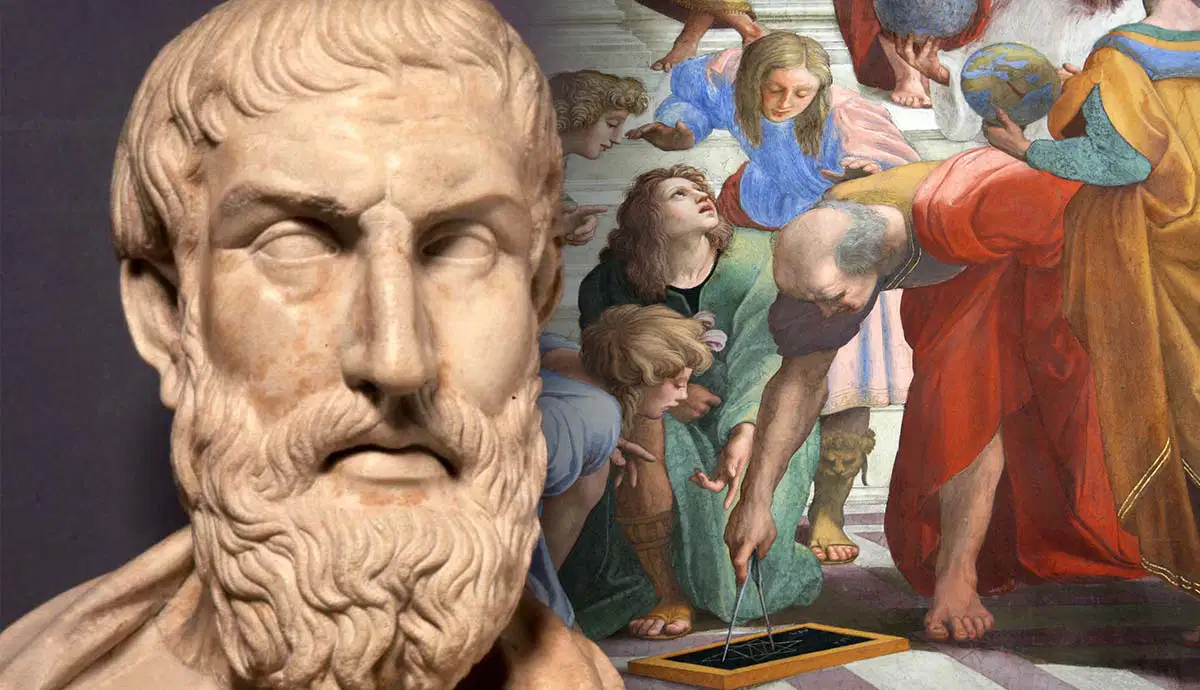
7. The Bust of Homer
Where: British Museum, London (UK)
This Roman-era bust captures the imagined likeness of Homer, the blind poet of the Iliad and Odyssey. It represents the deep reverence Greeks had for their literary ancestors.
8. Theater Masks from Dionysian Rituals
Where: Museum of the Ancient Agora, Athens (Greece)
These terracotta masks used in religious performances honor Dionysus, god of wine and theater. They reflect the rich theatrical tradition that gave rise to tragedy and comedy.
9. The Doryphoros (Spear Bearer)
Where: National Archaeological Museum, Naples (Italy) – Roman copy
Originally by Polykleitos, this statue embodied Classical ideals of male beauty and proportion. Though the Greek original is lost, Roman copies allow us to admire its harmony and influence.
10. The François Vase
Where: Archaeological Museum, Florence (Italy)
This black-figure krater from the 6th century BCE is a storytelling epic in ceramic form, depicting over 200 mythological figures including Achilles, Theseus, and Heracles.
11. The Gortyn Code
Where: Gortyn, Crete (Greece) – In situ
This massive inscription carved into a wall in the 5th century BCE contains one of the oldest and most complete legal codes from ancient Greece. It’s a rare glimpse into daily life, marriage, property, and justice in early Crete.
12. The Bronze Charioteer of Delphi
Where: Delphi Archaeological Museum, Delphi (Greece)
Erected to celebrate a victory at the Pythian Games, this lifelike bronze statue from 470 BCE is one of the few surviving large bronzes from antiquity. The figure’s calm, focused gaze captures a moment of serene glory.
13. The Horse and Jockey of Artemision
Where: National Archaeological Museum, Athens (Greece)
This dramatic bronze statue depicts a young boy riding a galloping horse—possibly representing victory in a horse race. Its dynamism and energy are remarkable for its time (circa 150 BCE).