In the thunder of hooves and the clatter of wheels, chariot racing emerged as one of the most thrilling and perilous spectacles of ancient Greek sports. Though often overshadowed by the more famous Olympic footraces and wrestling matches, chariot racing captivated audiences with its high speed, high stakes, and potential for dramatic catastrophe.
Origins and Cultural Significance
Chariot racing likely originated in Mycenaean Greece, with depictions found in Bronze Age art and Homeric epics. In the Iliad, Achilles honors the fallen Patroclus with funeral games that include a tense and prestigious chariot race—a nod to how revered the event was in Greek hero culture.
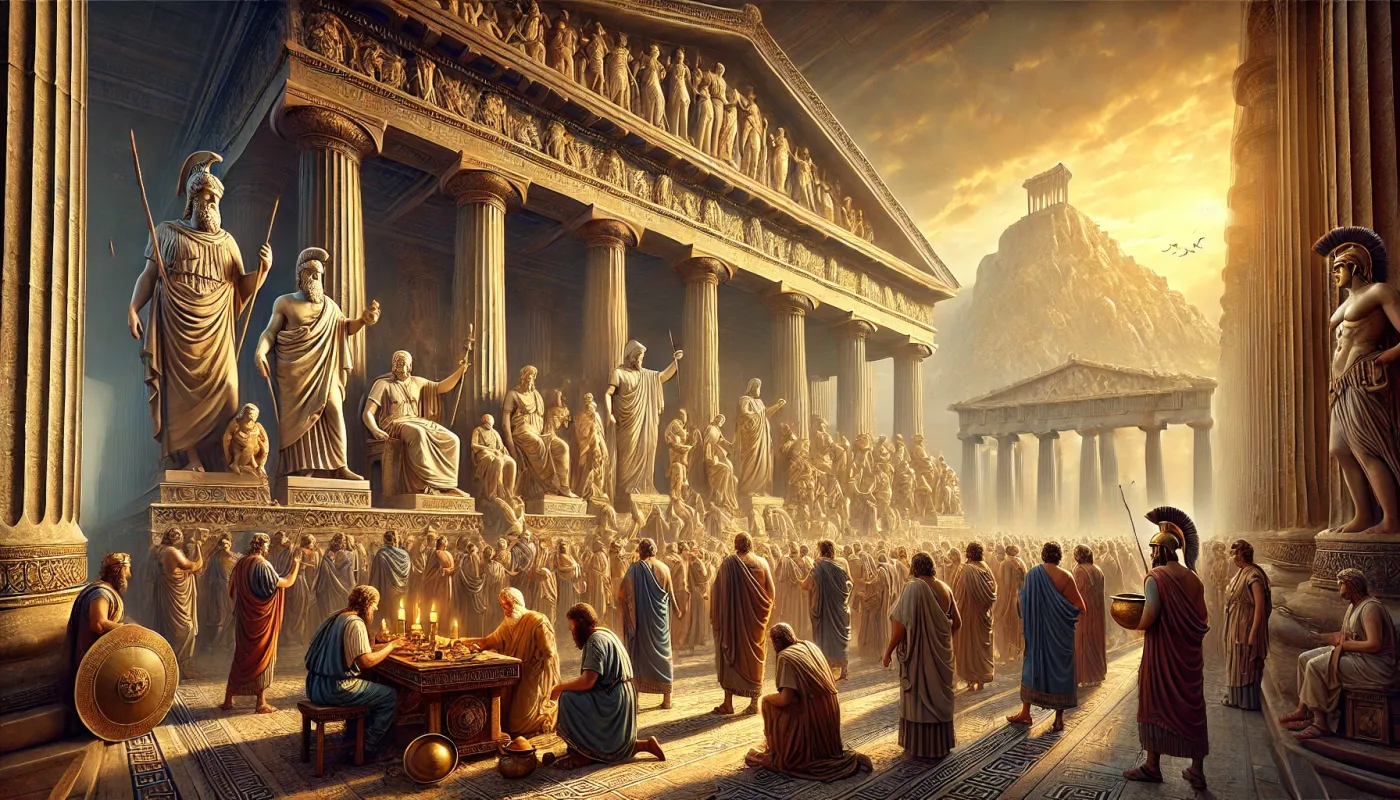
By the Archaic and Classical periods, chariot racing became an elite sport tied to aristocratic wealth and religious celebration. Races were often held during major festivals such as the Olympic Games, Pythian Games at Delphi, and Panathenaic Games in Athens, honoring gods like Zeus and Apollo.
The Race: Controlled Chaos
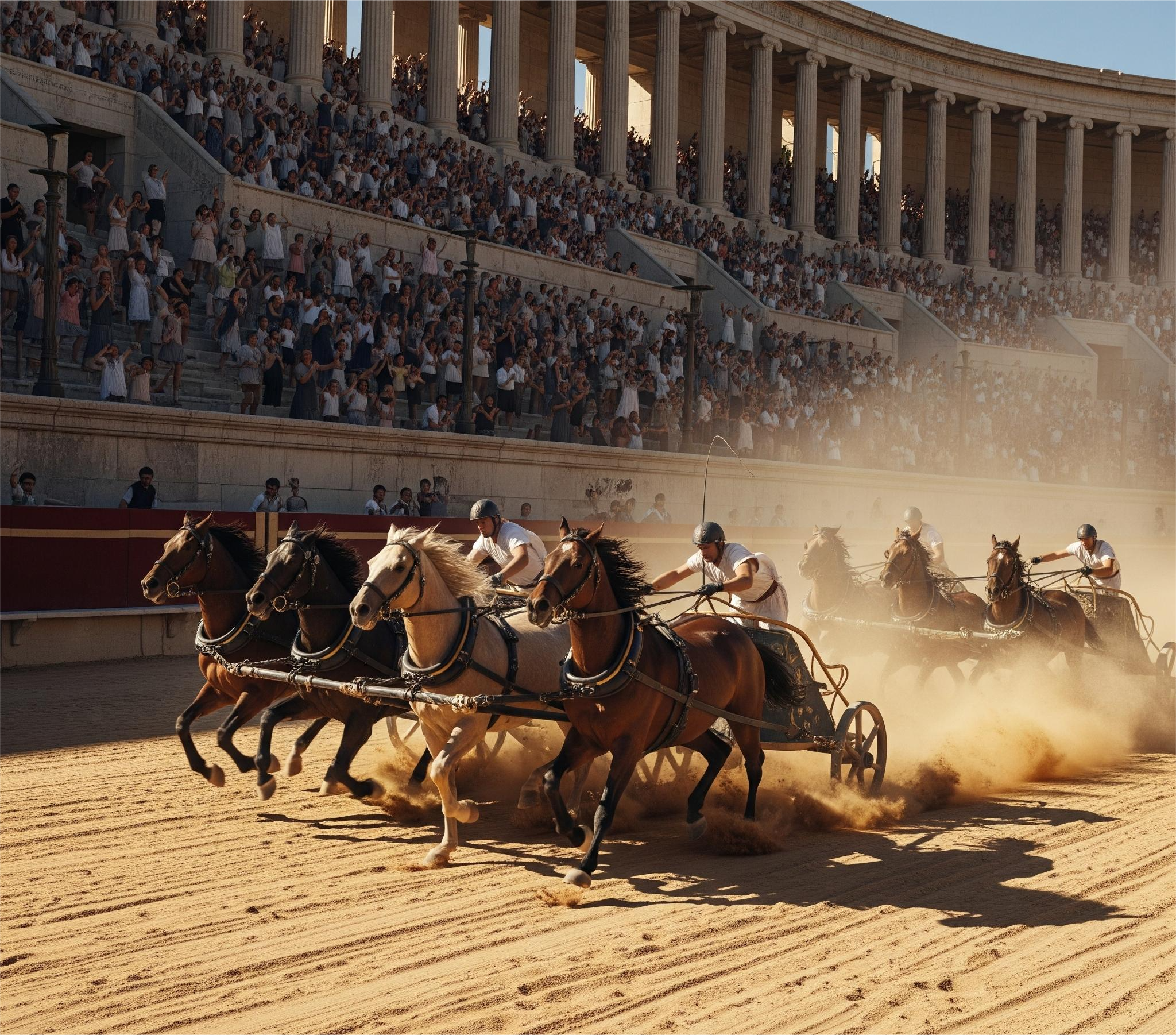
Greek chariot races were typically run in a hippodrome, an elongated track similar to the Roman circus, with sharp turning posts (called nyssa) at each end. Racers competed in two-horse (biga) or four-horse (quadriga) teams. The skill of the charioteer, or hēniokhos, was critical: they had to navigate tight turns at breakneck speeds while avoiding collisions.
Crashes—called "shipwrecks" (nauagiai)—were common and often deadly. With little in the way of safety gear, charioteers could be trampled, dragged, or thrown violently from their vehicles. This danger only heightened the drama and prestige of victory.
Elite Ownership, Slave Drivers
Ironically, wealthy elites often owned the horses and chariots but did not race themselves. Instead, they employed professional drivers, sometimes slaves or hired specialists, to compete on their behalf. If the driver won, the owner was officially recorded as the victor, reinforcing the link between sport, class, and political influence.
A famous example is Kyniska of Sparta, who became the first woman to win at the Olympics—not by racing herself, but by owning the winning chariot team. This loophole allowed elite women a rare path to Olympic recognition in a male-dominated arena.
Spectacle for the Masses
Though aristocratic in nature, chariot racing was also a mass entertainment event. Crowds gathered in large numbers to witness the contests, placing bets and cheering for their favored drivers and teams. The emotional highs and brutal crashes provided a visceral thrill unmatched by other sports.
The Greeks didn’t form the organized factions (like the Blues and Greens in Roman times), but the passion and rivalry among spectators and competitors still ran deep.
Technical Mastery and Horse Care
Success in chariot racing depended on more than just raw speed. Training, horse breeding, track knowledge, and strategic maneuvering all played a role. A skilled charioteer knew how to distribute the strain among the horses, take the inner curve at just the right angle, and react to sudden crashes in front of them.
Horses themselves were highly valued and often given divine or heroic names. Victorious teams might be immortalized in poetry, sculpture, or vase art.
Legacy and Influence
Chariot racing continued to evolve and reached its grandest scale under Roman rule, particularly in the Circus Maximus. However, its roots remained firmly Greek. The drama, ritual, and elite competition embedded in Greek chariot racing laid the groundwork for Rome’s love affair with the sport.
Even today, echoes of chariot racing linger in modern equestrian sports, auto racing, and pop culture, keeping alive the ancient fascination with speed and spectacle.