When we think of ancient Greek athletics, we often imagine footraces, wrestling, and discus throws. Yet, among the most prestigious and elite competitions of the ancient world were the equestrian events—a dazzling showcase of wealth, skill, and the deep bond between horse and rider.
An Elite Affair
Horse sports in ancient Greece were deeply tied to the aristocracy. Unlike other Olympic events where individual strength or agility was the key to victory, equestrian events required ownership of horses, stables, and trainers—luxuries only the wealthy could afford. For this reason, these contests weren’t just about athletic ability—they were about status and power.
Victories in equestrian events elevated an individual's prestige, sometimes even more than success in physically contested games. Owning a winning horse was proof of both resources and refinement, and winners were often immortalized in statues and poetry.
Types of Equestrian Events
At major Greek athletic festivals such as the Olympics, Pythian, Isthmian, and Nemean Games, several horse events were featured:
1. Tethrippon (Four-Horse Chariot Race)
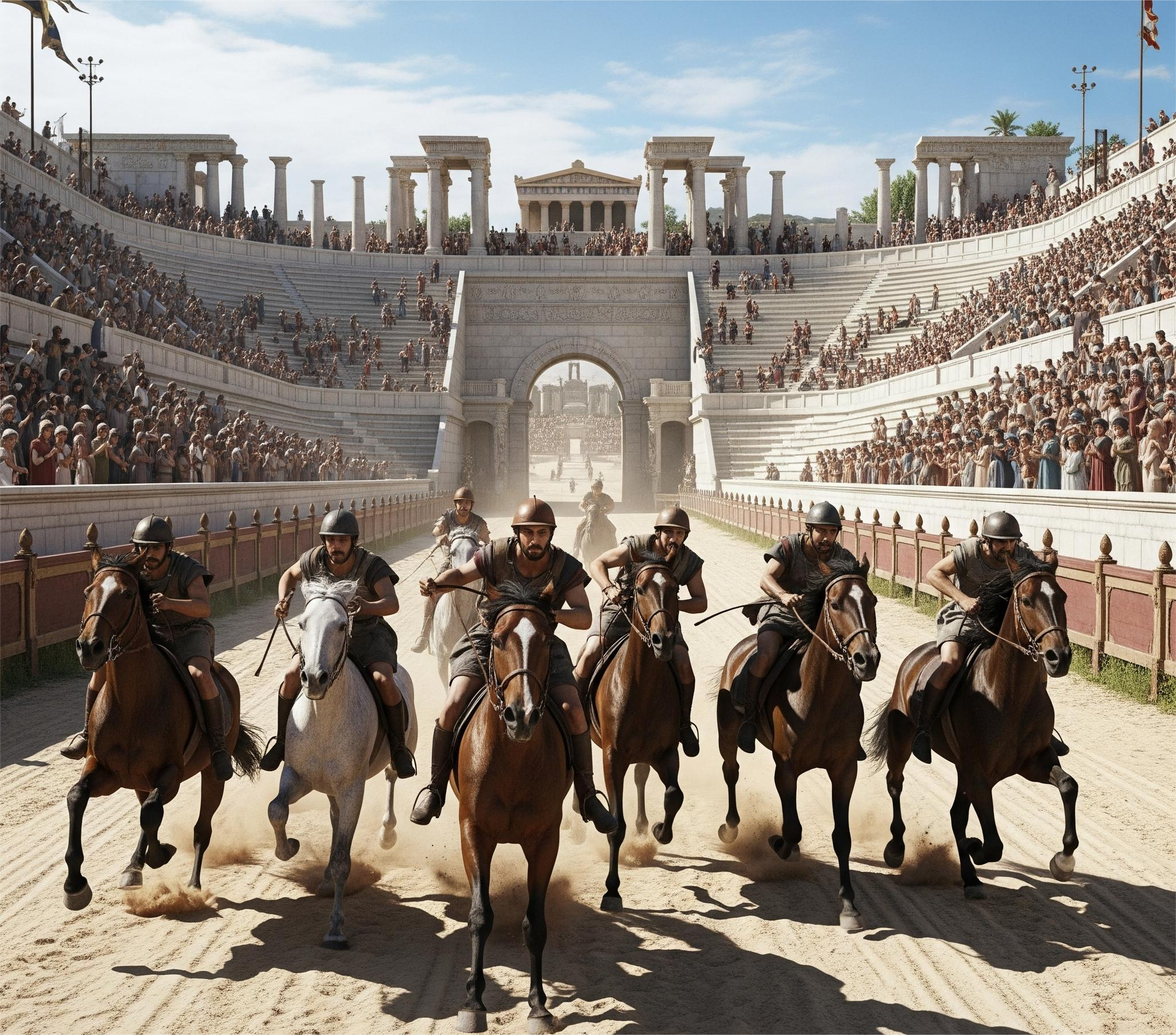
This was the most spectacular and dangerous event. Drivers raced around a hippodrome, navigating tight turns at high speeds. Crashes, or nauagiai ("shipwrecks"), were common and often deadly. Owners—not the drivers—were awarded the official victory, highlighting the role of wealth over personal participation.
2. Synoris (Two-Horse Chariot Race)
A slightly less intense version of the tethrippon, this race featured two-horse chariots and required even more control and precision due to the smaller team. It demanded technical finesse from the charioteer and strategic understanding of pace and curve management.
3. Keles (Mounted Horse Race)
In this solo horse race, jockeys rode bareback, guiding their horses over a distance of around six stades (roughly 1,100 meters). This event tested both the horse’s stamina and the rider’s balance and bravery—especially without saddles or stirrups.
4. Kalpe (Dismount Race)
In this unusual event, riders would dismount mid-race, run alongside their horse for a portion of the track, then remount and finish the course. It was a hybrid challenge, combining equestrian and foot racing skills. The kalpe was eventually discontinued, but it remains a fascinating example of innovation in ancient sports.
The Role of Jockeys and Trainers
While the owners received the accolades, jockeys (often slaves or young boys) carried out the actual racing. These riders needed lightweight frames, quick reflexes, and immense courage. They received little recognition, though some gained local fame for their skill.
Trainers and stablemasters were equally important. Training racehorses was a complex science involving diet, exercise regimens, and grooming—early echoes of modern sports science.
Women and Equestrian Fame
One of the few ways women could earn Olympic recognition was through horse ownership. The most famous example is Kyniska of Sparta, who became the first woman to win an Olympic event by entering a chariot team in her name. Her success paved the way for other elite women to participate indirectly in Greek sports culture.
Cultural Significance and Symbolism
Horses in Greek culture were symbols of nobility, speed, and divine favor. They were often associated with gods such as Poseidon (god of horses and the sea) and depicted in mythological stories and vase paintings. Equestrian victories often appeared on coins, monuments, and grave markers, cementing their importance in the Greek imagination.
Legacy and Influence
Greek equestrian sports laid the groundwork for later Roman spectacles and even influenced modern horse racing traditions. The celebration of grace, speed, and elite competition continues in equestrian events today, echoing the glory once sought in the dust of the ancient hippodrome.