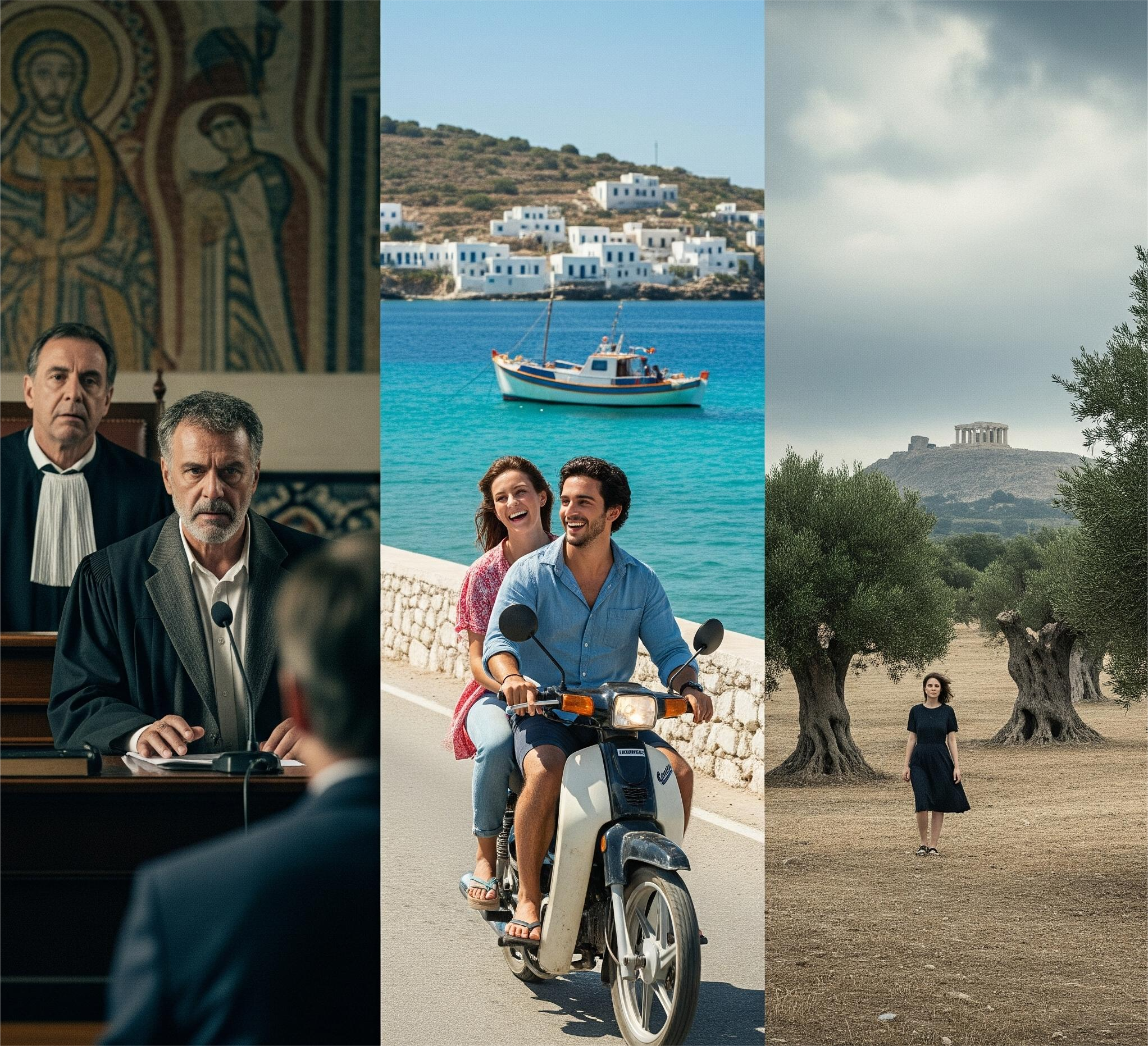
Greek cinema, though often overshadowed by larger film industries, has produced a rich and distinctive body of work that captures the soul of the nation—its mythology, history, humor, political struggles, and existential anxieties. From golden-age classics to the bold innovation of modern auteurs, Greek cinema continues to evolve while maintaining a unique voice in global film culture.
The Golden Age: 1950s–1970s
The mid-20th century marked a flourishing period for Greek cinema, often referred to as its "Golden Age." Directors like Michael Cacoyannis brought international attention to Greek storytelling. His 1964 adaptation of Zorba the Greek, starring Anthony Quinn and based on the novel by Nikos Kazantzakis, became an iconic global success. The film's blend of passion, tragedy, and joy—as well as its unforgettable music and dance—symbolized Greek spirit for millions.
Another prominent figure was Theo Angelopoulos, whose deeply poetic and political films explored Greek identity, exile, memory, and national trauma. Works like The Travelling Players (1975) and Landscape in the Mist (1988) use long takes, minimalist dialogue, and dreamlike imagery to reflect both the personal and the collective.
Cinema as Resistance and Reflection
Greek cinema has long served as a medium for political expression. During the military dictatorship of 1967–1974, filmmakers used symbolism and allegory to evade censorship. Costa-Gavras, although based in France, brought Greek political drama to the international scene with films like Z (1969), a powerful critique of authoritarianism that won the Jury Prize at Cannes.
Following the dictatorship, Greek cinema began openly addressing themes of social justice, memory, migration, and postwar trauma, often with a tone of introspection or bitterness. This era established film as a mirror for national wounds and aspirations.
The Greek Weird Wave: 2009–Present
Modern Greek cinema underwent a radical transformation in the early 21st century with the rise of the “Greek Weird Wave.” This movement, fueled in part by the country’s financial crisis, is known for surreal plots, unsettling dialogue, minimalist aesthetics, and existential dread.
Yorgos Lanthimos emerged as the leading voice of this new era. His breakout film Dogtooth (2009) won the Un Certain Regard prize at Cannes and introduced audiences to his darkly absurd style. Later English-language films like The Lobster (2015), The Killing of a Sacred Deer (2017), and Poor Things (2023) have earned critical acclaim and Academy Award nominations, making him one of Greece’s most internationally recognized filmmakers.
Other directors, such as Athina Rachel Tsangari (Attenberg, 2010) and Babis Makridis (Pity, 2018), have contributed to the Weird Wave with equally provocative works, blending satire, discomfort, and societal critique.
Themes of Identity and Belonging
Despite stylistic differences, Greek filmmakers often explore recurring themes: the tension between tradition and modernity, family dynamics, the role of fate, and the impact of political systems on the individual. The Aegean landscape, ancient ruins, and urban sprawl frequently serve as visual metaphors for these conflicts.
Greek films frequently depict characters caught between worlds—between old and new, freedom and constraint, personal desire and social expectations. This cultural duality gives Greek cinema its emotional power and philosophical depth.
Global Recognition and Cultural Impact
In recent years, Greek films have continued to shine at international festivals. In addition to Lanthimos, directors like Christos Nikou (Apples, 2020) and Eftihia Papadopoulou (Eftihia, 2019) have gained global praise. Streaming platforms have also increased access to Greek cinema, allowing global audiences to experience the country's vibrant storytelling traditions.
Moreover, cinema has become a tool for cultural diplomacy and education, used in Greek diaspora communities to preserve language, history, and heritage.