
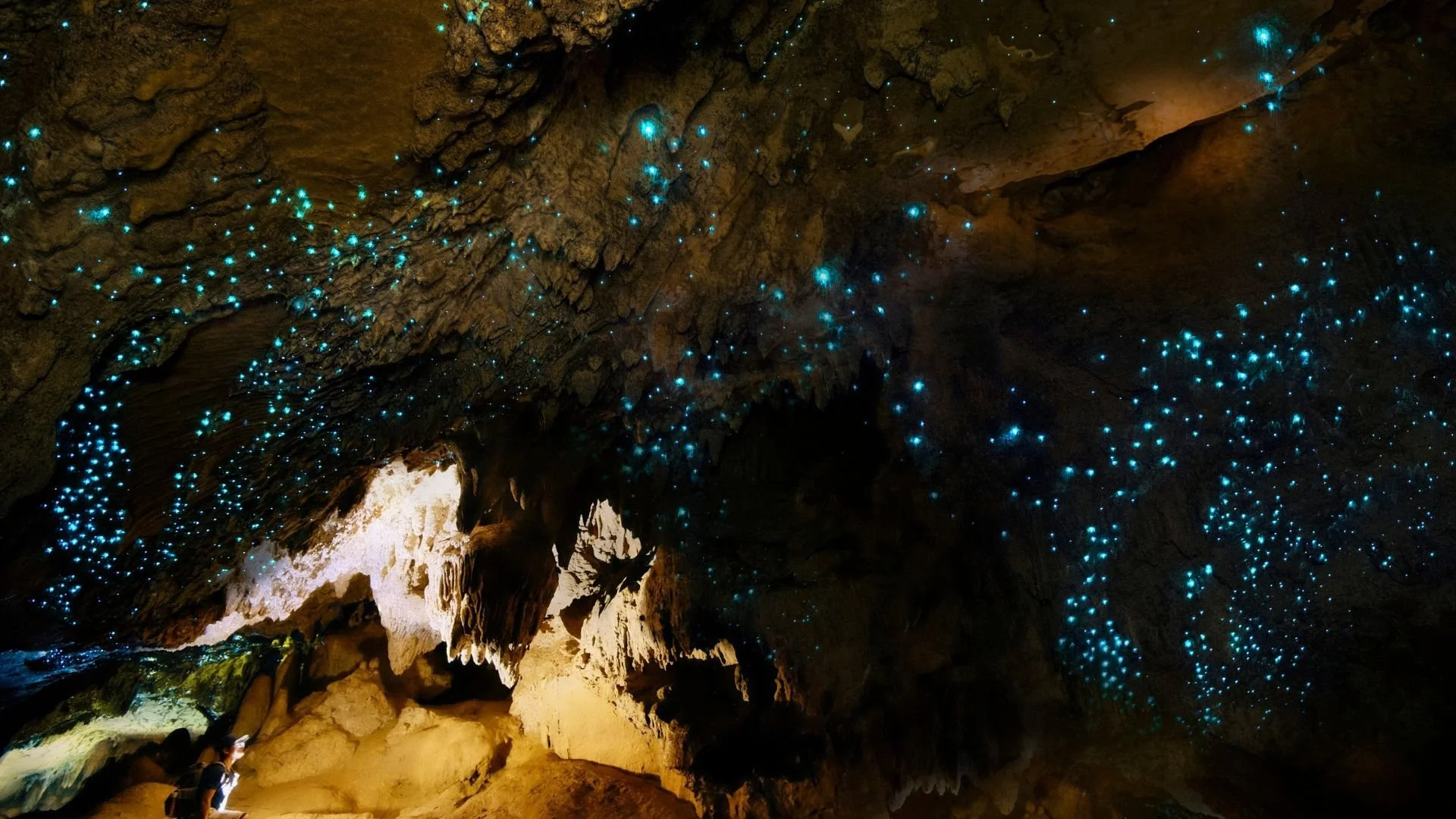
Marine light, microscopic organisms, and the science behind glowing waters in the eastern Mediterranean.
When the Sea Appears to Glow
Under certain conditions, seawater can emit flashes of blue or greenish light when disturbed. A swimmer moving through the water, a wave breaking against a boat, or a paddle passing through a dark sea may produce a brief luminous trail. The effect can make an ordinary stretch of coastline appear almost supernatural.
This phenomenon is known as marine bioluminescence. It occurs when living organisms produce light through biochemical processes. In the ocean, bioluminescence is associated with several kinds of organisms, including certain plankton, jellyfish, and other marine animals. Some microscopic planktonic organisms can produce flashes when disturbed, creating the familiar impression of glowing water.
Kastellorizo, also known as Megisti, lies in the eastern Mediterranean near the coast of southwestern Turkey. Its rocky coastline and marine environments provide a setting for investigating coastal ecology, underwater geology, and the conditions under which bioluminescence may occur.
The title refers specifically to glowing algae caves off Kastellorizo's reefs. A confirmed site with recurring bioluminescent algae and documented cave conditions would require direct ecological evidence. The existence of marine caves or reefs alone does not establish that such a phenomenon occurs there.
The Organisms Behind Bioluminescence
Bioluminescence is produced through chemical reactions that release energy in the form of light. In many organisms, the process involves a light-emitting molecule and an enzyme or related protein system. The exact chemistry varies among species.
Some microscopic marine organisms produce light when they experience mechanical disturbance. When large numbers are present near the surface, the cumulative effect can be visible to the human eye. Their flashes may appear when waves move through the water or when an object disturbs the surrounding plankton.
Not all glowing marine organisms are algae in the strict biological sense. Some organisms historically grouped with plankton have more complex evolutionary relationships, and the term algae is often used loosely in popular descriptions. Accurate identification requires knowledge of the organism's characteristics and, in many cases, microscopic examination or genetic analysis.
Bioluminescence can serve different biological functions. In some organisms, it may help deter predators, attract prey, communicate, or confuse an attacker. The function depends on the species and the ecological circumstances in which the light is produced.
The presence of luminous organisms also varies with environmental conditions. Water temperature, nutrient availability, currents, season, and the abundance of suitable plankton can influence whether visible displays occur.
Why Caves and Reefs Create a Dramatic Setting
Marine caves differ from open coastal waters in their light conditions, circulation, and physical structure. Some have broad entrances that admit sunlight, while others contain deeper chambers where natural light is limited. Their shapes can influence water movement and the distribution of organisms.
Reefs provide habitat for diverse marine life, although the composition of Mediterranean reef ecosystems differs from that of tropical coral reefs. Rocky substrates, crevices, algae, and other organisms create complex habitats that can support a variety of species.
A cave containing bioluminescent organisms could produce a visually striking display under suitable conditions. However, darkness alone does not cause bioluminescence, and not every cave contains organisms capable of producing visible light. A specific site would need ecological observation and species identification before it could be described as a glowing algae cave.
Marine biologists can investigate such environments through underwater photography, water sampling, plankton surveys, and measurements of environmental conditions. These methods help determine which organisms are present and whether the observed light is associated with a particular species.
Investigating a Glowing Marine Site
A reliable investigation would begin by documenting the reported location and the circumstances in which the light was observed. Researchers would need to establish the time of year, water conditions, whether the light appeared after physical disturbance, and whether independent observations support the report.
Water samples can be examined under a microscope to identify potentially luminous organisms. Genetic techniques may provide additional information where species identification is difficult, while controlled observations can help determine whether light production occurs in response to mechanical stimulation.
Environmental measurements are equally important. Researchers can record water temperature, salinity, nutrient concentrations, currents, and light conditions. Repeated surveys would help determine whether the phenomenon is seasonal or associated with particular environmental events.
Photographs and videos can document the appearance of the light, but camera settings and exposure times may exaggerate its intensity or color. Visual evidence should therefore be interpreted alongside direct ecological observations.
For Kastellorizo, a credible article should consult local marine research, biodiversity records, and documented observations before claiming that a particular cave hosts recurring bioluminescent blooms.
Bioluminescence and the Health of Marine Ecosystems
The appearance of luminous plankton can attract attention, but bioluminescence alone does not indicate whether an ecosystem is healthy or unhealthy. The ecological significance depends on the organisms involved, their abundance, and the environmental conditions that support them.
Some plankton blooms are part of normal seasonal cycles, while others may be associated with unusual nutrient conditions or changes in water circulation. Certain bloom-forming organisms can have harmful effects, but not all luminous organisms are toxic or dangerous.
Monitoring marine ecosystems requires measurements of species composition, abundance, water quality, and environmental change. Long-term observations can help scientists identify patterns that a single nighttime sighting cannot reveal.
Coastal tourism also creates conservation considerations. Visitors may be tempted to enter caves or disturb marine habitats in pursuit of unusual displays. Responsible observation should avoid damaging sensitive environments and should follow local safety and access rules.
The study of bioluminescence around Kastellorizo can bring together marine biology, underwater geology, environmental monitoring, and the cultural fascination with glowing water. The scientific investigation is strongest when the existence and location of a particular luminous phenomenon are verified rather than assumed from an evocative title.







