
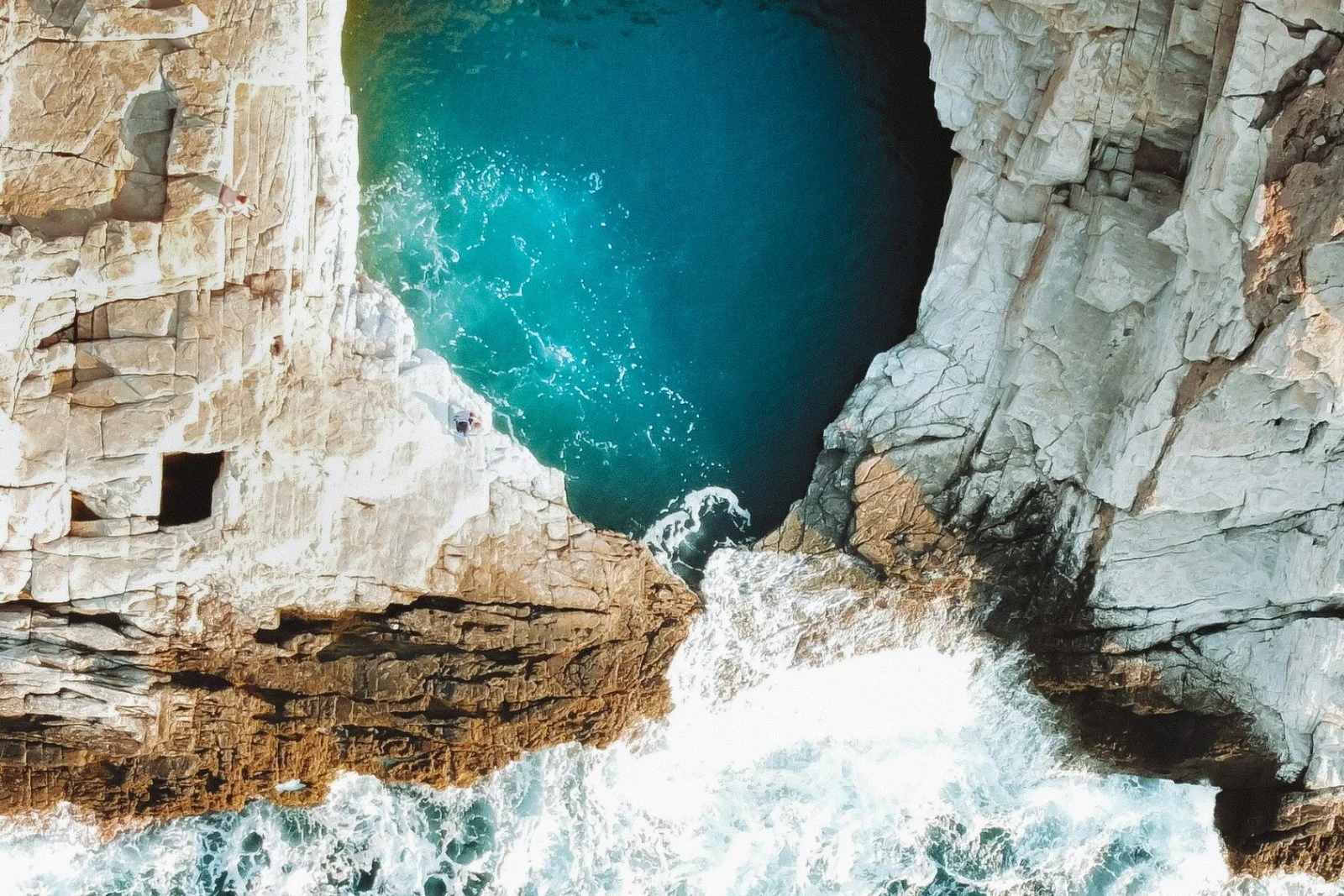
White marble, mineral coloration, and the geological evidence behind unusual colors in stone.
The Contrast Between White Marble and Blue-Green Color
Thasos is internationally associated with its bright white marble, a material valued for its appearance and use in architecture and sculpture. The idea of rare turquoise streaks running through its quarries presents a striking contrast: vivid blue-green markings against a predominantly pale stone.
Such a feature would attract attention from geologists, stone specialists, and collectors. Yet turquoise-colored markings should not automatically be identified as the mineral turquoise, and a specific occurrence in Thasos marble requires documented evidence.
What Gives Marble Its Color?
Marble forms when limestone or dolostone undergoes metamorphism. Heat, pressure, and chemically active fluids alter the original rock, allowing mineral grains to recrystallize into an interlocking structure.
Pure calcite marble is often white, but impurities can introduce gray, pink, green, or other colors. Graphite and other carbon-bearing materials may produce dark markings, while certain silicate minerals can create green tones.
Blue-green coloration is especially difficult to interpret from appearance alone. It may arise from a copper-bearing mineral, another accessory mineral, staining, or an external substance deposited along fractures.
Turquoise itself is a hydrated copper-aluminium phosphate mineral. Its formation requires a particular combination of chemical elements and conditions, so its presence cannot be assumed merely because a rock displays a turquoise hue.
Thasos and Its Marble Heritage
Thasos has a long history of marble extraction and use. Its marble has been important in ancient and modern contexts, and quarrying has shaped parts of the island's economic and cultural landscape.
A claim about unusual streaks in Thasos marble would need to specify the quarry, the geological layer, and the mineral identification. Without those details, it is impossible to determine whether the supposed streaks are natural inclusions, weathering features, or simply a descriptive interpretation of color.
Geologists would examine the surrounding marble, trace the streaks through the rock, and determine whether they follow fractures or occur as part of the original mineral structure.
Testing a Blue-Green Streak
Mineralogists use several methods to identify unfamiliar colored material. Optical microscopy can reveal texture and grain relationships, while chemical analysis helps establish elemental composition. X-ray diffraction or Raman spectroscopy can provide more definitive mineral identification.
A turquoise streak might prove to be a copper mineral, a green silicate, or a mixture of minerals. It could also turn out not to contain turquoise at all.
This distinction matters commercially as well as scientifically. A colored stone should not be sold or described as a gemstone solely on the basis of appearance.
Quarrying, Heritage, and Geological Documentation
Quarries provide opportunities to study rocks that may be difficult to examine in natural outcrops. Freshly exposed surfaces can reveal mineral veins, fractures, and changes in composition, although quarrying also raises questions about landscape preservation and responsible extraction.
If an unusual mineral occurrence were confirmed in Thasos marble, careful documentation could help establish whether it is isolated or part of a broader geological pattern.
Until reliable mineralogical evidence is available, turquoise streaks in Thasos marble remain an unverified premise. The island's real marble history is already remarkable, and a careful investigation of unusual coloration would add value without overstating what is known.







