Egypt has once again formally rejected the controversial 2019 maritime agreement between Turkey and Libya, submitting a new diplomatic note to the United Nations in which Cairo declared the memorandum null and void and warned that it would take measures to protect its maritime rights in the Eastern Mediterranean.
The note, dated November 5, 2026, was submitted by Egypt's Permanent Mission to the United Nations and published as General Assembly document A/81/479.
Egypt reiterated that it does not recognize the maritime delimitation memorandum signed between Turkey and Libya on November 27, 2019, arguing that the agreement has no legal effect and cannot undermine Egypt's sovereign rights.
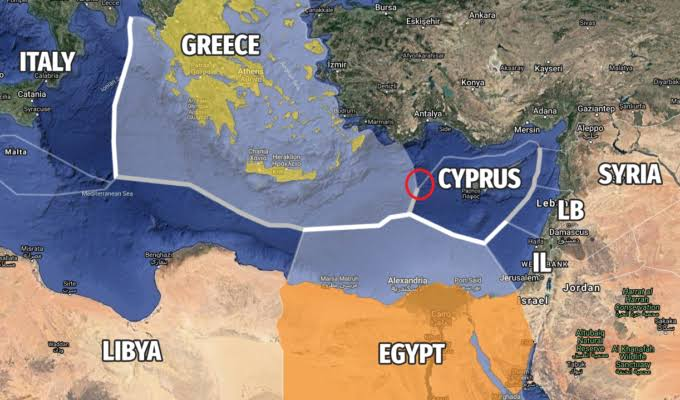
Cairo also challenged maritime boundaries unilaterally declared by Libya, arguing that they overlap with Egypt's western maritime limits and extend into areas that Egypt considers part of its own maritime zones, including its Exclusive Economic Zone (EEZ) and continental shelf.
Furthermore, Egypt rejected additional agreements between Turkey and Libya concerning energy cooperation, including the October 2022 hydrocarbons agreement and a June 2025 memorandum between Libya's National Oil Corporation and Turkey's Petroleum Corporation.
The diplomatic intervention follows a significant development on October 20, when Libya's eastern-based House of Representatives approved the 2019 maritime memorandum, reversing its previous opposition to the agreement.
The agreement, originally signed by Turkey and Libya's then Government of National Accord, has been strongly opposed by Greece, Egypt and Cyprus, among others. Athens argues that the arrangement disregards the maritime rights generated by Greek islands, particularly Crete and the Dodecanese, when determining maritime boundaries in the Eastern Mediterranean.
Egypt also emphasized that it reserves the right to defend its interests under international law and oppose any actions that infringe upon its declared maritime boundaries.
At the same time, Cairo expressed its willingness to negotiate with neighboring countries in good faith to reach mutually acceptable maritime boundary agreements based on international law and equitable solutions.
The latest diplomatic move highlights the continuing geopolitical tensions surrounding maritime boundaries, energy resources and competing territorial claims in the Eastern Mediterranean.