Introduction
Kavala, located on the northern Aegean coast of Greece, occupies a strategic position near important maritime routes connecting the Aegean islands, Thrace, and the Macedonian interior.
Its harbor has supported maritime activity for many centuries.
The possibility of Mycenaean trade amphorae in Kavala Harbor raises questions about Bronze Age commerce, seafaring, pottery production, and the movement of goods along the northern Aegean coast.
The subject requires chronological care. Modern Kavala developed around the ancient settlement of Neapolis, but the presence of a modern harbor does not establish that Mycenaean trading vessels or amphorae were recovered there. Any specific discovery must be supported by archaeological documentation.
The Mycenaean World
The Mycenaean civilization flourished during the Late Bronze Age, approximately between 1600 and 1100 BCE.
Its major centers included Mycenae, Pylos, Tiryns, and Thebes.
Mycenaean society developed monumental palaces, administrative systems, specialized craft production, and extensive trade connections.
The movement of goods across the Aegean was essential to its economy.
Maritime Trade in the Bronze Age
The Aegean Sea connected numerous islands and coastal settlements.
Ships transported pottery, metals, agricultural products, luxury goods, and raw materials.
Maritime trade allowed Mycenaean communities to obtain resources unavailable in their immediate surroundings.
It also encouraged cultural interaction between different regions.
The northern Aegean was important because it connected the central Aegean with the coastlines of Macedonia and Thrace.
What Were Amphorae?
An amphora is a vessel characterized by two handles and a relatively narrow neck.
Amphorae were used in different periods for storing and transporting liquids and other commodities.
Depending on their design and period, they could contain wine, oil, or other products.
The term covers a wide range of vessel types.
Not every large two-handled storage vessel should automatically be identified as a transport amphora.
Mycenaean Storage and Transport Vessels
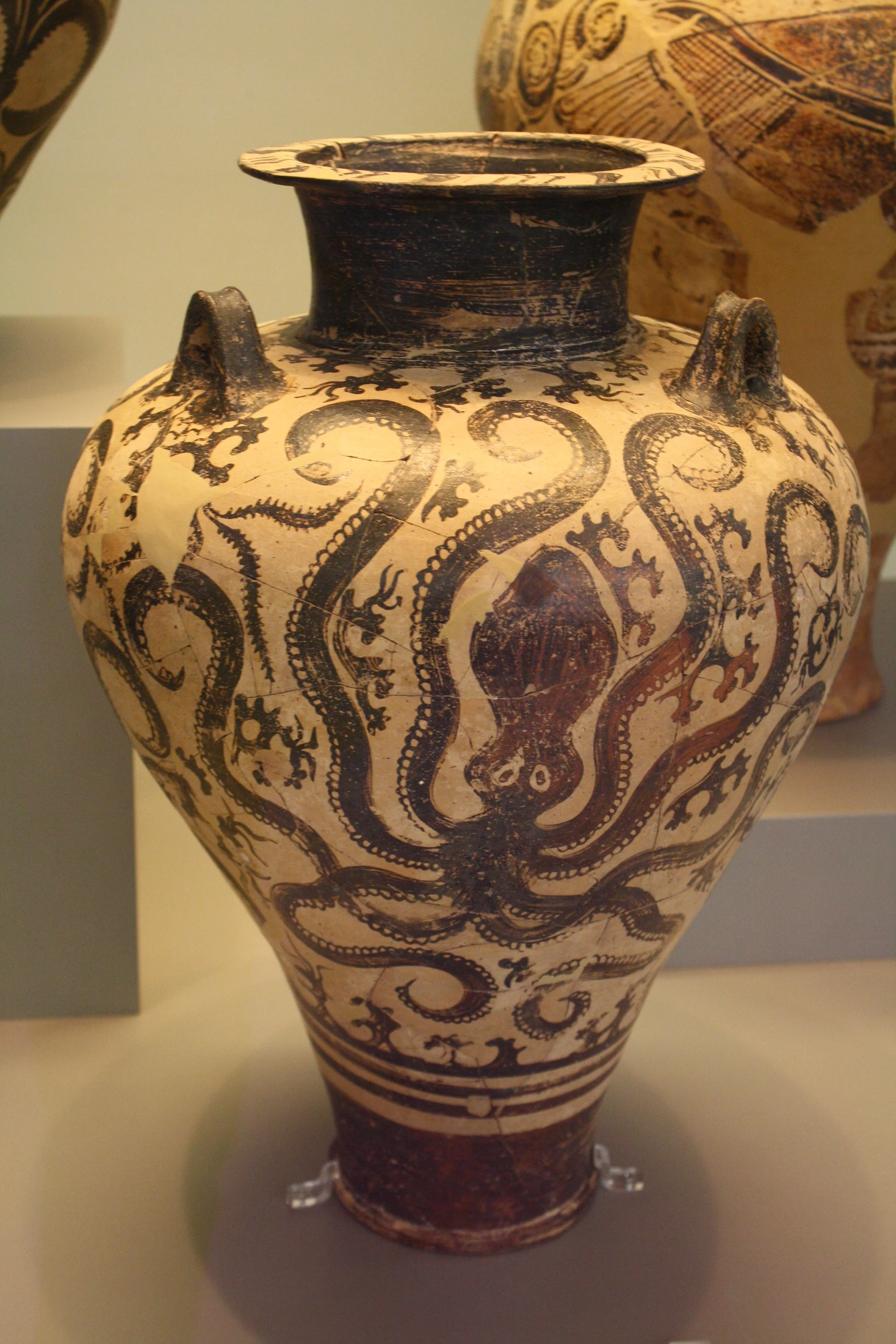
Mycenaean pottery production included several types of storage and transport containers.
Large vessels could be used for storing agricultural products and liquids.
Smaller containers were suitable for specialized commodities.
Some pottery was decorated, while other vessels were relatively plain.
Their shapes and manufacturing techniques can help archaeologists identify regional production traditions and chronological phases.
The Northern Aegean Connection
The northern Aegean provided routes between the Mycenaean world and communities farther north.
Trade and exchange did not necessarily involve direct voyages between major palatial centers and every coastal settlement.
Goods could pass through multiple intermediary ports.
Local communities could acquire Mycenaean objects through merchants, travelers, gift exchange, or other forms of contact.
The presence of Mycenaean pottery in a northern Aegean context would therefore provide evidence of regional interaction, but not necessarily of a direct Mycenaean colony.
Kavala and Ancient Neapolis
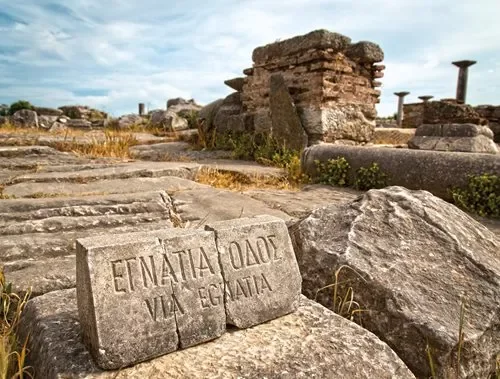
The ancient city of Neapolis occupied the area of modern Kavala.
It became an important coastal settlement in later historical periods.
Its location supported maritime communication with the Aegean and nearby mainland territories.
However, Neapolis is historically distinct from the Mycenaean world.
The chronological gap must be respected when investigating any proposed Bronze Age material from the wider area.
Identifying Mycenaean Amphorae
Archaeologists identify Mycenaean pottery through shape, fabric, decoration, and manufacturing techniques.
A vessel's profile can be compared with established Bronze Age ceramic typologies.
Clay analysis may help identify the region where it was produced.
Decorative patterns can also provide chronological clues.
Scientific analysis is particularly useful when vessels are fragmentary or lack distinctive decoration.
Shipwrecks and Harbor Deposits
A harbor can contain archaeological material from different periods.
Pottery may originate from shipwrecks, shoreline deposits, later construction, or discarded domestic material.
A group of Mycenaean sherds recovered underwater would need to be examined in relation to the surrounding sediment and any associated cargo.
A single fragment cannot establish the presence of a Mycenaean trading vessel.
A securely documented assemblage containing transport vessels and other cargo would provide stronger evidence.
Maritime Archaeology
Underwater archaeology can reveal trade networks that are difficult to reconstruct from land excavations.
Researchers document shipwreck remains, cargo arrangements, anchors, and associated objects.
Survey equipment can help identify submerged structures and buried material.
Sediment analysis may also reveal how harbor environments changed over time.
Any investigation in Kavala Harbor would need to consider modern port activity and the possibility that archaeological deposits have been disturbed.
Conclusion
Mycenaean trade amphorae associated with Kavala Harbor would offer valuable evidence for Bronze Age connections between the southern and northern Aegean.
Such material could help researchers investigate maritime exchange, pottery production, and the movement of goods toward Thrace and Macedonia.
Nevertheless, the specific presence of Mycenaean amphorae in Kavala Harbor requires secure archaeological documentation. Establishing the vessels' date, origin, and depositional context is essential before interpreting them as evidence of a Mycenaean trade route.