
Introduction
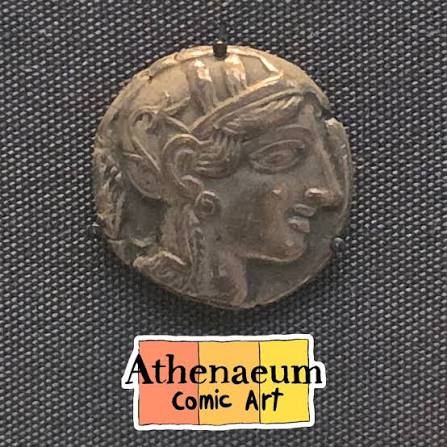
Athens has a long association with coin production, trade, collecting, and the study of ancient monetary systems. Greek coins are among the most recognisable objects in classical archaeology, with examples featuring gods, rulers, civic symbols, animals, and inscriptions.
The growth of digital technology has introduced new ways to document and represent cultural objects. One development is the use of non-fungible tokens, commonly known as NFTs, to create unique digital records associated with particular items.
The title Artifact NFTs from Athens Numismatic Auctions raises the possibility of connecting traditional numismatic auctions with blockchain-based documentation. Such a system could represent coins and other artefacts digitally while providing records of descriptions, ownership transfers, and associated images.
However, an NFT is not the artefact itself. It is a digital token whose meaning and legal effect depend on the information and rights attached to it.
Understanding Numismatic NFTs
Numismatics is the study and collection of coins, medals, and related monetary objects. Collectors and researchers examine coins for their metal composition, weight, dimensions, inscriptions, minting techniques, historical context, and provenance.
An NFT can be created to represent a particular coin or auction lot. Its metadata might contain:
A catalogue number.
A description of the coin.
High-resolution photographs.
Weight and dimensions.
Metal composition, where tested.
Historical attribution.
Provenance information.
Links to conservation and authentication records.
The token may also contain a reference to an external digital certificate or image repository.
Blockchain and Provenance
Blockchain technology uses a distributed ledger to record transactions. Once a transaction has been accepted and recorded, altering the historical record can be difficult, depending on the blockchain's design and governance.
For numismatic auctions, this could help document transfers between participating sellers and buyers.
For example, an auction house could issue a digital certificate associated with a coin. When the coin is sold, the token could be transferred to the buyer's digital wallet, creating a record of the transaction.
However, blockchain records do not automatically establish authenticity. If an incorrect description or false provenance is entered initially, the blockchain may preserve that inaccurate information rather than correct it.
Independent authentication remains necessary.
Legal and Ethical Considerations
Ancient coins and archaeological objects can be subject to complex ownership, export, import, and cultural-property laws.
An NFT does not automatically confer legal ownership of the physical object. Nor does purchasing a token necessarily provide copyright over its photographs or permission to reproduce its images.
A responsible system would need to state clearly:
Whether the NFT represents ownership, a certificate, or simply a digital collectible.
Whether the physical object is included in the sale.
Who holds legal title to the artefact.
Whether the item has documented provenance.
Whether its export and sale comply with applicable law.
This is especially important for archaeological objects because undocumented collecting and trafficking can damage historical knowledge and cultural heritage.
Potential Uses for Museums and Auction Houses
Digital tokens could support the documentation of collection histories and make certain records easier to share. Museums might use digital certificates to document authorised reproductions or educational digital collectibles.
Auction houses could use secure digital records to provide buyers with access to supporting documentation.
Nevertheless, the quality of the system would depend on the accuracy of the original catalogue data and the credibility of the institution issuing the token.
Environmental and Technical Limitations
Blockchain systems differ in their energy requirements. Some use energy-intensive consensus mechanisms, while others use more efficient methods.
Digital storage is another concern. An NFT may contain a link to an image rather than storing the image itself. If the external file disappears, the token may no longer provide access to the associated material.
Long-term digital preservation therefore requires stable hosting, redundant backups, metadata standards, and clear institutional responsibility.
Conclusion
Artifact NFTs associated with Athens numismatic auctions offer a possible way to connect traditional coin collecting with digital documentation. Their most useful role may be as supporting records for provenance and collection management rather than as substitutes for physical authentication or legal ownership. Transparency, cultural-property compliance, and reliable archival storage are essential.







