Introduction: The Unseen Weapons of the Polis
The idealized narrative of classical Greek warfare centers on the absolute transparency of the hoplite phalanx: two lines of heavily armored citizen-soldiers meeting in broad daylight on a flat, open field to contest a border through sheer physical strength and endurance. This formalized, rule-bound framework was celebrated as the pinnacle of civilized combat.
Yet, as the Peloponnesian War (431–404 BC) and the subsequent struggles for hegemony fractured the Greek world, military commanders rapidly abandoned these restrictive codes. Faced with the daunting task of breaching fortified stone cities and breaking the morale of disciplined armies, the Greeks weaponized two of the most volatile forces available to the ancient mind: fire and psychological terror.
Through early chemical engineering, tactical misdirection, and the calculated exploitation of religious and cultural anxieties, ancient Greek commanders proved that wars were not merely won by the impact of bronze on iron, but by consuming the enemy's resources and shattering their psychological will to resist.
1. The Tactical Incendiaries: Early Chemical Warfare
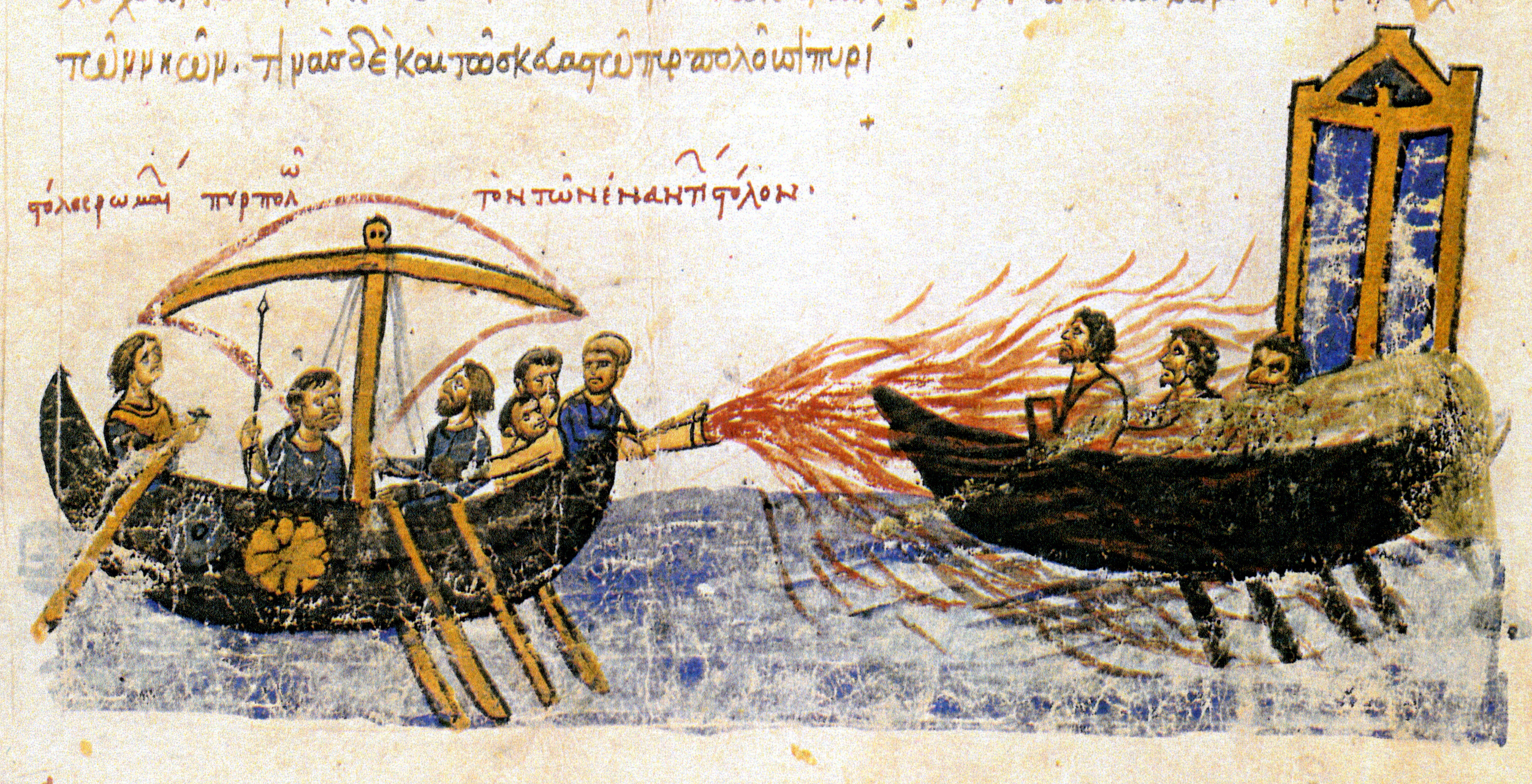
Before the invention of Byzantium’s famous "Greek Fire," classical Greek armies developed sophisticated incendiary mixtures designed to clear fortifications and burn enemy infrastructure to the ground.
The Pitch and Sulfur Matrix: During siege operations, attackers routinely packed large wooden barrels with highly flammable mixtures of crude pitch, charcoal, sulfur, and pine resin. These barrels were rolled against the wooden gates of a besieged city or thrown over the ramparts using early mechanical engines. Once ignited, this mixture produced an intense, clinging fire that was incredibly difficult to extinguish with water, alongside dense, toxic clouds of sulfur dioxide gas that forced defenders to abandon their battlements.
The Flamethrower of Delium (424 BC): At the Battle of Delium, the Boeotians engineered the ancient world's first documented tactical flamethrower to capture an Athenian-held fort. They hollowed out a massive wooden beam, lined it with iron sheets, and suspended a large cauldron at one end filled with burning charcoal, sulfur, and pitch.
A huge set of blacksmiths' bellows was attached to the back of the tube. When pumped vigorously, the bellows forced a high-velocity blast of air through the pipe, projecting a terrifying, roaring column of liquid fire directly against the wooden palisades of the fort, incinerating the defenders and causing the garrison to collapse in a panic.
2. Psychological Warfare: Cultivating "Panic" (Phobos)
To the Greeks, sudden, irrational terror on the battlefield was not a mere emotional failing; it was a divine affliction. The word "panic" itself derives from Pan, the goat-legged god of the wild, who was believed to possess the power to strike armies with an overwhelming, unexplained fear that caused soldiers to break ranks and flee. Greek commanders mastered the art of artificially manufactured panic.
The Sonic Onslaught: The psychological assault began before the lines even met. Greek armies used calculated noise to project overwhelming strength. The Spartans marched to the slow, relentless, eerie rhythm of double-flutes, a cold display of absolute discipline meant to unnerve their opponents. Conversely, the Athenians and Thebans advanced while shouting the ala-la—a deafening, synchronized war cry accompanied by the rhythmic clashing of spears against bronze shields, creating a wall of sound designed to terrify the enemy's horses and fracture the resolve of the frontline troops.
The Spartan Terror Apparatus: Sparta's entire socio-political structure functioned as a psychological weapon. Their long, crimson cloaks (chlamys) were intentionally chosen to mask the sight of their own blood, projecting an illusion of invulnerability. The reputation of the Spartans—cultivated by tales of their refusal to surrender at Thermopylae—acted as an asymmetric psychological barrier; many provincial armies broke and ran the moment they saw the distinctive lambda ($\Lambda$) painted on the approaching Spartan shields, defeated by the myth before a single blow was struck.
3. Tactical Deception and Visual Illusions
Manipulating what the enemy saw on the horizon was a primary strategy used to induce panic and force premature retreats.
[ Visual Deception ] ──► [ Illusion of Overwhelming Numbers ] ──► [ Moral Collapse ] ──► [ Bloodless Victory ]
The Illusion of Mass Numbers: During the Second Messenian War, commanders who found themselves severely outnumbered utilized camp followers, women, and slaves to artificially inflate their battle lines. They equipped these non-combatants with sticks, cloaks, and mock shields, positioning them on distant hills or on the wings of the phalanx. To the opposing scouts, the dust clouds raised by these auxiliary lines gave the terrifying impression of a massive, fresh relief army arriving on the field, frequently triggering an immediate, bloodless retreat.
The Epaminondas Pincer Feint: At the Battle of Leuctra (371 BC), the Theban general Epaminondas shattered the Spartan line not just through physical force, but through high-level cognitive deception. He deliberately stacked his left wing 50 shields deep while keeping his right wing weak and held back. By continuously shifting his cavalry in front of his lines to kick up blinding clouds of dust, he masked his radical troop movements, preventing the Spartan command from seeing where the heavy hammer-blow was going to fall until it was already crashing through their lines.
4. Sacrilege and Cultural Terror
Because the Greeks were deeply religious, the ultimate form of psychological warfare involved weaponizing the supernatural and exploiting spiritual anxieties.
The Desecration of the Dead: In the moral code of the Greek polis, ensuring a proper burial for fallen warriors was an absolute, sacred law. Commanders regularly exploited this by refusing to grant a truce for the collection of the dead (ancresis) following a battle, or by hanging the captured armor of fallen heroes on trophy posts (tropaia) in plain view of the besieged city. Witnessing the bodies of their brothers-in-arms left to rot or be picked apart by carrion birds inflicted a devastating moral wound on the surviving population, breaking their spiritual resolve to continue fighting.
The Manipulation of Omens: Commanders routinely used the religious ritual of the sphagia (pre-battle animal sacrifice) to manipulate their own troops and terrify the enemy. If a general wanted to delay a battle to wait for reinforcements, the state seers would conveniently declare the animal's liver to be "unfavorable." Conversely, during the Battle of Plataea, the Spartan regent Pausanias deliberately forced his men to stand still under a hail of Persian arrows, refusing to engage until the sacrifices yielded a favorable sign. The sudden, dramatic announcement that the gods had blessed the line triggered a fanatic, psychological surge among the Spartans, who charged forward with a terrifying religious fervor that broke the Persian vanguard.