The Importance of Fortifications in Ancient Greece
In ancient Greece, fortifications were the architectural backbone of the polis (city-state). Far more than just physical barriers, city walls, citadels, and border forts represented the sovereignty, security, and economic independence of the community. As military technology evolved, fortifications grew from rudimentary earth and wood barriers into highly sophisticated networks of stone, towers, and gates.
1. The Acropolis as an Initial Stronghold
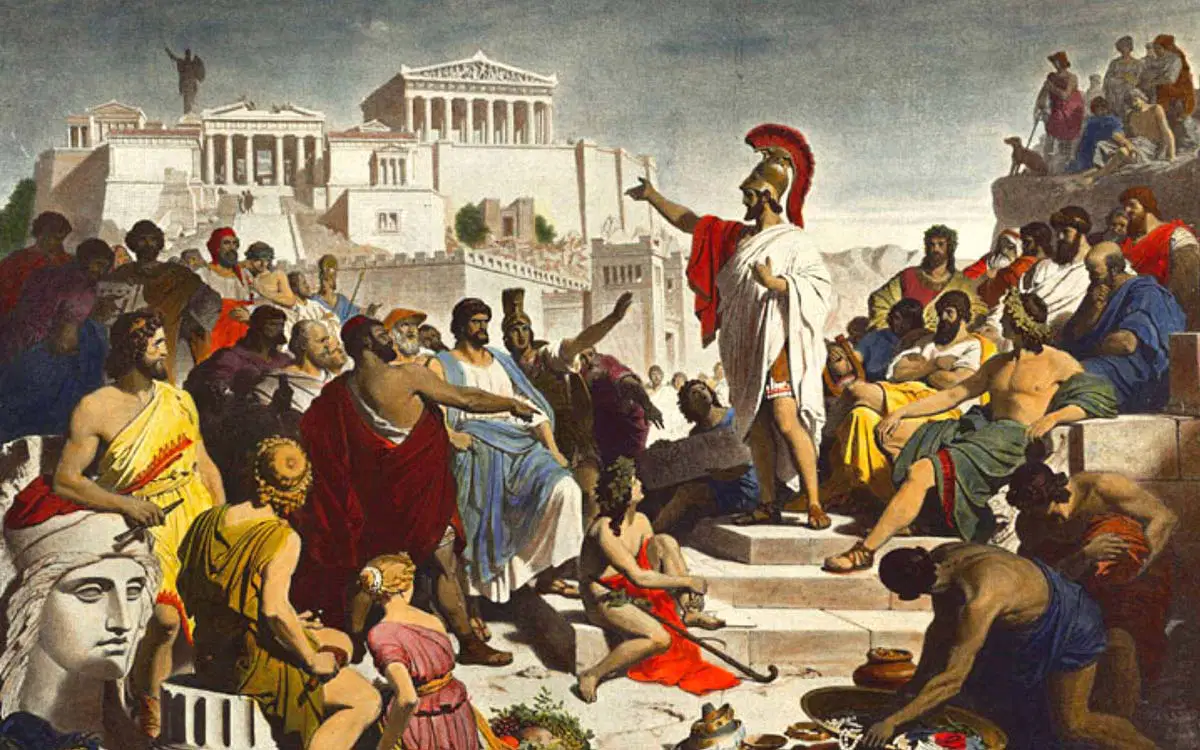
The earliest form of Greek fortification was the acropolis, or "high city." These naturally defensible elevated areas served as the core of many settlements.
Refuge of Last Resort: In times of invasion, the entire population of the countryside and city could retreat to the acropolis, which was equipped with its own water supply and defenses.
Religious and Civic Center: The acropolis often housed the city’s primary temples and treasuries, making it both a sacred and a strategic heart.
Historical Example: The Acropolis of Athens and the Acrocorinth of Corinth demonstrated exceptional natural defense that required long sieges rather than quick assaults to capture.
2. The Evolution of Circuit Walls
As populations grew and conflicts between city-states intensified, walls were built to enclose the entire residential and commercial area, not just the citadel.
Archaic to Classical Period: Walls were often constructed from mudbrick on stone foundations, offering protection against light infantry and sudden raids.
The Classical Innovation: Following the Persian Wars, cities like Athens built major defensive walls, such as the Long Walls, which connected the city to its port at Piraeus, ensuring access to trade even during a land siege.
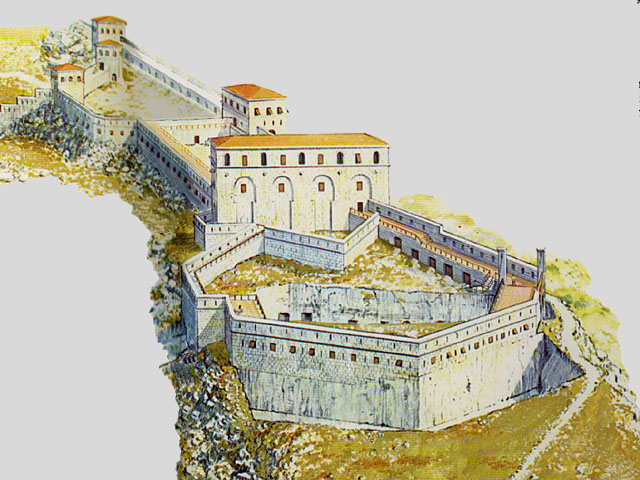
Hellenistic Refinements: In the 4th and 3rd centuries BCE, fortifications became much more complex, featuring ashlar (finely cut) masonry, projecting towers, and intricate gates designed to trap attackers in narrow killing zones.
3. Key Components of Greek Fortifications
Greek engineers developed specialized defensive architecture to counter evolving siege tactics.
Curtain Walls: The main vertical walls, often reinforced with rubble fill or built as double walls to absorb the impact of battering rams.
Flanking Towers: Positioned at regular intervals along the wall, these allowed defenders to fire missiles or hurl projectiles at the exposed right flank of attacking soldiers (who carried shields on their left arms).
The Dipylon Gate: A primary gate type that utilized a large interior courtyard, trapping attackers inside if they managed to break through the outer gate.
4. Strategic and Psychological Significance
Beyond their defensive utility in warfare, fortifications played a major role in the political and economic life of the polis.
Territorial Control (Phrouria): Border forts, or phrouria, were constructed at strategic passes and boundaries. They served as early-warning systems, watchtowers, and bases to project military power over neighboring territories.
Deterrence: Strong walls dissuaded potential enemies from attempting a campaign, effectively avoiding the destruction of surrounding farmland and economic infrastructure.
Psychological Stability: High, well-maintained stone walls provided citizens with a strong sense of civic identity and safety against the ever-present threat of enslavement or pillage.