Greek Philosophy and Science
Ancient Greek philosophy and science were deeply intertwined, emerging from a shift away from mythological explanations toward rational, empirical inquiry. Known collectively as philosophia (the love of wisdom), this pursuit of understanding the natural world laid the foundational concepts for modern scientific disciplines.
1. The Pre-Socratic Natural Philosophers
The earliest thinkers, primarily active on the Ionian coast and in Southern Italy, sought to explain the cosmos through underlying physical causes rather than the whims of the gods.
Thales of Miletus (c. 624–c. 546 BCE): Often considered the first philosopher and scientist in the Western tradition. He proposed that water is the fundamental principle (arche) of all matter and successfully predicted a solar eclipse in 585 BCE.
Democritus (c. 460–c. 370 BCE): Developed the earliest atomic theory, suggesting that all matter is composed of small, indivisible, and unchangeable particles called atomos.
2. The Classical Period: Logic and Empiricism
The classical era refined how knowledge was acquired and categorized, moving from pure speculation to structured logic and observation.
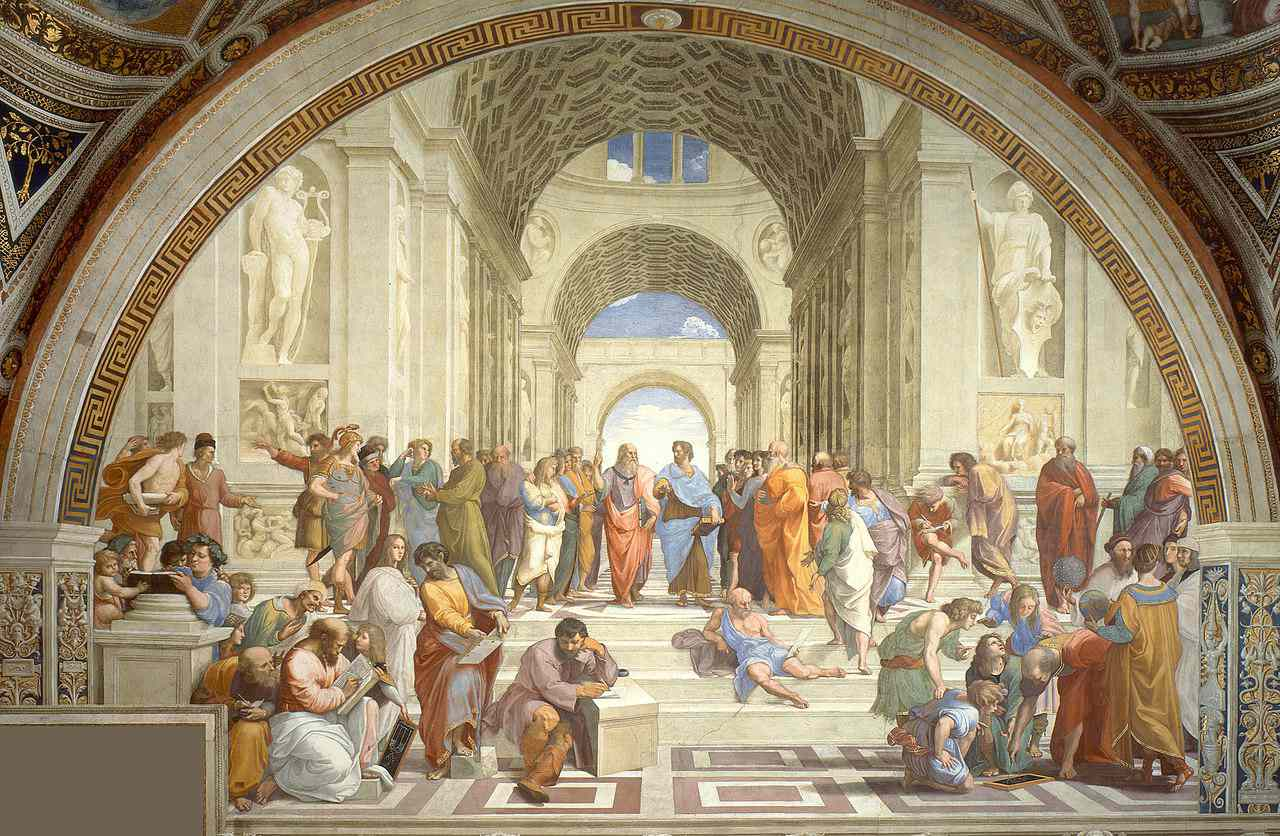
Plato (428–348 BCE): Founded the Academy in Athens. While primarily focused on metaphysics and the "Theory of Forms," he emphasized the supreme role of mathematics and geometry in understanding the true structure of reality.
Aristotle (384–322 BCE): Often called the father of the scientific method. He introduced systematic observation, the classification of biological species, and formal deductive logic (the syllogism). Aristotle's geocentric model of the universe dominated scientific thought for nearly two millennia.
3. Hellenistic Science and Engineering
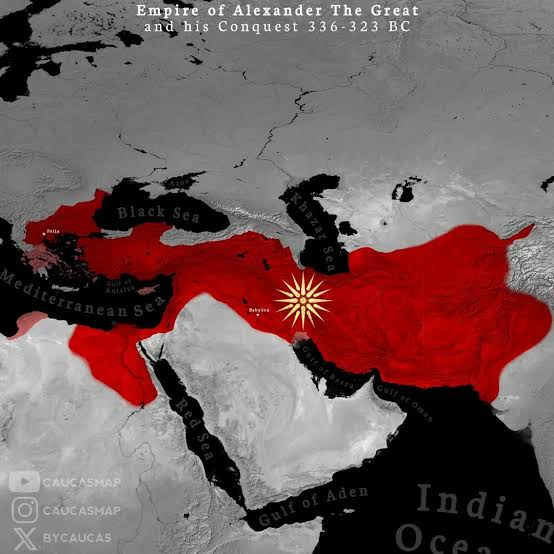
Following the conquests of Alexander the Great, the center of scientific advancement shifted to centers like Alexandria, Egypt, where theoretical concepts were applied to mechanics, geography, and mathematics.
Archimedes (c. 287–c. 212 BCE): A brilliant mathematician and engineer. He calculated an accurate approximation of Pi ($\pi$), formulated the laws of buoyancy (Archimedes' principle), and designed complex mechanical devices like the Archimedes screw.
Eratosthenes (c. 276–c. 195 BCE): Calculated the circumference of the Earth with astonishing accuracy using only the angle of the sun at two different locations.
Euclid (c. 300 BCE): Known as the father of geometry; his textbook Elements remained the standard geometric reference for over 2,000 years.