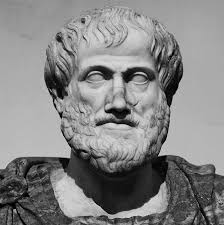
Aristotle’s Influence on Medieval Europe
For centuries following the fall of the Western Roman Empire, the majority of Aristotle’s works were lost to Western Europe, preserved primarily in the Byzantine Empire and the Islamic world. However, the 12th and 13th centuries witnessed a massive intellectual revival. The rediscovery and translation of Aristotle's treatises transformed the medieval worldview, laying the foundation for modern universities, Scholastic philosophy, and the development of the scientific method.
1. The Transmission and Translation Movement
The reintroduction of Aristotle to Europe was largely mediated by scholars in the Islamic Golden Age and the Byzantine Empire, who had translated and commented on his works.
The Arabic Commentators: Philosophers such as Averroes (Ibn Rushd) and Avicenna (Ibn Sina) wrote extensive commentaries on Aristotle. Averroes, in particular, was so influential in Europe that he was simply known as "The Commentator," while Aristotle was "The Philosopher."
Centers of Translation: Scholars flocked to translation hubs such as Toledo, Spain, and Sicily, where they worked to translate Aristotelian texts from Arabic and Greek into Latin. This effort made works on logic, metaphysics, and natural philosophy accessible to European scholars for the first time in centuries.
2. Scholasticism and the University Curriculum
The influx of Aristotelian texts revolutionized the newly emerging universities of Paris, Oxford, and Bologna.
The Curriculum: Aristotle's works became the core of the university curriculum, especially his treatises on logic (known collectively as the Logica Nova).
Scholasticism: Thinkers like Albert the Great and his student Thomas Aquinas integrated Aristotelian philosophy with Christian theology. Aquinas used Aristotelian logic and metaphysics to form a comprehensive theological system, Thomism, which reconciled faith and reason.
Historical Note: The integration was not without friction. Early 13th-century church councils initially banned the teaching of Aristotle's natural philosophy at the University of Paris due to concerns over its deterministic implications, but these bans were eventually lifted.
3. Natural Philosophy and Science
Aristotle’s influence extended far beyond logic and theology; his writings established the framework for the medieval study of the natural world.
Empirical Observation: Aristotle’s Physics, Meteorology, and De Caelo (On the Heavens) provided the conceptual framework for understanding physical systems.
Biological Classification: His treatises on biology and zoology introduced a methodology for observing and categorizing nature that remained an important baseline for naturalists until the Scientific Revolution.