To the ancient Greek mind, the universe was not a collection of chaotic, random events, but a highly ordered, deterministic tapestry woven by cosmic forces. This absolute cosmic order was governed by the Moirai, who were known as the Fates: Clotho the spinner, Lachesis the allotter, and Atropos the unturnable. Not even the Olympian gods, including Zeus, could alter the threads once cut. Because human life was entirely subject to this inescapable trajectory, known as Ananke, the practice of fortune-telling and divination became an essential tool for navigation, functioning as a formalized institutional science across all tiers of Greek society.
Divination operated on multiple systemic levels, ranging from domestic folk magic to massive, state-funded oracle complexes. At the civic level, the Oracle of Delphi was the absolute geopolitical center of the Greek world. The mechanism of divination here was highly biochemical. The Pythia, who was a consecrated priestess, sat upon a bronze tripod over a fissure in the temple floor. Modern geological surveys confirm that this fissure lay at the intersection of the Delphic and Kern fault lines, releasing intoxicating light hydrocarbon gases, specifically ethylene, methane, and ethane. Inhaling these vapors induced a trance-state, during which the priestess muttered phrases that the Delphi priests translated into ambiguous verse.
On the battlefield, fortune-telling was highly militarized. No Greek general would march across a border without consulting a seer who performed hieroscopy, which was the inspection of sacrificial animals. The most critical sub-discipline was hepatoscopy, the extraction and examination of the victim's liver. The seer meticulously analyzed the liver's lobes, the gallbladder, and the structures for discoloration or deformity. A missing lobe was interpreted as an absolute cosmic veto, sufficient to halt an entire army on the eve of battle, regardless of tactical superiority.
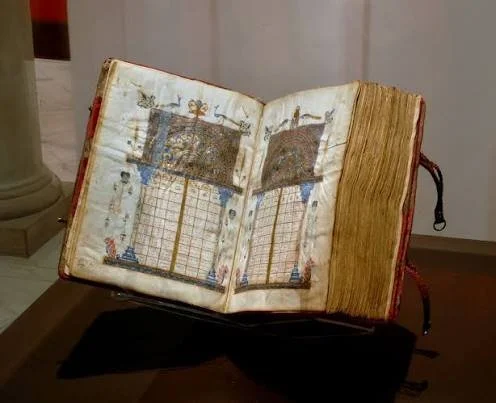
For the average citizen, daily choices relied on cleromancy, which involved casting lots, dice, or colored beans, and oneiromancy, which was the interpretation of dreams. Professional dream interpreters set up booths in urban centers, utilizing complex catalogs that mapped dream symbols to specific real-world outcomes. Far from being viewed as primitive superstition, the Greeks treated fortune-telling as an empirical, data-driven methodology. It was a structured attempt to read the operating system of the cosmos, providing psychological certainty in an unpredictable world and ensuring that human actions remained in perfect harmony with cosmic destiny.