In ancient Greek society, where literacy was limited and many people could not write their own names, a personal seal (sphragis) functioned as an individual's legal signature and proof of identity. Rather than signing documents by hand, people authenticated official records by pressing their engraved seals into wet clay or melted wax, leaving a unique impression that identified the owner. These seals were essential for verifying legal agreements, commercial transactions, and private correspondence, while also protecting important documents from tampering. Beyond paperwork, seals were commonly used to secure storeroom doors, storage jars, chests, and containers holding valuable goods such as grain, olive oil, wine, or precious metals. Breaking the seal immediately indicated that an item had been opened or altered without authorization, making the sphragis an effective tool for both authentication and security. Government officials, merchants, military commanders, and wealthy households relied heavily on seals to safeguard property and ensure the integrity of official communications.
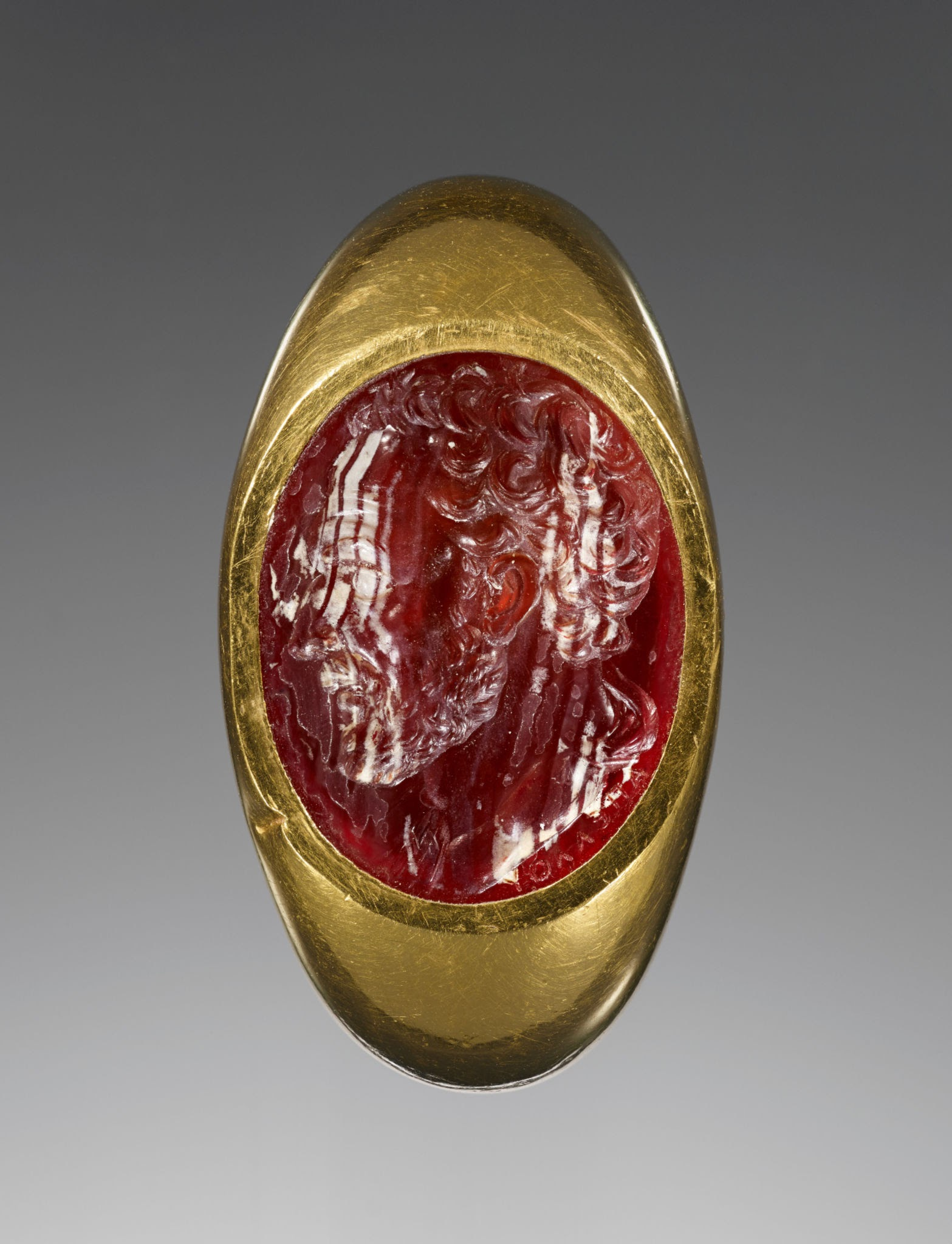
The creation of these seals was entrusted to highly skilled artisans known as glyptai, specialists in the art of gem engraving, or glyptic art. Their work required exceptional precision because the engraved image had to be carved in reverse so that it would appear correctly when stamped into clay or wax. Glyptai worked with durable and valuable materials, including semi-precious gemstones such as carnelian, chalcedony, jasper, onyx, and rock crystal, as well as cast bronze and solid gold signet rings for wealthier clients. These hard stones were prized not only for their beauty and durability but also because they produced sharp, detailed impressions that could withstand repeated use over many years.
Producing an engraved seal demanded advanced craftsmanship and specialized tools. Gem-cutters employed bronze bow-drills fitted with abrasive materials such as diamond dust or finely ground emery (Naxian stone) powder, which enabled them to slowly grind intricate mirror-reversed designs into the gemstone's surface. Since the stones themselves were much harder than bronze, the cutting was accomplished primarily through the abrasive action of these powders rather than the metal tool alone. The process was time-consuming and required a steady hand, keen eyesight, and considerable artistic skill, making expertly carved seals valuable possessions that often remained in families for generations.
The engraved imagery, or iconography, reflected the owner's identity, beliefs, profession, or social status. Some seals displayed personal emblems or family symbols that functioned much like coats of arms, while others depicted scenes from Greek mythology featuring gods, heroes, or legendary creatures. Portraits of rulers, respected individuals, or ancestors also appeared on certain seals, particularly during later periods. Symbolic animals such as lions, eagles, bulls, dolphins, and owls were especially popular because they represented qualities like strength, courage, wisdom, protection, or divine favor. These carefully chosen images transformed seals from simple administrative tools into personal works of art that conveyed identity, authority, religious devotion, and social prestige.
As a result, the sphragis served far more than a practical administrative purpose. It was simultaneously a legal signature, a security device, a symbol of personal identity, and a finely crafted artistic object. Combined with the exceptional skill of the glyptai, personal seals played a vital role in Greek administration, commerce, and daily life, ensuring trust, authenticity, and accountability in a society where written signatures were neither common nor practical.