The Central Act of Piety
Animal sacrifice, known as thysia, was the most important and sacred ritual in ancient Greek religion. More than simply offering an animal to a deity, it was considered the central act of worship through which humans established and maintained a reciprocal relationship with the gods. The ritual expressed charis, or mutual favor and goodwill, as worshippers honored the gods with offerings in the hope of receiving blessings, protection, prosperity, and success in return. Beyond its religious significance, thysia also reinforced civic unity by bringing together citizens, priests, magistrates, and families in a shared ceremonial event that strengthened both religious devotion and social harmony.
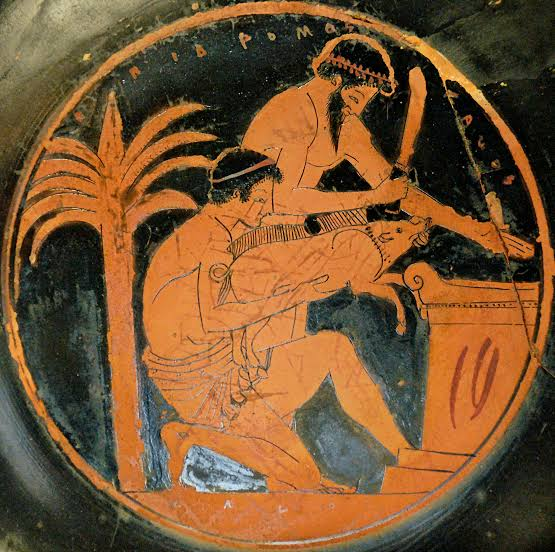
The ceremony followed a carefully prescribed sequence of rituals. It began with the procession (pompē), during which the sacrificial victim—typically a cow, sheep, goat, or pig—was decorated with garlands, ribbons, or wreaths and solemnly led through the streets to an outdoor altar (bōmos). Participants often carried baskets containing barley grains, sacred knives, and vessels of wine or water, while musicians played flutes and worshippers sang hymns in honor of the deity receiving the sacrifice. The procession transformed the event into a public display of communal piety, emphasizing that the offering was made on behalf of the entire community rather than by an individual alone.
Upon reaching the altar, the ritual entered the stage of preparation and sanctification. The priest sprinkled barley grains around the altar and onto the animal while holy water was poured over its head. The sudden sensation caused the animal to nod or shake its head, a movement interpreted as a symbolic sign of its willingness to participate in the sacrifice. This gesture was considered essential because it demonstrated that the offering was accepted voluntarily according to religious tradition, thereby ensuring that the sacrifice would be pleasing to the gods.
The next stage was the ritual slaughter (thysia) itself. The officiating priest first cut a small lock of the animal's hair and cast it into the sacred fire as an initial offering. The animal's throat was then swiftly cut in an act known as the sphagion, ensuring that death occurred as quickly as possible. During this solemn moment, the women present raised the ceremonial ololyge, a high-pitched ritual cry that marked the sacred transition between life and death and signified the successful completion of the sacrifice. The animal's blood, regarded as a powerful sacred substance, flowed onto the altar, symbolically dedicating the offering to the deity.
After the sacrifice, the animal was carefully butchered and divided according to long-established religious customs. The gods received their sacred portion in the form of the thigh bones (mēria) wrapped in rich layers of fat, which were placed upon the altar and burned. As the fat melted and the fragrant smoke rose toward the heavens, it symbolically carried the offering to Mount Olympus, where the gods were believed to dwell. This practice reflected the myth described in Hesiod's Theogony, in which Prometheus established the division between the divine and human portions of sacrificial animals.
The remaining edible meat, including the splanchna (the edible internal organs) and the animal's muscle meat, belonged to the human participants. Portions of the organs were often roasted first and consumed immediately by priests and leading participants as part of the sacred ritual, while the rest of the meat was roasted or boiled and distributed among the assembled citizens. For many ordinary Greeks, religious festivals were among the few occasions when they could regularly eat substantial amounts of meat, making the communal feast both a religious celebration and an important social event. By sharing the meal together, participants reaffirmed their bonds with one another and demonstrated that the sacrifice benefited the entire community.
Through every stage—from the solemn procession (pompē) to the altar preparation and barley sprinkling, the ritual slaughter (thysia), the burning of the thigh bones wrapped in fat for the gods, and the final communal feast—animal sacrifice united religious devotion, civic identity, and social cooperation. It embodied the Greeks' belief that honoring the gods through proper ritual was essential for maintaining divine favor, ensuring the prosperity of the city, and preserving harmony between the mortal and divine worlds.