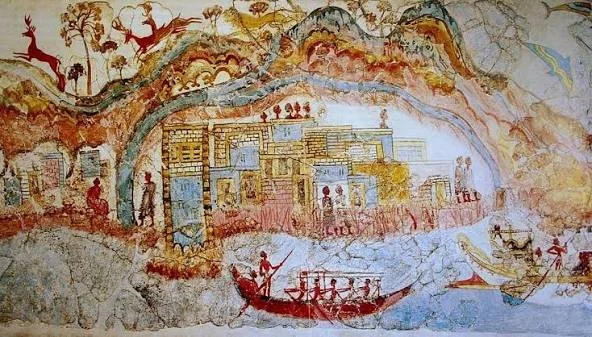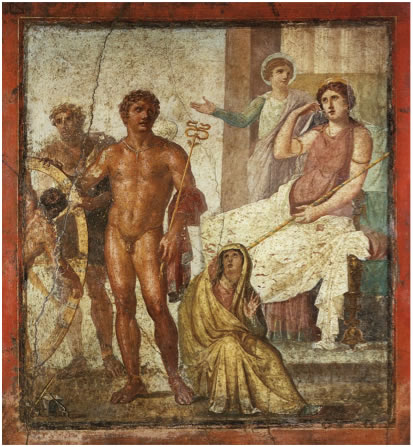
Greek painters employed a distinctive palette derived primarily from inorganic minerals, clays, and organic extracts, reflecting both the natural resources available to them and their advanced understanding of pigments. The classical four-color palette, or tetrachromacy, praised by Pliny the Elder, consisted of white, yellow, red, and black. White pigments were produced from melinum or cerusse, using chalky earth from the island of Milo or basic lead carbonate (lead white). Yellow was obtained from yellow ochre (sil), a natural hydrated iron oxide mined in regions such as Attica and Kea. Red pigments came mainly from sinopis, an iron oxide clay imported from Sinope on the Black Sea, while the more vibrant red hue was achieved using cinnabar, a mercury sulfide mineral. Black, known as atramentum, was created from carbon soot produced by burning pine resin, bones, or grapevine charcoal. In addition to the traditional four colors, Greek artists also used blue and green pigments, including Egyptian Blue, made from ground copper silicate glass (cyanos), and malachite, a naturally occurring green copper carbonate, to add greater variety and richness to their paintings.
Technical Application
Painters used two primary mediums:
Tempera (Fresco): Pigments ground in water and bound with egg white, animal glue, or gum arabic for wall murals and wooden panels (pinakes).
Encaustic: Pigments mixed into molten beeswax, applied with heated metal tools (cauteria). This technique produced luminous, highly durable paint used on marble statues, temple friezes, and ship hulls.