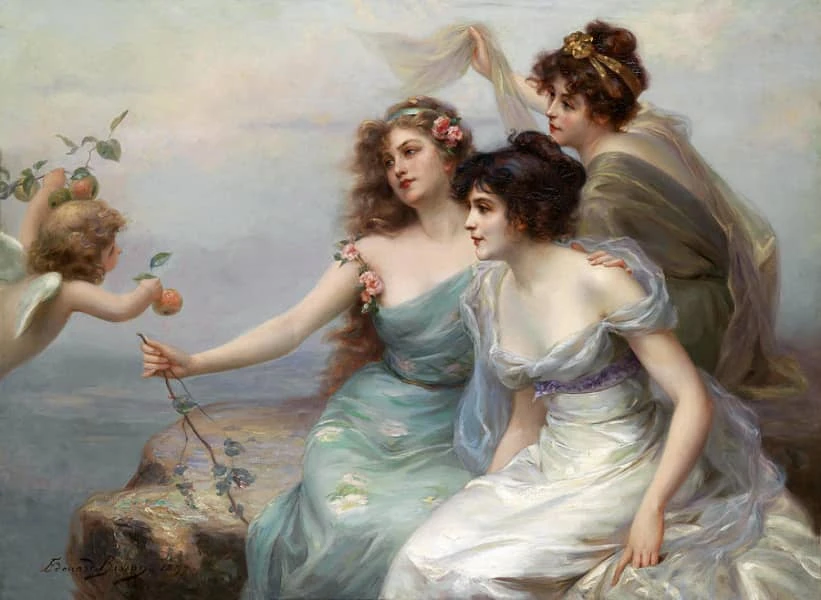
The Charites, more commonly known as the Graces, were minor goddesses who embodied beauty, charm, joy, grace, generosity, and goodwill. Usually depicted as three sisters—Aglaea ("Splendor"), Euphrosyne ("Mirth"), and Thalia ("Good Cheer" or "Blooming")—they were traditionally considered the daughters of Zeus and the Oceanid Eurynome, although some ancient traditions give them different parentage. The Charites were constant companions of Aphrodite, the goddess of love, and were closely associated with the Muses, often appearing together in myths celebrating music, poetry, dance, and artistic inspiration. Their presence symbolized harmony, elegance, and the blessings that made both divine and human life beautiful.
Beyond representing physical beauty, the Charites personified the Greek ideal of charis, meaning grace, kindness, gratitude, and reciprocal generosity. They inspired acts of hospitality, friendship, and mutual goodwill, encouraging people to give freely and receive gifts with gratitude. During banquets, weddings, religious festivals, and dances, the Charites were believed to bestow happiness, prosperity, and social harmony upon those who honored the gods and treated others with generosity. Artists frequently portrayed them as three young women dancing hand in hand, representing the continuous cycle of giving, receiving, and returning kindness. Through their association with beauty, creativity, and social cooperation, the Charites reminded the Greeks that true elegance was inseparable from virtue, generosity, and harmonious relationships.