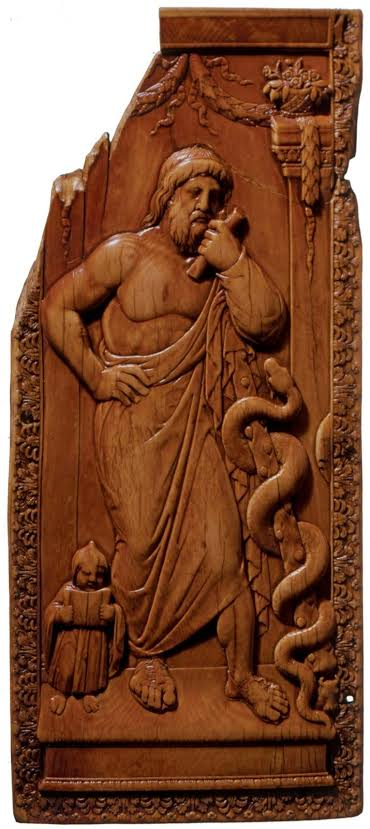
Asclepius was the Greek god of medicine, healing, and physicians, whose life illustrated the extraordinary power of knowledge as well as the limits imposed by the gods. He was the son of Apollo, the god of prophecy and healing, and the mortal princess Coronis. Before Asclepius was born, Coronis was unfaithful to Apollo, provoking the god's anger. As Coronis was dying, Apollo rescued the unborn child from her body, giving Asclepius his name and entrusting him to the wise centaur Chiron. Under Chiron's guidance, Asclepius mastered medicine, botany, surgery, and the healing arts, eventually surpassing every physician of his time.
Asclepius became so skilled that he could cure diseases previously thought incurable and, according to later myths, even restore the dead to life. Using his profound understanding of herbs, divine remedies, and the secrets of healing, he revived several legendary figures, including Hippolytus. This extraordinary ability disturbed the natural order established by the gods. Hades, ruler of the Underworld, complained to Zeus that Asclepius' actions reduced the number of souls entering his realm. Fearing that immortality would spread among mortals and upset the balance between life and death, Zeus struck Asclepius down with a thunderbolt.
Although Apollo was enraged by his son's death, Zeus later recognized Asclepius' immense contributions to humanity and elevated him to divine status as the god of medicine. Sanctuaries known as Asclepieia were established throughout Greece, where the sick sought healing through prayer, ritual purification, sacred dreams, and medical treatment. His enduring symbol, the Rod of Asclepius—a staff entwined by a single serpent—remains the internationally recognized emblem of medicine and healthcare today.