A team of researchers recently uncovered the remains of a 3,500-year-old settlement in Kom el-Negus, Egypt, located approximately 27 miles west of Alexandria. This groundbreaking discovery offers fresh insights into the region’s history, challenging earlier assumptions about its habitation timeline.
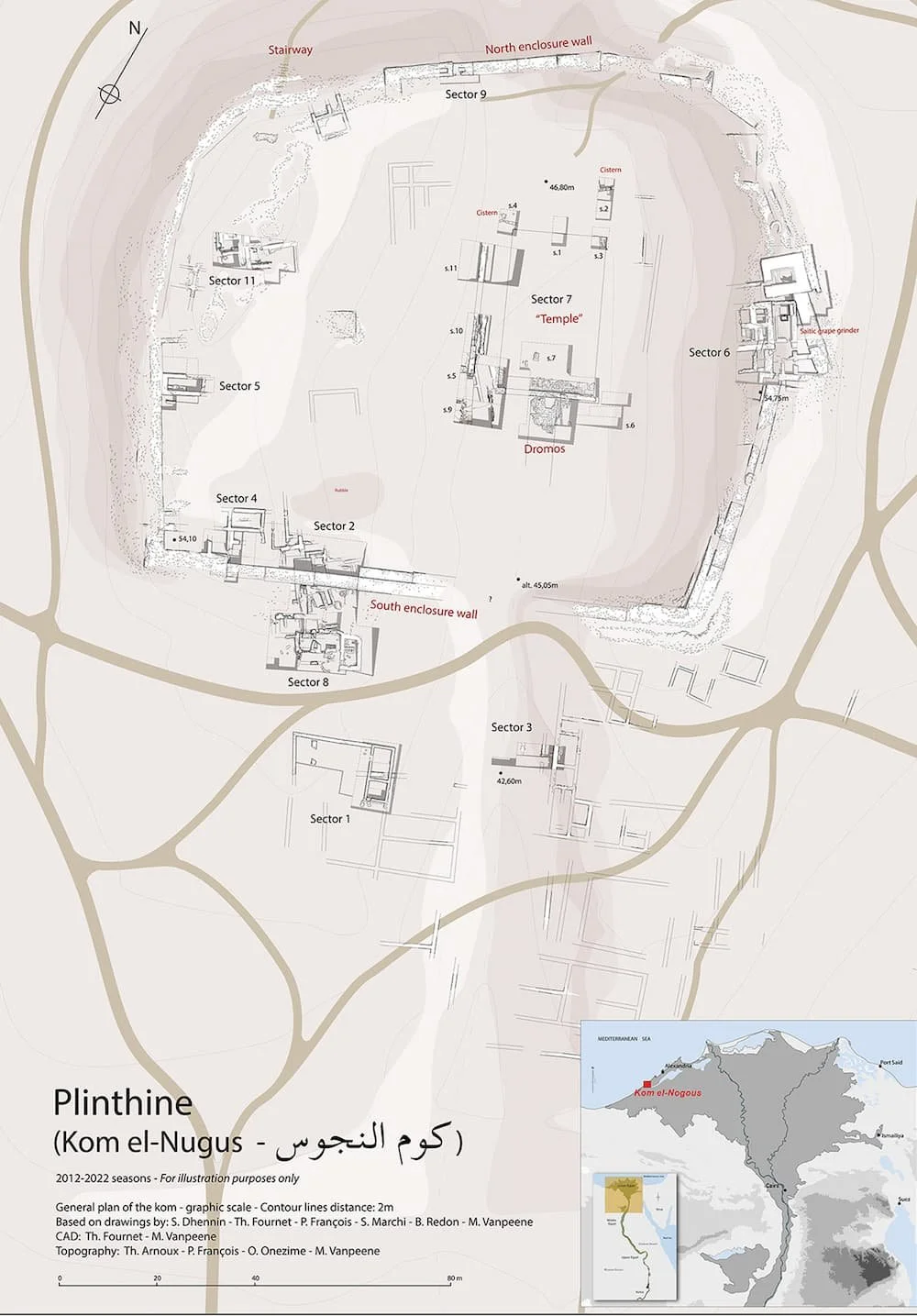
General plan and location of Kom el-Nugus. Credit: T. Arnoux, T. Fournet, P. François & M. Vanpeene / Mission Française de Taposiris Magna Plinthine
Revisiting Ancient Assumptions
For years, scholars believed that Kom el-Negus was primarily settled during the Hellenistic period (332–31 BC). However, the recent excavation, led by Sylvain Dhennin, has revealed that this area was home to human activity spanning multiple historical periods, including the New Kingdom of ancient Egypt. The unique horseshoe-shaped terrain of the site, known as a "Kom," lies between the Mediterranean Sea and Lake Mariout, making it a historically strategic location.
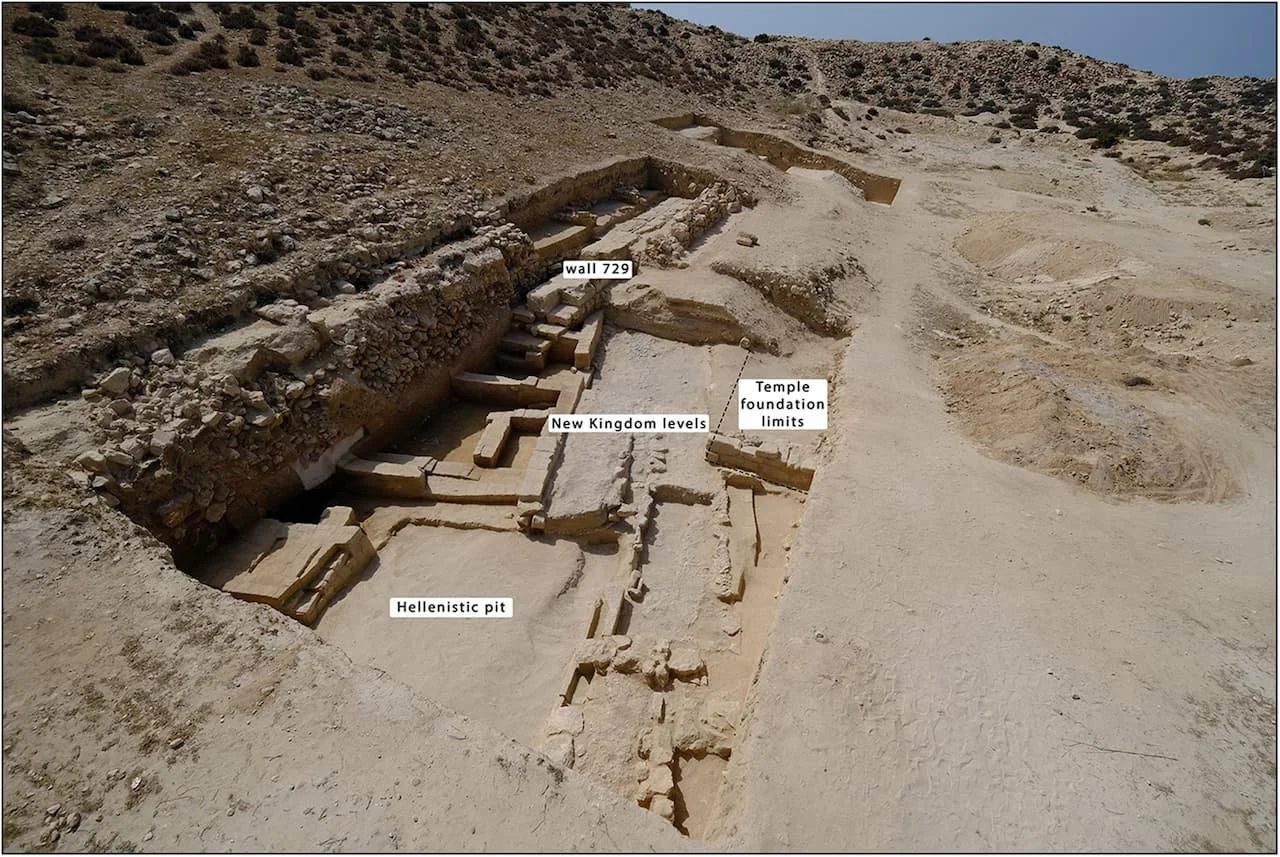
The Kom el-Negus Settlement near Alexandria, Egypt
Evidence of New Kingdom Occupation
A pivotal discovery was evidence of a settlement dating back to the New Kingdom (circa 1550–1069 BC). Among the artifacts unearthed was a jar cover bearing the name Meritaten, daughter of the famous Pharaoh Akhenaten and Queen Nefertiti. This suggests that the town’s origins can be traced to the 18th Dynasty (1550–1292 BC). Researchers believe the settlement was primarily agricultural, with signs of wine production being a central activity.
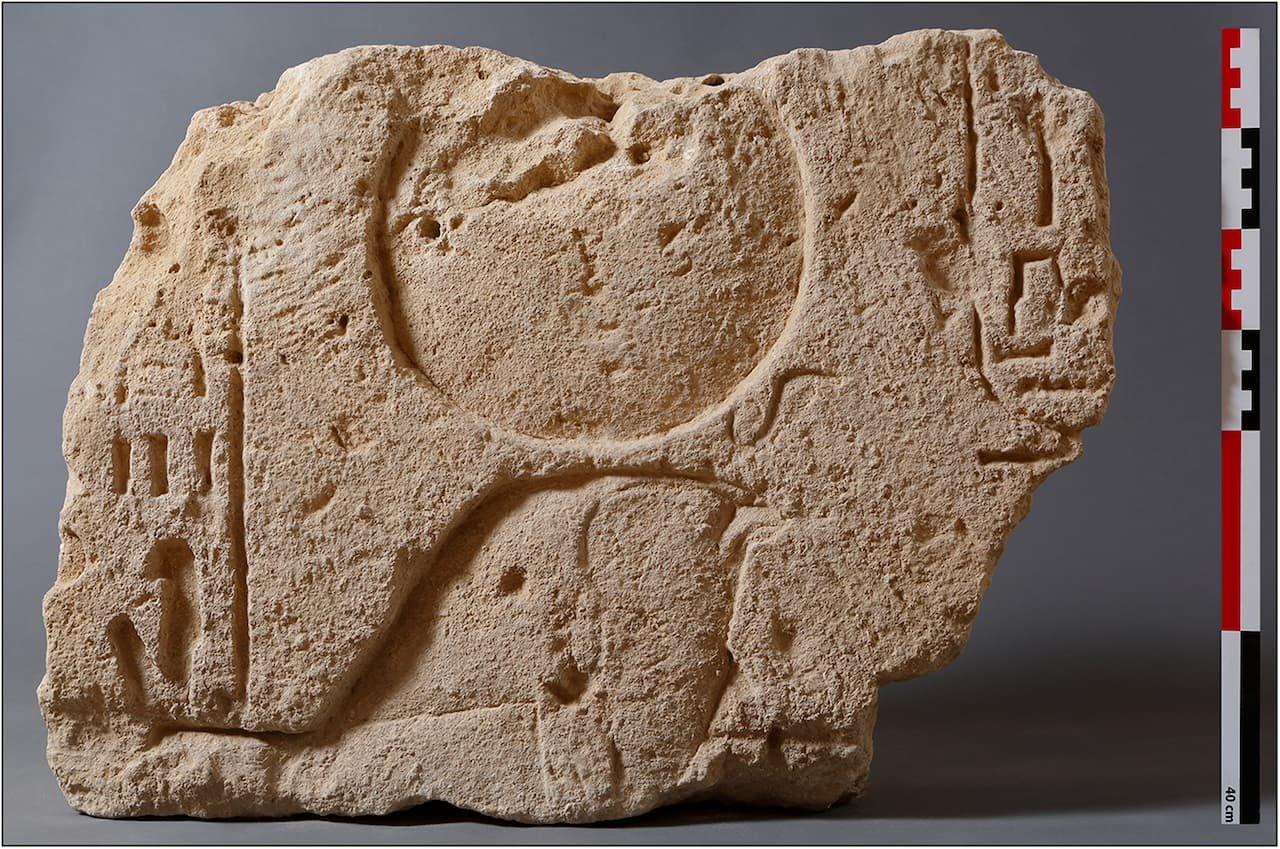
Block depicting Ra-Horakhty from the temple of Ramses II. Credit: G. Pollin / Institut Français d’Archéologie Orientale
Layers of History at Kom el-Negus
The research team’s findings indicate that the town underwent numerous phases of reconstruction as it was inhabited by different groups over time. Among the notable structures were:
Drainage Systems: Designed to protect the foundation walls of various buildings.
Multi-Purpose Buildings: Serving diverse functions, possibly including administrative and residential uses.
A Central Temple: Originally constructed during the Hellenistic period, this temple underwent significant transformations, with only its footprint remaining in the bedrock today.
Legacy of the New Kingdom Structures
Despite later modifications by Hellenistic settlers, remnants of earlier New Kingdom structures endured. Among these were:
A fragment of a stele inscribed with the cartouches of Pharaoh Seti II.
Stone blocks from a temple dedicated by Ramses II.
Fragments of private chapels dating back to the Ramesside period (1292–1069 BC).
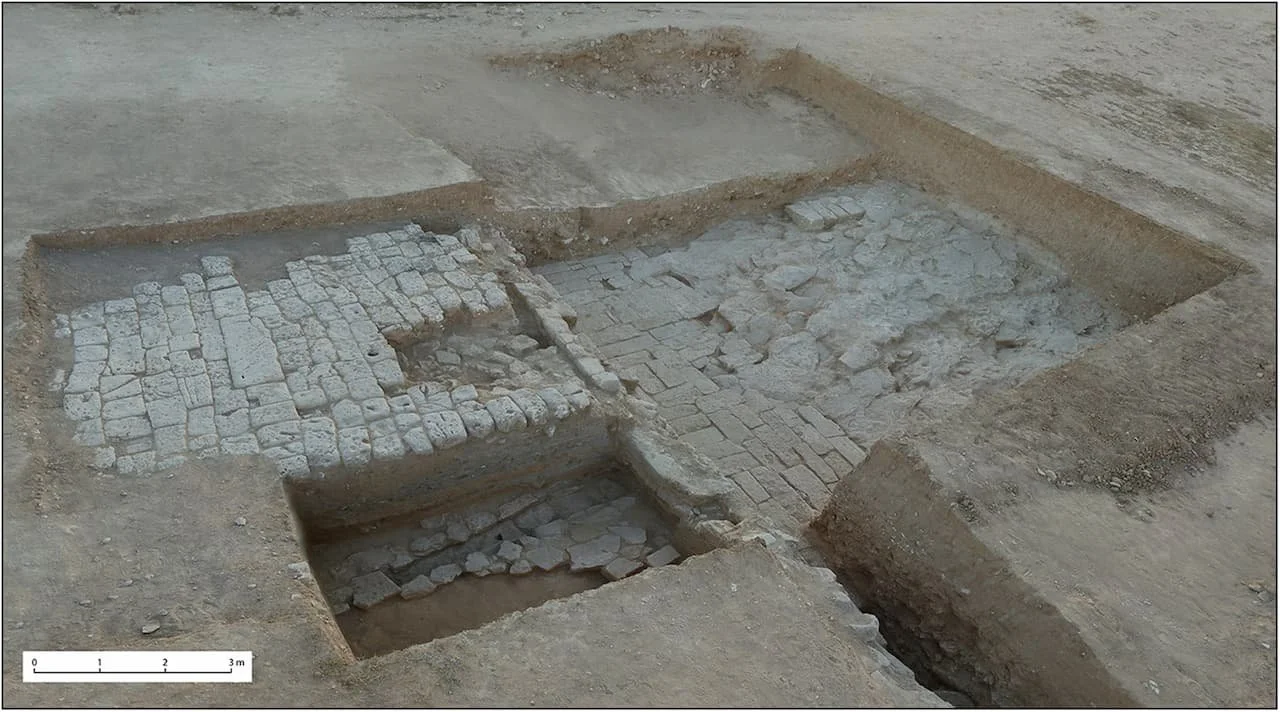
The temple area, viewed from the south-east. Credit: Pollin / Institut Français d’Archéologie Orientale
These reused elements provide a rare glimpse into the architectural and cultural practices of ancient Egypt.
Transformations During the Hellenistic Era
The arrival of Hellenistic settlers marked a period of significant change for Kom el-Negus. They repurposed or dismantled many of the earlier New Kingdom structures, integrating some components into their own constructions. This practice underscores the evolving nature of the settlement and its ability to adapt to the needs of its diverse inhabitants over centuries.
A New Chapter in Egypt’s History
The discovery of the 3,500-year-old town at Kom el-Negus is reshaping our understanding of northern Egypt’s ancient history. By uncovering evidence of continuous habitation from the New Kingdom to the Hellenistic period, archaeologists have highlighted the region’s historical significance and the enduring legacy of its early inhabitants. This finding not only enriches our knowledge of ancient Egyptian civilization but also underscores the importance of preserving archaeological sites for future generations.