1 Introduction and Historical Background
Tripods were among the most recognizable ritual and ceremonial objects in the ancient Greek world. Consisting generally of three supporting legs and a vessel or basin, they were used in religious ceremonies, sacrificial practices, feasting, and the presentation of offerings.
The ancient city of Pella, located in Central Macedonia, became particularly important during the Classical and Hellenistic periods. It developed into the capital of the Macedonian kingdom and eventually became one of the most prominent political and administrative centers in the eastern Mediterranean.
Although Pella is especially associated with its Hellenistic urban development, the city's earlier history provides an important context for examining the evolution of religious architecture and ceremonial objects.
The archaeological record identifies several sanctuaries within Pella, including the sanctuary of Demeter Thesmophoros, the sanctuary associated with the Mother of the Gods and Aphrodite, and the sanctuary of the local healing deity Darron. These religious establishments demonstrate the variety of cult practices within the ancient city.
Εγνατία+1
The Archaeological Importance of Tripods
Tripods held both practical and symbolic importance in ancient Greek society.
Their three-legged construction provided stability, while their elevated vessels allowed them to accommodate liquids, food, or ritual materials. Some examples were constructed primarily for ceremonial purposes and were elaborately decorated.
Tripods could be manufactured from bronze, iron, or other materials. Bronze examples were particularly important because the material allowed detailed casting, hammering, engraving, and decorative finishing.
Common components included:
A circular or bowl-shaped upper vessel.
Three supporting legs.
Connecting rods or crossbars.
Decorative attachments.
Handles or ornamental elements.
Some tripods incorporated animal-shaped feet, sculptural attachments, or patterned surfaces.
Religious Functions in Archaic and Classical Macedonia
Tripods were associated with religious offerings and the expression of devotion toward deities. In Greek sanctuaries, they could be dedicated as votive objects, commemorating victories, important events, or personal religious obligations.
The dedication of valuable objects demonstrated both individual piety and social standing.
A tripod presented to a sanctuary could represent a significant economic investment. Its material, weight, craftsmanship, and decorative complexity communicated the resources of its donor.
Within Macedonian religious settings, tripods should therefore be understood as objects operating within a wider system of ritual exchange between worshippers and divine powers.
2.4 Pella's Satellite Sanctuaries and Religious Landscape
The phrase satellite shrines can be used analytically to describe smaller sanctuaries associated with a major urban center. These religious establishments may have occupied agricultural areas, settlement boundaries, roads, or nearby communities.
Their location was significant because ancient religious life was not confined to monumental temples. Smaller shrines also provided opportunities for household worship, agricultural offerings, seasonal ceremonies, and community gatherings.
The Thesmophorion at Pella offers an especially important example of a modest sanctuary with a specialized religious function.
The sanctuary was organized around a circular enclosure with an altar at its center. Archaeologists also identified pits containing animal remains, including piglets, sheep, and goats, associated with the ritual activities of the Thesmophoria. The sanctuary was dedicated to Demeter and connected with agricultural fertility and seasonal renewal.
Εγνατία+1
Manufacturing Techniques and Artistic Characteristics
Bronze tripods were produced through several metallurgical processes. Casting was particularly important because it allowed craftsmen to create complex structural components.
The lost-wax technique was one possible method for producing intricate bronze forms. A model was prepared in wax, covered with a heat-resistant material, and heated to remove the wax. Molten metal was then poured into the resulting cavity.
After cooling, the object was removed, refined, and decorated.
Hammering and engraving could subsequently be used to modify the surface and improve the final appearance.
The decorative vocabulary of Greek bronze objects frequently included vegetal patterns, geometric compositions, animal figures, and mythological representations.
Tripods as Indicators of Exchange and Political Relationships
The movement of bronze objects across the Greek world demonstrates the importance of long-distance trade and elite networks.
Raw materials, finished objects, and technical knowledge circulated through commercial routes connecting Macedonia with the Aegean islands, southern Greece, Thrace, and the wider Balkan region.
Tripods could also serve as diplomatic gifts or prestigious possessions exchanged between powerful individuals.
Their appearance in archaeological contexts can therefore provide information about cultural relationships and the circulation of luxury goods.
Research Limitations and Archaeological Verification
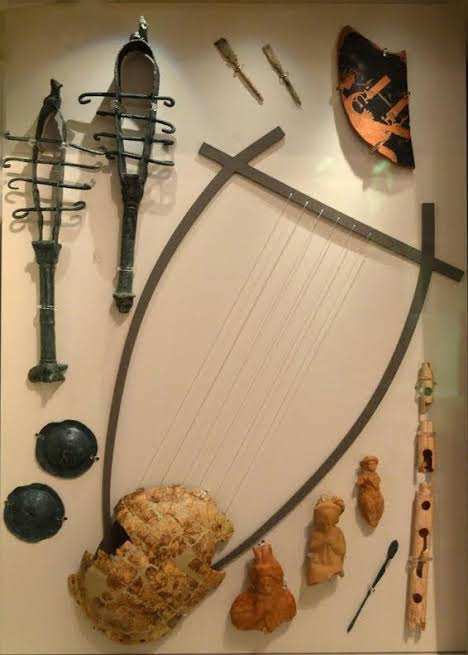
A specific assemblage described as Archaic Tripods from Pella Satellite Shrines requires verification through excavation records and museum catalogues.
The existence of sanctuaries at Pella is documented, but that fact alone does not establish that particular Archaic bronze tripods were recovered from satellite shrines.
Researchers should establish the original archaeological context, dating, material composition, dimensions, manufacturing characteristics, and associated inscriptions before assigning a specific interpretation.
Conclusion
Tripods provide an important avenue for understanding the relationship between religious practice, metallurgy, social prestige, and regional exchange in ancient Macedonia.
The sanctuaries of Pella demonstrate the complexity of religious life beyond monumental architecture. A systematic investigation of tripod-related finds, if documented in the relevant contexts, could further illuminate the ceremonial practices and economic resources of the communities associated with the Macedonian capital.