
Introduction
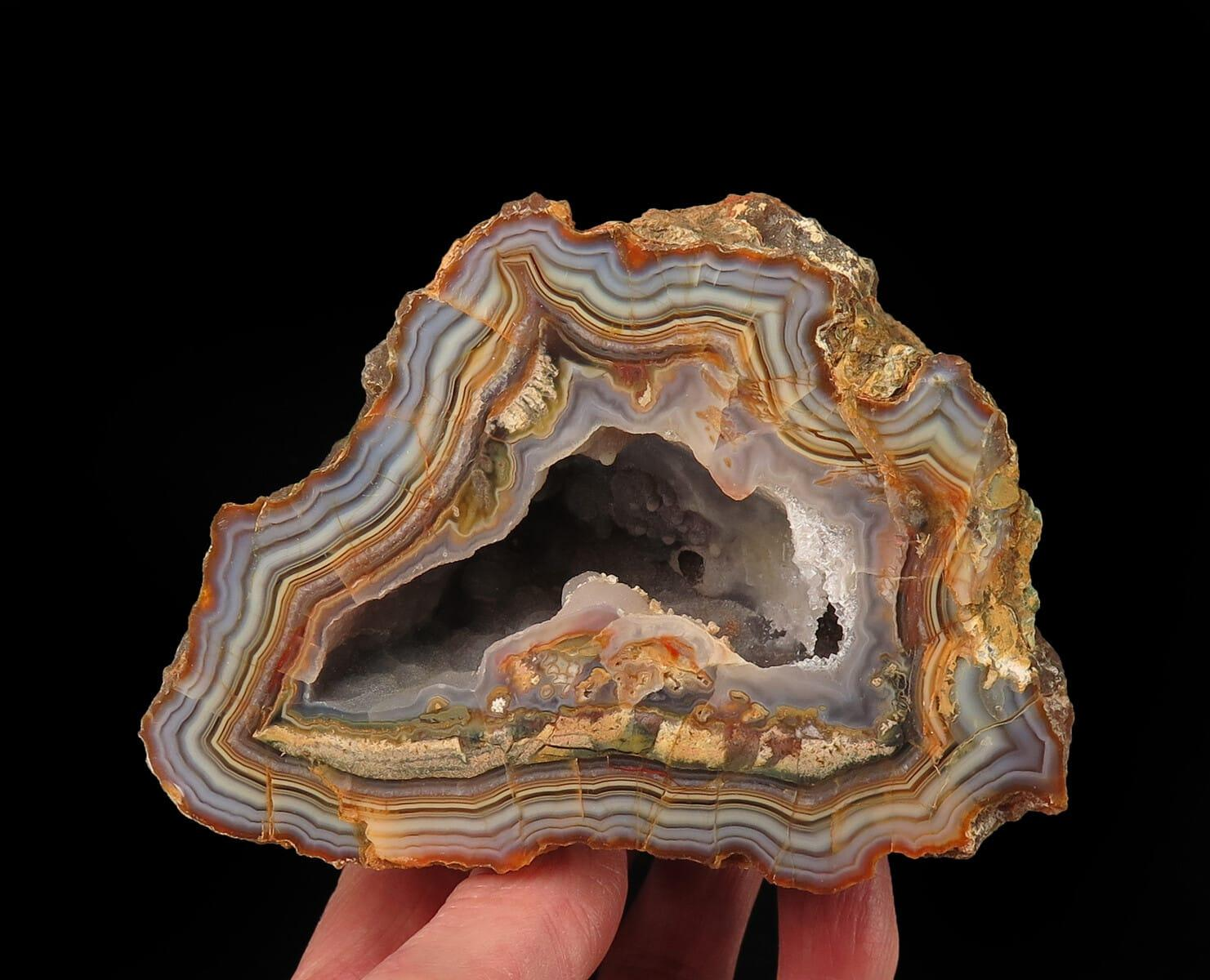
Agate is a variety of chalcedony characterized by its commonly banded appearance. It forms through the deposition of silica within cavities, fractures, and other geological spaces.
Karst landscapes are created through the dissolution of soluble rocks, particularly limestone and dolomite. They commonly contain caves, cavities, fractures, sinkholes, and underground drainage systems.
The idea of agate nodules beneath Antiparos karst presents a geological research topic involving silica deposition, cavity formation, groundwater circulation, and mineral preservation.
The specific agate nodules described in the title are not verified here.
Agate Formation
Agate commonly forms through repeated deposition of silica-rich materials within cavities.
The silica may be transported through groundwater or other fluids.
When chemical conditions change, silica may precipitate and gradually fill available spaces.
The process can create:
Concentric bands.
Layered deposits.
Nodules.
Cavity fillings.
Irregular silica structures.
The colors and patterns may result from impurities, mineral inclusions, and changes in deposition conditions.
Karst Environments
Karst develops through the dissolution of soluble rock by water.
In limestone environments, slightly acidic water may dissolve calcium carbonate and create cavities and fractures.
Over time, these processes can produce extensive underground drainage systems.
Karst cavities may later receive mineral-rich fluids that deposit silica or other minerals.
However, agate formation is not a universal feature of karst environments. It requires specific geological and chemical conditions.
Nodules and Cavity Filling
Agate nodules may form when silica is deposited within a cavity.
The deposition process may occur in multiple stages, producing layers that differ in composition, texture, and color.
Some nodules may contain central cavities lined with crystals.
The presence of a cavity or nodule does not automatically establish that it is agate. Mineral identification is necessary.
Geological Investigation
Researchers could examine possible agate nodules using:
Geological mapping.
Mineral identification.
Microscopy.
X-ray diffraction.
Raman spectroscopy.
Chemical analysis.
Examination of surrounding rock.
The relationship between the nodule and the host rock may reveal whether silica was deposited during the formation of the karst cavity or through later mineralization.
Geological Significance
Agate formation may record fluid movement and changes in chemical conditions.
The banding may preserve evidence of repeated mineral deposition.
The study of silica nodules may also contribute to understanding the geological history of the surrounding rocks and groundwater systems.
Conclusion
Agate nodules provide a useful subject for examining mineral deposition in geological cavities.
The proposed Antiparos occurrence would require field confirmation and laboratory identification to establish whether the material is agate and how it formed within the environment.







