
Introduction
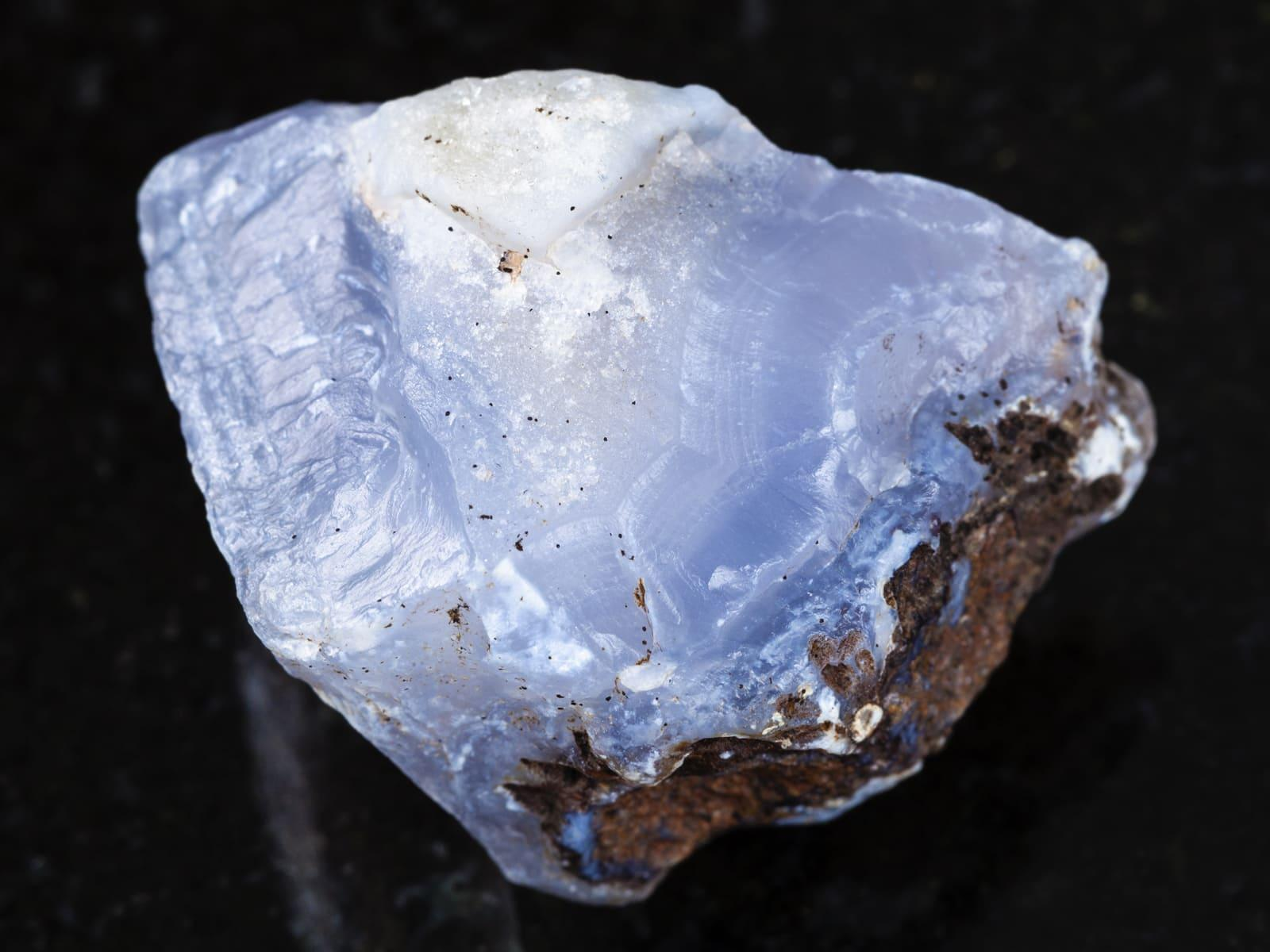
Chalcedony is a microcrystalline form of silica, commonly occurring in nodules, veins, cavities, and sedimentary or volcanic environments.
Its colors may range from white and gray to blue, brown, and other shades depending on impurities and structural characteristics.
The title suggests chalcedony beds associated with gravel bars along the Nestos River. The exact occurrence is unverified, but the geological setting provides an opportunity to explore silica deposition, river transport, and mineral accumulation.
Chalcedony Properties
Chalcedony is composed mainly of silica, SiO₂.
It differs from large, well-formed quartz crystals because its silica structure is composed of very small crystals and related microstructures.
Chalcedony may display:
Waxy luster.
Translucent or opaque appearance.
Smooth fracture surfaces.
Variable color.
Relative hardness suitable for many practical uses.
Agate, carnelian, and other varieties are commonly associated with chalcedony.
Formation
Chalcedony commonly forms when silica-rich fluids deposit material in cavities, fractures, or porous rocks.
The silica may originate from volcanic glass alteration, groundwater circulation, or other geological processes.
As silica-rich solutions move through rocks, changes in temperature, chemical conditions, or fluid composition may cause precipitation.
Deposits may form layers, nodules, veins, or cavity fillings.
River Transport and Gravel Bars
Gravel bars form through the movement and deposition of sediment within rivers.
Their shape and composition depend on river flow, sediment supply, channel geometry, and flood conditions.
Hard mineral fragments may survive transport while softer materials break down.
Chalcedony fragments could theoretically become concentrated in river gravels if they originate from upstream geological sources.
However, a concentration of chalcedony in gravel would not necessarily represent a bed formed in place.
Researchers must distinguish:
Primary mineral deposits.
Transported mineral fragments.
Sedimentary layers.
Secondary silica cement.
Natural concentrations created by river sorting.
Geological Investigation
Possible research methods include:
Sediment sampling.
Grain-size analysis.
Mineral identification.
Petrographic examination.
Geological mapping.
Chemical analysis.
Upstream source tracing.
These methods can help determine whether chalcedony formed locally or was transported from other geological formations.
River Dynamics
River systems continuously redistribute sediments.
Floods may erode older deposits and redeposit mineral fragments downstream.
Changes in channel position may create gravel bars containing materials from different geological sources.
The presence of chalcedony may therefore help researchers investigate sediment transport and the geological history of a river catchment.
Conclusion
Chalcedony in river gravel provides an opportunity to study silica mineral formation, river transport, sediment sorting, and geological provenance.
The Nestos River setting would require confirmation through field sampling and mineralogical analysis before specific chalcedony beds could be identified.







