
Introduction
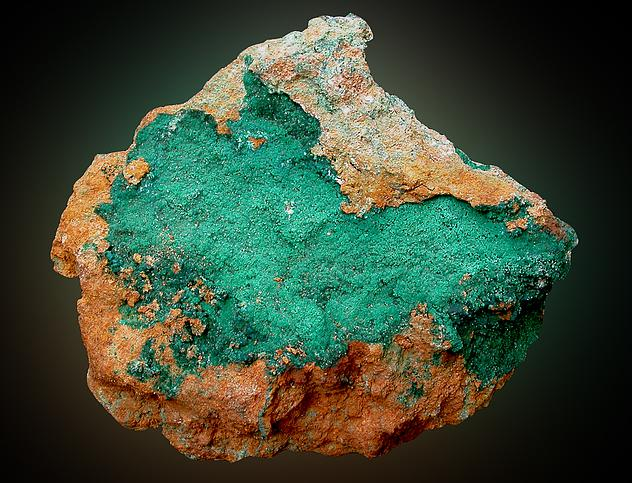
Malachite is a green copper carbonate mineral commonly associated with the oxidation of copper-bearing deposits.
Its distinctive color makes it one of the more recognizable secondary copper minerals. Malachite can form as crusts, fibrous aggregates, bands, coatings, and other structures along fractures and surfaces.
The title suggests malachite stains associated with ore veins in the Vitsi region. The specific occurrence is not verified here, but the subject provides an opportunity to examine copper oxidation, mineral alteration, and the development of secondary minerals.
Malachite Properties
Malachite has the chemical formula Cu₂CO₃(OH)₂.
It is commonly characterized by:
Green coloration.
Variable banding.
Fibrous or massive forms.
Relatively low hardness.
Association with oxidized copper deposits.
Its color may range from light green to darker green depending on the structure and appearance of the material.
Formation of Malachite
Malachite generally forms through secondary mineral processes involving copper-bearing materials.
When copper minerals are exposed to oxygen, water, and suitable chemical conditions, they may undergo oxidation and alteration.
The resulting solutions can transport copper and carbonate-bearing components.
Malachite may precipitate when chemical conditions favor the formation of copper carbonate hydroxide.
The process is influenced by:
Groundwater movement.
Oxygen availability.
Carbon dioxide.
Acidity and alkalinity.
Temperature.
Existing copper minerals.
Ore Veins and Mineral Alteration
Ore veins form when mineral-bearing fluids move through fractures and deposit minerals.
The minerals may be arranged in bands or zones reflecting changes in fluid composition, temperature, pressure, or the timing of mineralization.
Malachite may occur in the weathered or oxidized portions of copper-bearing veins.
Green staining can indicate copper-bearing minerals, but color alone cannot establish the presence of malachite.
Other copper minerals may produce similar colors.
Geological Investigation
Researchers studying possible malachite veins in Vitsi could use:
Geological mapping.
Mineral identification.
X-ray diffraction.
Raman spectroscopy.
Chemical analysis.
Microscopic examination.
Structural analysis of fractures and veins.
The surrounding rock and mineral assemblages may help determine the origin of the copper and the conditions under which alteration occurred.
Environmental and Safety Considerations
Copper-bearing mineral deposits may contain other metals or contaminants.
Mineral collection should not involve unprotected exposure to unknown ore materials, unstable quarry walls, or contaminated drainage.
Researchers should avoid disturbing mineralized areas without appropriate authorization and geological assessment.
Conclusion
Malachite provides a visible record of copper mineral alteration.
Its investigation in the Vitsi region would require confirming the mineral's identity and understanding its relationship to ore veins, groundwater, and surrounding rocks.







