
Introduction
Gypsum is a hydrated calcium sulfate mineral with the chemical formula CaSO₄·2H₂O. It commonly forms through evaporation of sulfate-rich water, although it may also develop through reactions involving calcium-bearing rocks and sulfate-rich fluids.
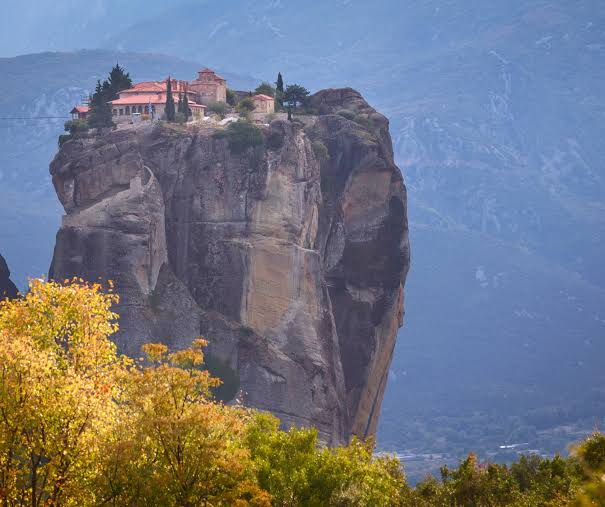
Meteora in central Greece is internationally recognised for its dramatic sandstone and conglomerate rock formations, as well as its monasteries built on elevated rock pillars. The possibility of gypsum crystals occurring within fractures or weathered surfaces of these cliffs raises questions about groundwater movement, mineral precipitation, and the long-term preservation of sandstone landscapes.
Geological Conditions
Sandstone is a sedimentary rock composed primarily of sand-sized mineral grains, commonly quartz, held together by natural cement. Its porosity and permeability allow water to move through the rock, although the degree of movement depends on cementation, grain size, fractures, and weathering.
Gypsum may form when calcium- and sulfate-bearing water becomes concentrated through evaporation. In sandstone environments, this can occur when groundwater migrates through fractures and leaves dissolved minerals behind as water evaporates.
Another possible mechanism involves sulfate produced by the oxidation of sulfide minerals. If sulfate-bearing water encounters calcium from carbonate cement or other calcium-rich materials, gypsum may precipitate.
Crystal Development
Gypsum crystals can develop in open fractures, pores, and cavities. Their size and shape depend on the available space, the rate of crystal growth, temperature, and the chemical composition of the water.
Some crystals may form as thin coatings, while others develop as larger transparent or translucent structures. However, the presence of white crystalline material does not establish that it is gypsum. Calcite, halite, and other minerals may appear similar in photographs or field observations.
Methods of Investigation
A geological assessment would include detailed mapping of visible mineral occurrences and the collection of small samples where permitted.
Useful analytical techniques include:
X-ray diffraction for mineral identification.
Raman spectroscopy for non-destructive or minimally destructive analysis.
Scanning electron microscopy for crystal textures.
Ion chromatography for dissolved sulfate in water samples.
Petrographic examination of the surrounding sandstone.
Researchers should also document whether the crystals occur in natural fractures, weathered surfaces, or areas affected by human activity.
Conservation Challenges
Meteora's cliffs are both geological formations and important cultural landscapes. Mineral growth and dissolution can affect rock surfaces, but attempts to remove crystals or alter fractures may cause further damage.
Gypsum is relatively soft and can dissolve in water. Repeated wetting and drying may therefore contribute to surface changes, especially where salts accumulate in porous rock.
Conservation assessments should distinguish natural weathering from damage caused by tourism, construction, pollution, and inappropriate cleaning methods.
Conclusion
Gypsum crystals in Meteora sandstone would provide a valuable case study in mineral precipitation and the interaction between groundwater and sedimentary rock. Their scientific importance would extend beyond mineral identification to questions about cliff weathering, salt movement, and cultural heritage conservation.







