
Introduction
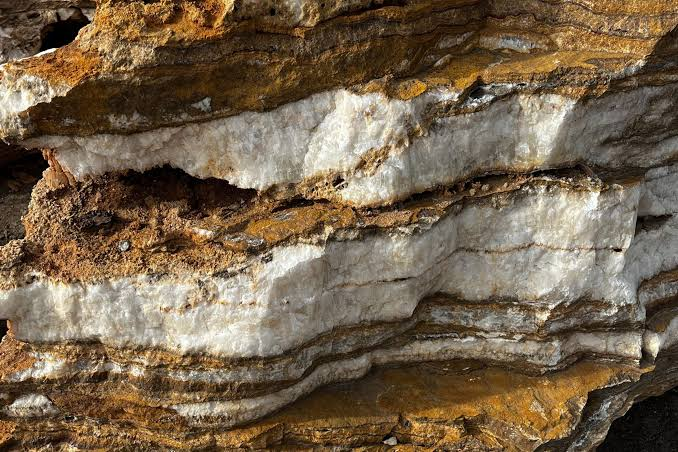
Onyx is a banded variety of chalcedony, a microcrystalline form of silica. It is commonly recognised by its contrasting layers, which may appear in white, black, brown, red, or other colours. The term is also sometimes used commercially for banded calcite or aragonite, which are technically different materials.
The Taygetus Mountains of the Peloponnese contain extensive limestone formations and complex geological structures. Their fractures and cavities provide potential pathways for mineral-rich groundwater. A proposed occurrence of onyx-like layers in Taygetus limestone fissures would therefore be relevant to the study of silica deposition, carbonate geology, and mineral-filled fractures.
Limestone Fractures and Mineral Transport
Limestone is composed mainly of calcium carbonate and is especially vulnerable to dissolution by slightly acidic water. Over long periods, groundwater can enlarge fractures and produce cavities, creating pathways through which dissolved minerals move.
Silica may enter these systems through groundwater interacting with silicate-bearing rocks or sediments. When chemical conditions change, silica can precipitate along fracture surfaces and form successive layers.
Banded chalcedony develops when silica-rich fluids deposit material repeatedly. Variations in trace elements, impurities, and growth conditions may produce visible colour differences.
Distinguishing Onyx from Other Banded Minerals
One of the main challenges in studying the proposed Taygetus occurrence would be determining whether the material is genuine siliceous onyx or banded carbonate material.
The distinction is important:
Chalcedony onyx: A microcrystalline silica material, relatively hard and resistant to ordinary scratching.
Banded calcite: A calcium carbonate material that is softer and reacts with dilute acid.
Banded aragonite: Another calcium carbonate mineral that may form layered deposits in caves and fractures.
Visual inspection alone is insufficient for a reliable classification. Mineralogical testing is essential.
Geological Investigation
Researchers would map fissure orientations and examine how mineral layers relate to the surrounding limestone. Samples could then be analysed using X-ray diffraction, Raman spectroscopy, and scanning electron microscopy.
Stable isotope analysis may also help investigate the source of fluids and the environmental conditions during mineral deposition. If multiple layers are present, their sequence could reveal repeated episodes of groundwater movement.
Scientific and Cultural Value
Confirmed chalcedony onyx in Taygetus could contribute to regional mineralogical documentation. It might also help explain the movement of silica-bearing fluids through carbonate formations.
If the material displayed attractive banding, it could attract interest from collectors or lapidary specialists. However, collecting from protected areas, caves, or unstable limestone fissures may damage geological features and should not be undertaken without appropriate authorisation.
Conclusion
The proposed onyx layers of Taygetus highlight the complex processes through which groundwater can deposit minerals inside limestone fractures. Confirming their composition would be the first step toward understanding their formation and assessing their geological significance.







