
Introduction
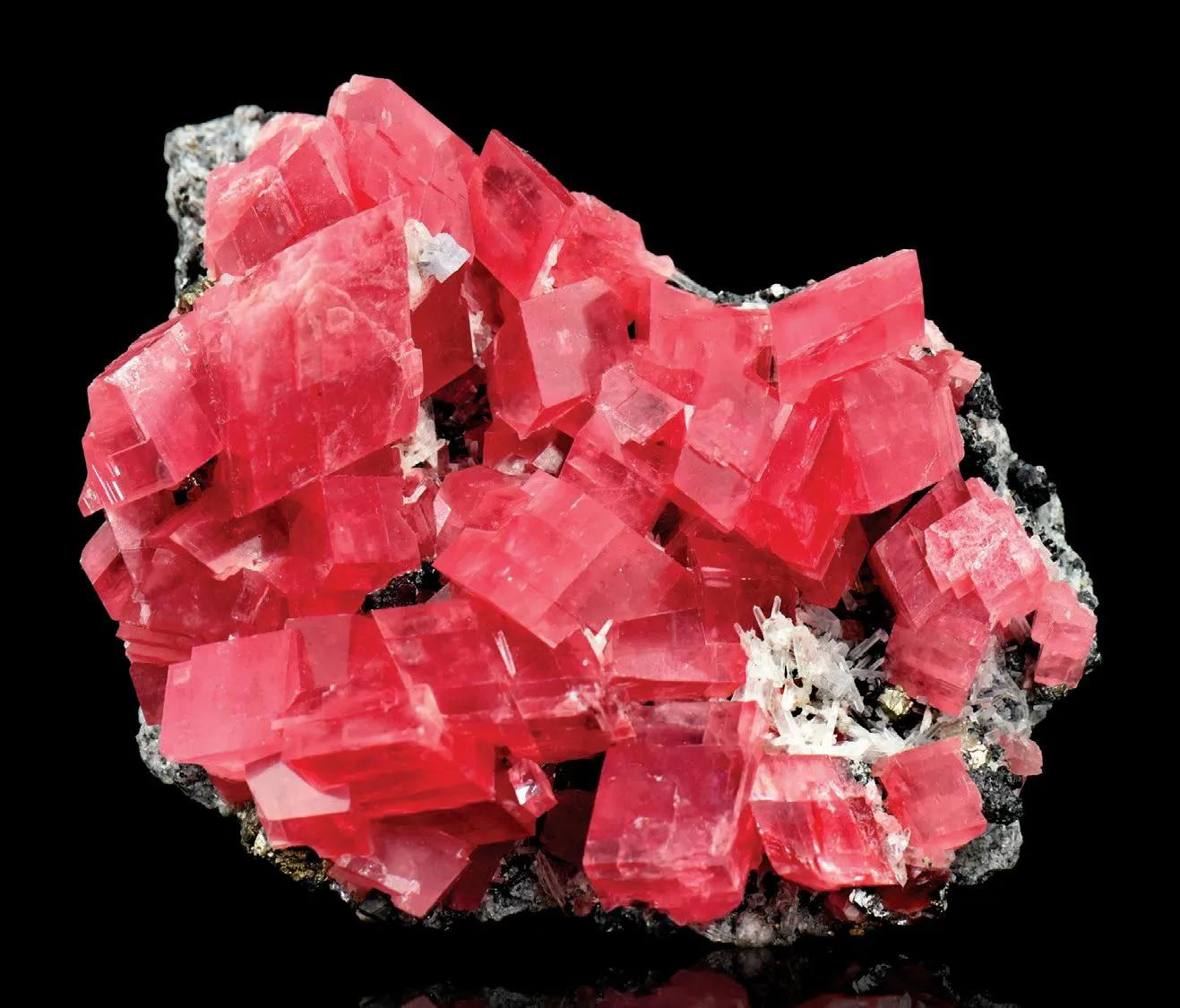
Rhodochrosite is a manganese carbonate mineral known for its pink to red coloration.
It commonly forms in hydrothermal environments and may occur in veins, cavities, and other mineralized settings.
The title suggests rhodochrosite associated with ultramafic rocks in the Olympus region. The exact occurrence is not verified here, but the topic offers an opportunity to investigate manganese mineralization, carbonate formation, hydrothermal processes, and the geological relationship between ultramafic rocks and secondary minerals.
Rhodochrosite Properties
Rhodochrosite has the chemical formula MnCO₃.
Its color may range from pale pink to deeper red, although impurities and structural variations can affect appearance.
Common characteristics include:
Pink to red coloration.
Carbonate composition.
Variable crystal forms.
Relatively low hardness.
Association with manganese-bearing geological environments.
It may occur as crystals, massive material, bands, or mineral coatings.
Manganese Mineralization
Manganese is a chemical element that occurs in a variety of geological settings.
Its concentration may develop through sedimentary processes, hydrothermal activity, weathering, and other mineral-forming mechanisms.
Rhodochrosite may form when manganese-bearing fluids encounter suitable carbonate conditions.
The mineral precipitation process depends on the availability of manganese, carbonate, and appropriate chemical conditions.
Ultramafic Rocks
Ultramafic rocks are igneous rocks characterized by a high proportion of magnesium- and iron-rich minerals and relatively low silica content.
Examples include peridotite and other mantle-derived rocks.
These rocks may undergo alteration when exposed to water and other fluids.
Hydrothermal processes can transform original minerals and create new mineral assemblages.
The relationship between ultramafic rocks and rhodochrosite would require investigation rather than assumption, because rhodochrosite is not a universal product of ultramafic alteration.
Geological Processes
The possible occurrence of rhodochrosite near ultramafic rocks could be investigated through the interaction of fluids, fractures, and chemical components.
Researchers would examine:
Fluid pathways.
Rock alteration.
Carbonate mineralization.
Manganese concentrations.
Mineral assemblages.
Geological structures.
The mineral's relationship to surrounding rocks may provide information about the origin of the deposit.
Scientific Investigation
Mineral identification could involve:
X-ray diffraction.
Raman spectroscopy.
Chemical analysis.
Petrographic microscopy.
Electron microscopy.
Geological mapping.
These techniques can help distinguish rhodochrosite from other pink minerals and carbonate materials.
Significance
Rhodochrosite is important for understanding manganese geochemistry and mineral formation.
Its presence in a particular geological environment may reveal information about fluid chemistry, alteration processes, and the movement of mineral-bearing solutions.
The study of manganese minerals can also contribute to broader research into mineral resources and geological evolution.
Conclusion
Rhodochrosite offers an interesting connection between mineralogy, carbonate chemistry, and geological alteration.
The proposed Olympus occurrence would require confirmation through mineralogical and geological investigation, particularly to establish whether the mineral is associated with ultramafic rocks and how it formed.







