A volcano long believed to be extinct in Greece is now raising serious scientific concern—not because it has erupted, but because it never truly went quiet.
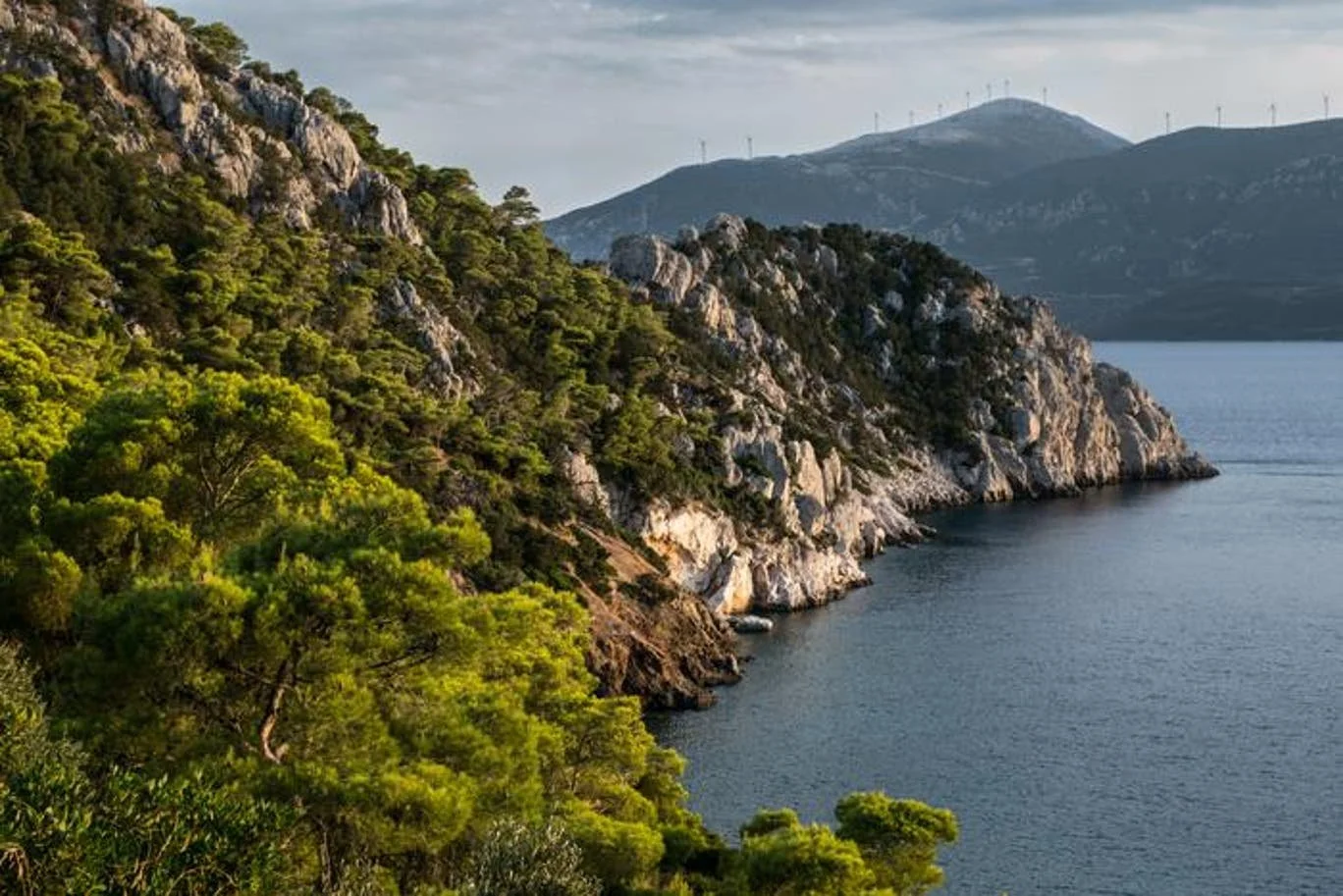
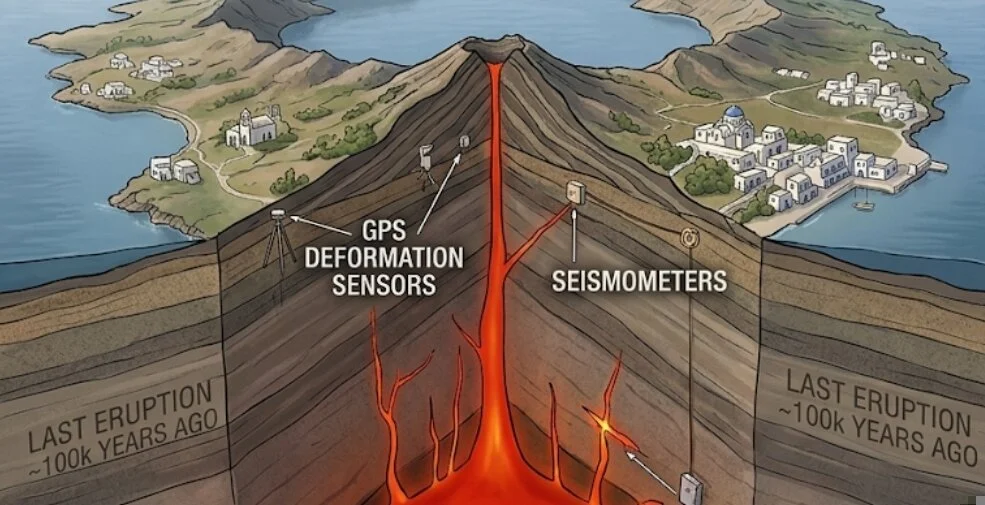
New research reveals that the Methana volcano, located about 50km from Athens, has been silently accumulating massive amounts of magma beneath the surface for over 100,000 years.
Despite showing no visible signs of activity—no lava, no ash, no explosions—the volcano has remained geologically active deep underground. Scientists discovered that magma has been forming almost continuously, using zircon crystals as “time capsules” to reconstruct its hidden history across hundreds of thousands of years.
This challenges a long-held assumption: a quiet volcano is not necessarily a safe one.
Researchers found that the magma beneath Methana is unusually rich in water, which slows its rise to the surface. Instead of erupting, it thickens and accumulates, allowing pressure to build over immense timescales.
The implications go far beyond Greece. Experts now warn that volcanoes previously classified as dormant or extinct worldwide may still be active below ground—potentially capable of reawakening with little warning.
Methana is part of the volatile South Aegean Volcanic Arc, a region that includes active systems like Santorini Caldera, reminding us that the earth beneath Greece is anything but still.
What appears calm on the surface may be quietly building power below—a reminder that nature does not always announce its intentions.