The Sicilian Expedition (415–413 BCE) was the turning point of the Peloponnesian War. It was an ambitious, over-extended, and ultimately catastrophic attempt by Athens to conquer Syracuse, the most powerful city in Sicily.
What began as a quest for glory and limitless resources ended in the total destruction of the Athenian navy and the enslavement or death of thousands of its citizens.
1. The Hubris of the Assembly
The expedition was born from a mixture of greed and fear. Athens was approached by the city of Segesta, which promised to fund an invasion against their rival, Syracuse.
Alcibiades vs. Nicias: The Athenian Assembly was split. Alcibiades, a young and charismatic general, argued that conquering Sicily would provide the wealth and timber needed to defeat Sparta once and for all. Nicias, a cautious veteran, argued it was a reckless waste of resources.
The Reverse Psychology Fail: In an attempt to scare the Assembly into cancelling the mission, Nicias claimed they would need a massive, impossibly expensive force. Instead of backing down, the Assembly enthusiastically voted to give him exactly what he asked for.
2. The Omen of the Hermae
Shortly before the fleet set sail, Athens woke up to find that the Hermae (sacred statues of the god Hermes) had been systematically vandalized across the city. This was seen as a terrifying religious omen.
In the ensuing political chaos, Alcibiades was accused of sacrilege. Shortly after the fleet arrived in Sicily, he was recalled to stand trial. Fearing for his life, he defected to Sparta, where he gave the Spartans the exact intelligence they needed to destroy the Athenian mission.
3. The Siege of Syracuse
Initially, the Athenians had the advantage. They began building a massive circumvallation wall to cut Syracuse off from the rest of the island.
The Arrival of Gylippus: Just as Syracuse was on the verge of surrender, a Spartan general named Gylippus arrived with reinforcements. He successfully built a "counter-wall," preventing the Athenians from completing their siege lines.
The Athenian Decline: The Athenian troops, stuck in the marshy lowlands, began to suffer from disease. Their ships, once the pride of the Mediterranean, began to rot and lose their maneuverability in the cramped harbor of Syracuse.
4. The Lunar Eclipse and the Final Trap
By 413 BCE, the situation was desperate. Nicias finally agreed to retreat, but on the night they were to depart, a lunar eclipse occurred.
The Fatal Delay: The superstitious Nicias insisted they wait 27 days to "purify" themselves. This gave the Syracusans time to block the mouth of the Great Harbor with a chain of ships.
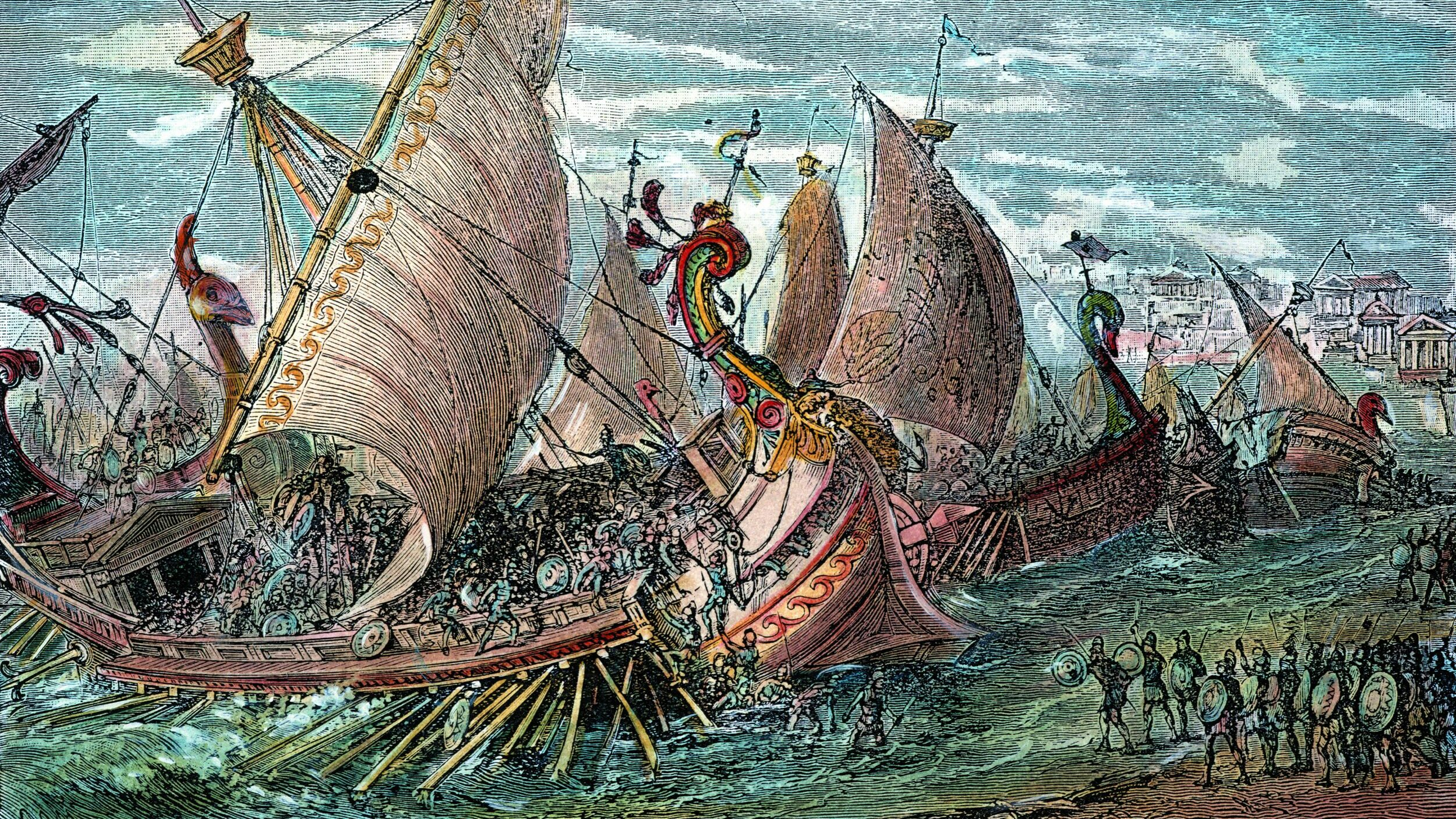
The Naval Massacre: In a brutal, close-quarters naval battle where the Athenians could not use their superior rowing tactics, the fleet was crushed. The survivors were forced to flee inland on foot, abandoned by their ships.
5. The Death in the Quarries
The retreat was a nightmare. Harassed by Syracusan cavalry and dying of thirst, the remnants of the Athenian army were finally captured at the Asinarus River.
The Fate of the Generals: Both Nicias and the reinforcements commander, Demosthenes, were executed despite Gylippus’s attempt to save them.
The Latomia: 7,000 survivors were thrown into the Latomia (deep limestone quarries) of Syracuse. They were kept there for months in horrific conditions—scorched by the sun and freezing at night—with barely enough food or water to survive. Most died, and the survivors were eventually sold into slavery.
6. The Aftermath: A City in Shock
When the news reached Athens, the citizens initially refused to believe it. They had lost their entire fleet, thousands of hoplites, and their treasury was empty.
The Sicilian Expedition proved that even a superpower can be brought down by a combination of hubris, poor leadership, and logistical overreach. While Athens would fight on for another decade, they never truly recovered their military dominance.