While Athens often receives the lion's share of the credit for the naval victories of the Persian Wars, Sparta was the undisputed leader of the Greek land forces. As the head of the Peloponnesian League, Sparta held the official supreme command of the Hellenic defensive alliance. Their role was defined by a unique tension between their legendary military prowess and their characteristic strategic caution.
1. The Marathon Dilemma (490 BCE)
During the first Persian invasion, Sparta's involvement was famously delayed by religious law.
The Carneia: When the Athenian herald Phidippides ran to Sparta to beg for help against the approaching Persians at Marathon, the Spartans refused to march immediately. They were celebrating the Carneia, a festival honoring Apollo, during which military activity was forbidden until the full moon.
The Aftermath: By the time the Spartan army arrived, the Athenians had already won. The Spartans toured the battlefield, praised the Athenians, and marched home—a moment that stung Spartan pride and set the stage for their commitment in the next war.
2. Thermopylae: The Eternal Stand (480 BCE)
The Second Persian War saw Sparta take a central, albeit tragic, role. King Leonidas I led a small force to the narrow pass of Thermopylae to buy time for the rest of Greece to mobilize.
The 300: While several thousand other Greeks were present, the 300 Spartiates formed the core of the defense. They were chosen specifically because they all had living sons to carry on their bloodlines, as it was understood to be a suicide mission.
Psychological Warfare: The Spartans' refusal to retreat, even when surrounded, sent a chilling message to Xerxes: the conquest of Greece would come at a staggering cost in Persian blood. The "defeat" at Thermopylae became a moral victory that galvanized Greek resistance.
3. Strategic Friction: The Wall vs. The Sea
Following Thermopylae, a major rift opened between Sparta and Athens regarding how to defend the remaining territory.
The Isthmus Strategy: Sparta, being a land power, wanted to abandon everything north of the Peloponnese (including Athens) and build a massive wall across the Isthmus of Corinth.
The Athenian Counter: The Athenians argued that a wall was useless if the Persian fleet could simply land troops behind it. This strategic tug-of-war nearly broke the alliance until the naval victory at Salamis forced the Persians onto the defensive.
4. Plataea: The Spartan Masterclass (479 BCE)
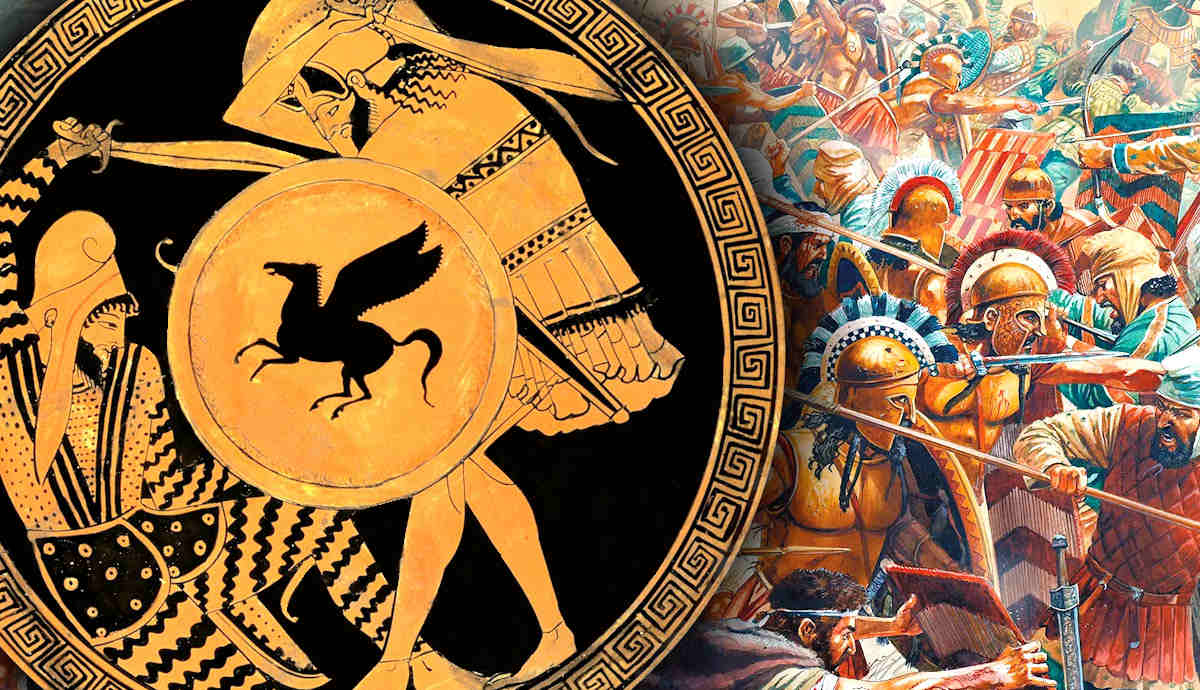
The Battle of Plataea was the decisive land engagement of the war, and it was primarily a Spartan victory. Under the command of the regent Pausanias, the Spartan phalanx proved its absolute superiority over the Persian infantry.
Tactical Discipline: During the battle, the Spartans sat under a hail of Persian arrows without flinching, refusing to engage until the omens were favorable. When they finally charged, their heavy bronze armor and long spears (dory) crushed the lightly armed Persian "Immortals."
Ending the Threat: The victory at Plataea effectively ended the Persian land threat in mainland Greece forever.
5. The Aftermath and Isolation
Despite their victories, Sparta’s leadership of the Greek world was short-lived.
The Scandal of Pausanias: After the war, Pausanias was accused of adopting Persian dress and conspiring with Xerxes. This tarnished Sparta's reputation and led many Greek states to turn to Athens for leadership.
Withdrawal: Sparta’s fear of a Helot revolt at home always pulled them back from overseas commitments. While Athens formed the Delian League to continue the war in Asia Minor, Sparta retreated into the Peloponnese, sowing the seeds for the eventual conflict between the two superpowers.
The Spartan Legacy in the War
Sparta provided the prestige and the heavy infantry that made the Greek defense possible. Without the Spartan phalanx at Plataea, the naval victories at Salamis might have been rendered irrelevant by a Persian land occupation. They were the "shield" of Greece, even if they were sometimes reluctant to move it.
Does the Spartan obsession with religious festivals like the Carneia—even in the face of an invasion—seem like a genuine act of piety to you, or was it a convenient excuse for their strategic isolationism?