Introduction: The Leviathans of the Mediterranean
Following the death of Alexander the Great in 323 BC, his empire was fractured among his top generals—the Diadochi (Successors)—who immediately plunged the Mediterranean world into generations of total war. To secure tactical advantages over one another, these Hellenistic kings looked eastward, adopting and weaponizing a terrifying asset they had first encountered at the Battle of the Hydaspes: the war elephant (elephantoi).
During the Hellenistic Era (323–31 BC), empires like the Seleucids of Syria and the Ptolemies of Egypt turned the war elephant into the ultimate symbol of royal prestige and military dominance. No longer just wild beasts used for chaos, elephants were systematically integrated into standardized tactical doctrines. They functioned as a combination of heavy tanks, psychological weapons, and mobile command platforms, fundamentally reshaping the landscape of ancient combined-arms warfare.
1. Procurement and Biology: The Two Elephant Fractions
Hellenistic empires faced a grueling logistical race to secure and maintain elephant corps, splitting the ancient world into two distinct biological and geographical camps.
The Seleucid Choice (The Indian Elephant): The Seleucid Empire held a massive advantage due to its proximity to the East. In 305 BC, Seleucus I Nicator traded vast eastern territories to King Chandragupta Maurya of India in exchange for 500 purebred Indian elephants ($Elephas\ maximus$). Indian elephants were large, easily trained, and naturally aggressive in combat.
The Ptolemaic Adaption (The North African Forest Elephant): Blocked from Indian trade routes by the Seleucids, Ptolemaic Egypt had to launch massive hunting expeditions down the Red Sea to capture the now-extinct North African forest elephant ($Loxodonta\ africana\ pharaoensis$). These elephants were significantly smaller than their Indian counterparts. At the dramatic Battle of Raphia (217 BC), this size disparity was put to the test; contemporary historians recorded that the smaller Ptolemaic African elephants literally turned tail and fled, terrified by the superior size, weight, and smell of the Seleucid Indian giants.
2. Tactical Roles on the Battlefield
In Hellenistic military doctrine, war elephants were rarely used to simply charge directly into dense infantry formations. Instead, they were deployed as specialized components of a combined-arms system.
The Anti-Cavalry Screen: Horses possess a natural, deep-seated terror of the smell, sound, and visual silhouette of elephants. Hellenistic commanders routinely placed elephants on their extreme flanks to act as a living screen. Enemy cavalry horses would panic, throw their riders, and refuse to charge, effectively neutralizing the opponent's most mobile strike force.
The Phalanx Breaker: If an enemy infantry phalanx was locked tightly in a wall of spears (sarissas), elephants were driven forward to trample the long pikes, smash the physical shield wall, and create gaping holes. Hellenistic heavy cavalry would then immediately charge through these fractures to annihilate the infantry from within.
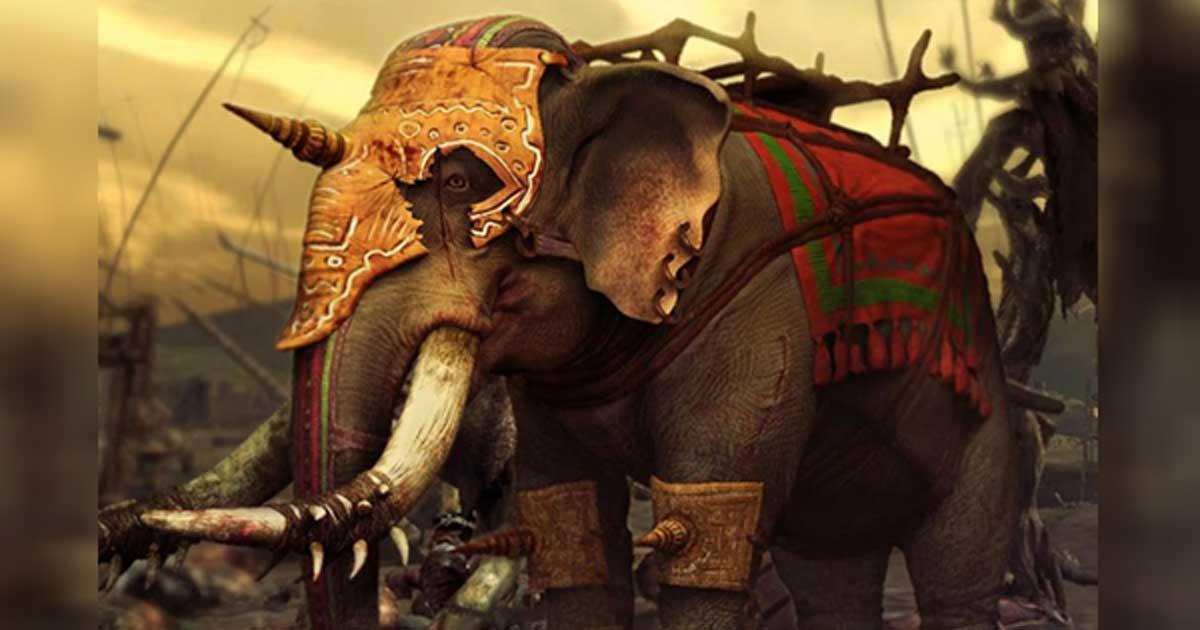
The Howdah Revolution: While early war elephants were ridden bareback by a single driver, Hellenistic engineers invented the howdah (pyrgos)—a wooden or wicker tower secured to the elephant's back by heavy leather straps and iron chains. This tower was lined with shields and housed two to three elite archers or javelin-throwers, transforming the beast into a mobile, elevated sniper tower.
3. Crew Complement and Armor Project
A war elephant in a Hellenistic army was treated like a capital ship, requiring a dedicated crew and an immense financial investment in defensive armor.
[ Elephant ] ◄── [ The Indos (Driver) ] ◄── [ Howdah Tower ] ◄── [ 2-3 Archers/Skirmishers ]
The Indos (The Mahout/Driver): The most critical human element was the driver, universally referred to by the Greeks as the Indos (Indian), regardless of their actual ethnicity, due to India's foundational expertise in the craft. The driver sat astride the elephant’s neck, guiding the beast using spoken commands and an ankusha—a bronze hook used to apply pressure behind the ears.
The Defensive Kit: Elephants were fitted with thick leather, felt, or bronze breastplates to protect their vulnerable chests from javelin volleys. Their heads were capped with frontlets, and their ears were occasionally decorated with heavy tassels to deflect arrows.
The Crucial Defensive Escort: Because elephants had blind spots and were vulnerable to agile light infantry who could slip underneath to slash their bellies or hamstrings, every war elephant was assigned a dedicated squad of foot soldiers (elephantophylakes). These guardians fought directly alongside the beast, clearing away enemy skirmishers and protecting its legs.
4. The Psychological Toll and the "Madness" Risk
The primary value of the war elephant lay in its ability to inflict sheer psychological terror (phobos). The thundering roar of an elephant charge, combined with the sight of men being crushed to pulp underfoot or impaled on tusks, could shatter the morale of even the most veteran legions. However, this weapon carried a terrifying, built-in tactical risk.
The Blind Panic: Elephants are highly sensitive, intelligent animals. If they were overwhelmed by pain from multiple missile wounds, or if their trusted Indos driver was killed, they would frequently succumb to blind panic (aponoia).
The Generic Onslaught: Once panicked, an elephant ceased to distinguish between friend and foe. It would turn around and violently stampede backward through its own army's tightly packed infantry lines, inflicting catastrophic casualties.
The Chisel Emergency: To mitigate this catastrophic risk, Hellenistic drivers carried a drastic emergency tool: a sharp iron chisel and a heavy mallet. If an elephant went mad and turned on its own troops, the driver was ordered to place the chisel over the sweet spot where the elephant's neck meets the skull and drive it home with a massive hammer blow, instantly severing the spinal cord and killing the beast on the spot.
5. Defensive Counter-Tactics
As elephants became a standard fixture on the battlefield, rival generals engineered ingenious, highly effective counter-strategies to neutralize them.
The Chanakya Caltrops: Armies began sowing the battlefield with caltrops—four-pronged iron spikes designed so that one point always pointed upward. When an elephant stepped on these spikes, the iron would pierce its soft footpads, crippling the animal and causing it to halt or run amok.
The Tactical Lanes: At the Battle of Zama (202 BC), the Roman general Scipio Africanus completely neutralized Hannibal’s elephant charge by altering his infantry layout. Instead of forming a solid block, he arranged his cohorts in separated lines with wide, open pathways running straight through them, masking the gaps with light skirmishers. When the elephants charged, Roman horn-blowers let out a deafening blast. The panicked elephants naturally ran down the paths of least resistance—the open lanes—allowing the Romans to harmlessly funnel them to the rear of the army where they were systematically dispatched.
The Incendiary Pigs: The most bizarre yet historically validated counter-tactic involved the use of incendiary pigs. At the Siege of Megara (266 BC), defenders coated live pigs in pitch, set them on fire, and drove them toward the invading elephant lines. The high-pitched, agonizing squeals of the burning pigs terrified the elephants to such a degree that they broke rank and stampeded through their own lines, ruining the assault.
6. Decline and Archaeological Legacy
By the 2nd and 1st centuries BC, the golden age of the war elephant drew to a close as the Roman Republic expanded across the Mediterranean. The Romans, with their highly flexible, disciplined checkerboard legion formations, proved that a well-drilled infantry force could consistently out-maneuver and neutralize predictable elephant charges. Furthermore, the immense cost of capturing, transporting, and feeding a single elephant—which consumed up to 300 pounds of forage per day—became economically unsustainable for declining Hellenistic treasuries.
Today, the definitive legacy of these ancient leviathans survives across the Mediterranean material record. Archaeologists routinely recover beautifully detailed Hellenistic coins minted by Antiochus III or Seleucus I featuring proud, trunk-raising elephants, alongside terra-cotta figurines from Myrina depicting elephants trampling Celtic warriors. These artifacts, paired with the discovery of heavy bronze elephant armor pieces in modern-day Iraq and Syria, serve as a permanent material testament to the brief, spectacular era when the kings of the ancient world marshaled the raw power of the animal kingdom to wage industrial warfare.