Few philosophical problems are as old—or as difficult—as the question of whether human beings control their own lives.
Are our decisions genuinely free?
Is the future already determined?
Can people escape destiny?
If fate determines an outcome, can someone still be morally responsible?
Ancient Greek mythology, tragedy, religion, and philosophy repeatedly confronted these questions. Greek thinkers did not develop one single theory of fate and free will. Instead, different authors and philosophical schools offered competing approaches.
The result is a remarkably diverse intellectual tradition.
Fate in Greek Mythology
The Greek concept of fate is frequently represented through the Moirai, or Fates.
The three Fates are traditionally named Clotho, Lachesis, and Atropos.
Clotho spins the thread of life.
Lachesis measures or assigns it.
Atropos cuts it.
This imagery presents human life as something bounded by forces beyond individual control.
But Greek mythology does not always portray fate as a completely independent force standing above everything else.
The relationship between Zeus, the gods, and fate varies across traditions.
Sometimes Zeus appears capable of influencing mortal destiny.
At other times, fate seems to impose limits even on divine power.
This ambiguity is important.
The Prophecy of Oedipus
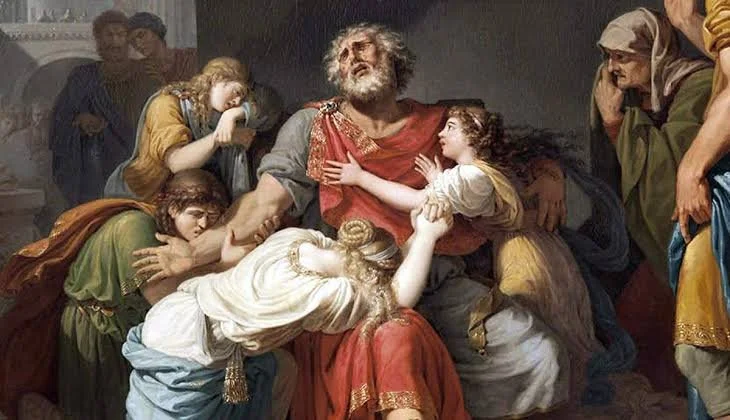
Perhaps the most famous Greek exploration of fate is the story of Oedipus.
A prophecy declares that Oedipus will kill his father and marry his mother.
His parents attempt to prevent the prophecy.
Later, Oedipus himself attempts to avoid it.
Yet his efforts ultimately contribute to its fulfillment.
This creates one of tragedy's most powerful paradoxes:
Can attempts to escape fate actually help bring fate about?
Sophocles does not reduce the story to a simple answer.
Oedipus makes choices.
He chooses to leave Corinth.
He investigates the murder of Laius.
He questions witnesses.
He insists upon discovering the truth.
At the same time, he lacks crucial knowledge about his own identity.
His freedom therefore operates within conditions he does not understand.
Fate Does Not Mean Every Action Is Meaningless
It would be a mistake to interpret Greek fate as meaning that human decisions do not matter.
Greek tragedies are filled with decisions.
Characters choose whether to obey, rebel, investigate, fight, forgive, marry, sacrifice, or seek revenge.
The dramatic importance of these decisions would disappear if characters had no meaningful agency.
Instead, Greek tragedy often creates a tension between what people choose and what circumstances make possible.
A person may not control everything that happens.
But they can still determine how they respond.
Achilles and the Choice of a Life
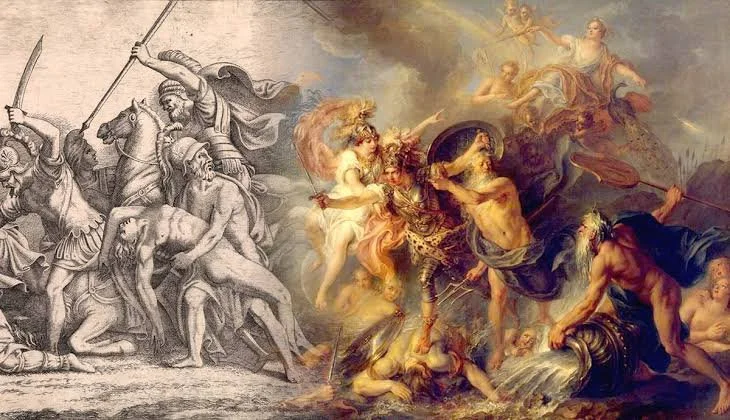
The story of Achilles offers another famous example.
In the Iliad, Achilles is presented as facing a choice concerning his future.
He can remain at Troy and achieve extraordinary glory while facing an early death, or return home and live a longer but less celebrated life.
This is not exactly a philosophical theory of free will.
Instead, it dramatizes the tension between destiny, reputation, and personal choice.
Achilles knows that his decision has consequences.
He nevertheless chooses a particular form of life.
The story therefore asks whether a predetermined mortality eliminates freedom.
The answer implied by the narrative is complicated.
Achilles cannot escape death.
But he can choose what kind of life he wants to live before death arrives.
The Greek Concept of Necessity
Greek literature also uses concepts such as anankē, meaning necessity.
Necessity can represent conditions that cannot easily be avoided.
Mortality is one example.
No human being can simply choose never to die.
Physical limitations are another.
Human beings are born into particular families, cities, historical circumstances, and bodies.
Ancient Greek thought therefore often operated with an understanding of freedom that was different from modern ideas of unlimited individual choice.
Freedom did not necessarily mean being able to do anything.
It could mean acting deliberately within the boundaries of reality.
Socrates and Moral Responsibility
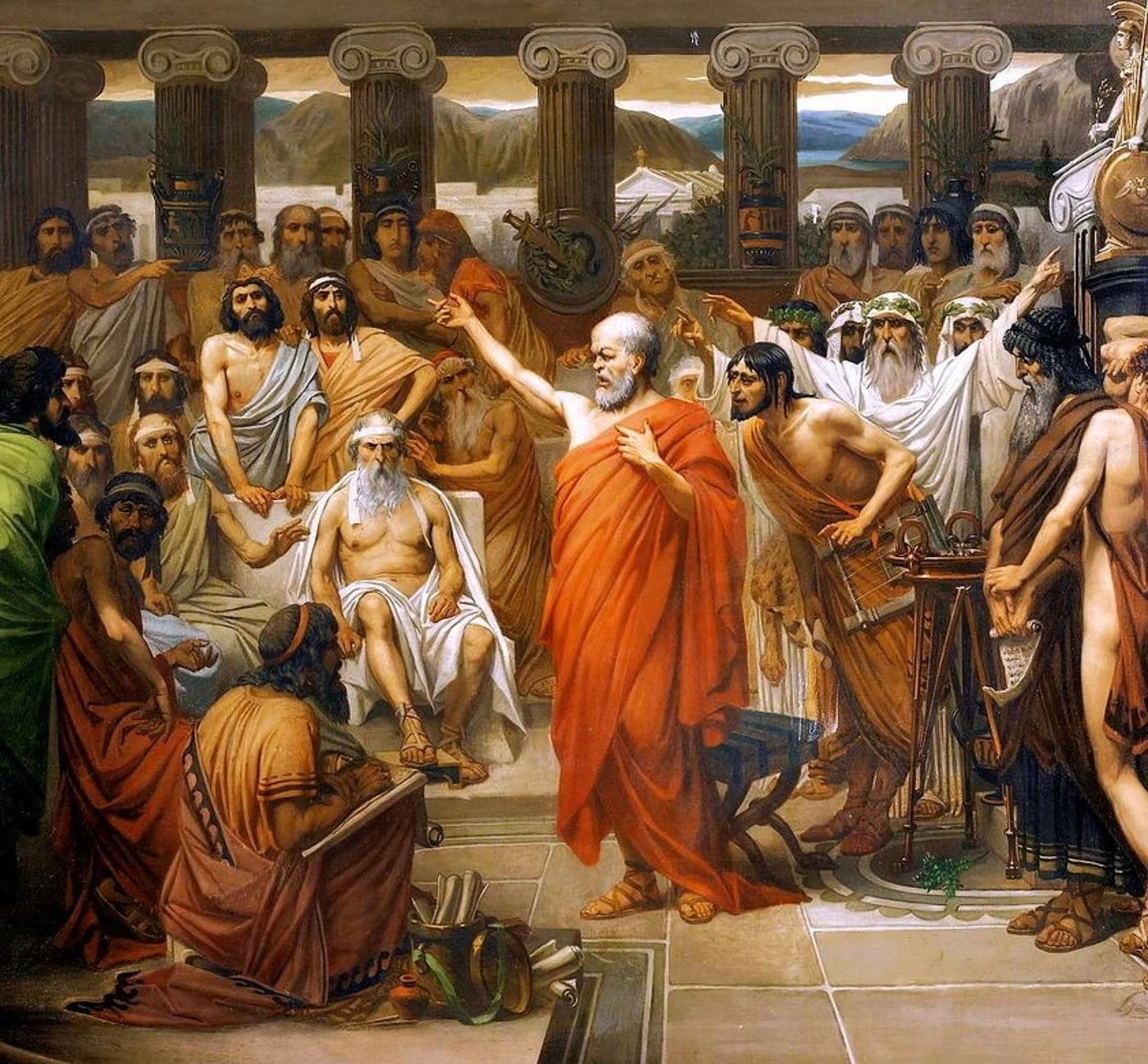
Socrates approached the problem from a different direction.
In several Platonic dialogues, Socrates emphasizes knowledge and virtue.
One famous Socratic idea is that people who genuinely understand what is good will be strongly motivated toward good action.
This raises difficult questions about ignorance and responsibility.
If someone does something wrong because they misunderstand what is genuinely good, are they morally blameworthy in the same way as someone who knowingly chooses evil?
Socratic philosophy therefore connects freedom with rational understanding.
A person is not truly free if their desires and ignorance control them.
Plato and the Soul
Plato developed a more complex psychological account.
In Republic, he divides the soul into three parts:
reason;
spirit;
appetite.
Human beings can experience internal conflict because these elements may desire different things.
Someone may know that studying is beneficial while wanting to sleep.
Someone may know that anger will make a situation worse while still wanting revenge.
Someone may understand that excessive wealth does not guarantee happiness while continuing to desire more.
For Plato, freedom involves proper internal order.
A person ruled by uncontrolled appetite is not necessarily free simply because they are doing what they want.
They may actually be enslaved by their desires.
Aristotle and Voluntary Action
Aristotle offered an especially influential analysis of voluntary action.
In the Nicomachean Ethics, he distinguishes voluntary from involuntary actions and examines concepts such as choice, deliberation, responsibility, and ignorance.
For Aristotle, ethical responsibility depends partly on whether an action originates in the agent and whether the person understands relevant circumstances.
This becomes an important foundation for later discussions of moral responsibility.
Aristotle does not simply ask whether someone "could have done otherwise" in an abstract sense.
He examines how choices emerge from character, deliberation, desire, knowledge, and circumstances.
The Stoics and Determinism
The Stoics developed one of the most sophisticated ancient theories of fate.
Stoic philosophy generally regarded the universe as governed by rational causal order.
Events were interconnected within a cosmic system.
At first glance, this appears to eliminate free will.
But Stoic philosophers developed a different conception of freedom.
They argued that human beings can respond rationally to circumstances.
Epictetus famously emphasized the distinction between what is and is not within our control.
External events may not be controllable.
Our judgments and responses can be.
This does not mean that Stoics believed humans controlled everything psychologically.
Rather, they argued that rational alignment with reality constitutes an important form of freedom.
The Stoic Example
Imagine losing a position you valued.
You may not control the fact that the position was lost.
But you can examine your judgment about the event.
You can decide whether to respond with bitterness, panic, acceptance, or constructive action.
For the Stoics, this distinction was central.
Freedom did not require controlling the entire universe.
It required developing rational agency within the universe.
Epicurean Response
Epicurean philosophers took a different approach.
Epicurus believed that strict determinism threatened meaningful human agency.
His physical theory included the famous concept of the swerve, a small deviation in atomic motion.
The exact philosophical purpose of the swerve remains debated, but it helped Epicurean philosophy distinguish its account of nature from a completely rigid deterministic system.
Epicurus was especially concerned with removing irrational fear.
Humans should not live in terror of gods or death.
Understanding nature could make life more peaceful.
Fate and the Gods
Greek religion also complicates the picture.
The gods were believed to influence human life, but Greek religion did not operate according to one universally standardized theological system.
Different myths provide different relationships between divine power and human agency.
A god might intervene.
A prophecy might warn someone.
A divine punishment might follow an action.
Yet characters still make choices.
This creates a narrative universe where divine influence and human responsibility coexist uneasily.
Why Tragedy Needs Both Fate and Choice
Tragedy becomes less powerful if everything is purely predetermined.
If a character has absolutely no agency, their actions lose much of their emotional significance.
But tragedy also becomes less distinctive if humans have unlimited control.
Greek tragic drama depends on the tension between these extremes.
Characters act freely enough to be responsible.
Yet they operate within circumstances they cannot completely control.
That tension generates tragedy.
Modern Relevance
The ancient debate remains recognizable today.
Modern philosophy continues to discuss determinism, moral responsibility, causation, neuroscience, psychology, and freedom.
People still ask:
Are decisions caused by genetics and environment?
Can someone be responsible for behavior shaped by circumstances beyond their control?
Does unconscious motivation reduce freedom?
Does knowing the causes of behavior make moral responsibility disappear?
The Greeks did not possess modern neuroscience, but they recognized the fundamental difficulty.
Human beings are simultaneously shaped by circumstances and capable of reflection.
Conclusion
Ancient Greek thought did not provide one final answer to the problem of fate and free will.
Instead, it developed multiple approaches.
Mythology emphasized destiny.
Tragedy explored the collision between destiny and choice.
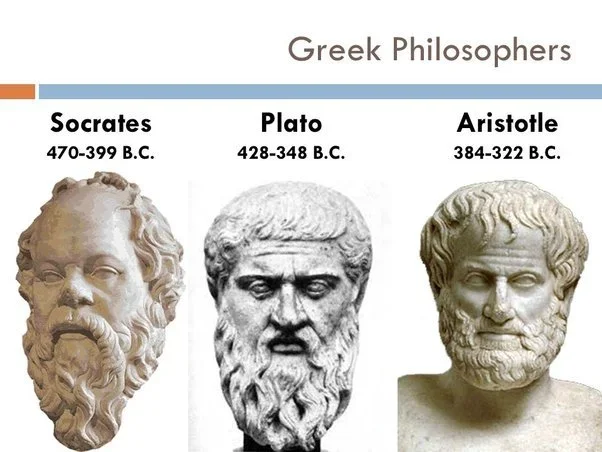
Socrates connected freedom with moral knowledge.
Plato examined internal psychological conflict.
Aristotle analyzed voluntary action and responsibility.
The Stoics explored rational freedom within a causally ordered universe.
Epicureans attempted to protect human agency from rigid determinism.
Together, these traditions established a philosophical problem that has never disappeared.
The enduring Greek insight is that freedom may not mean escaping every limitation.
It may instead involve understanding the limits within which human beings act—and determining what kind of person they will become within those limits.