Few concepts are more strongly associated with ancient Greek tragedy than hubris.
The word is often translated into English as "pride," "arrogance," or "excessive pride." These translations capture part of its meaning but can also oversimplify an important Greek concept.
Hubris was not merely feeling proud of oneself.
In ancient Greek contexts, hybris could describe outrageous, insulting, humiliating, or violent behavior that violated accepted boundaries. It could involve an individual's abuse of power, especially when that person treated others with contempt or behaved as though ordinary limits did not apply.
Greek tragedy repeatedly explored what happens when human beings cross boundaries—between authority and tyranny, confidence and arrogance, human and divine, freedom and law, or legitimate ambition and destructive excess.
What Did Hubris Actually Mean?
The Greek term hybris had a broader meaning than the modern psychological idea of pride.
In legal and social contexts, it could refer to an act of deliberate humiliation or outrageous violence against another person.
The concept therefore had an interpersonal dimension.
Someone committing hubris was not simply thinking highly of themselves.
They could actively demonstrate contempt for another person's dignity or status.
However, literature gradually developed broader associations between hubris, arrogance, excess, and disregard for limits.
This is particularly visible in tragedy.
Hubris and the Greek Fear of Excess
Greek culture frequently valued the principle of moderation.
The famous Delphic maxim associated with Apollo, meden agan—"nothing in excess"—expressed a broader cultural ideal.
Greek thinkers repeatedly warned about excess.
Too much wealth could become destructive.
Too much ambition could become dangerous.
Too much confidence could lead to disastrous decisions.
Too much political power could become tyranny.
Hubris therefore fits into a wider Greek concern with human limits.
The problem was not necessarily excellence itself.
Ambition could be admirable.
Courage could be admirable.
Power could be useful.
Intelligence could be valuable.
The danger emerged when these qualities became disconnected from restraint and judgment.
Hubris and the Gods
Greek mythology frequently places humans in relationships with powerful gods.
This created a cultural framework in which human beings occupied a limited position within a much larger cosmic order.
Mortals were expected to recognize their mortality.
A person who behaved as though they were invulnerable could therefore become symbolically dangerous.
Stories involving divine punishment should not automatically be interpreted as simple religious formulas saying "the gods punish pride."
Greek myths are much more complicated.
But they frequently use divine-human conflict to explore the consequences of violating boundaries.
Arachne and Athena
The story of Arachne provides a famous example.
Arachne is an extraordinarily talented weaver who challenges Athena.
The story is often presented as a contest between mortal skill and divine power.
Depending on the version and interpretation, the moral problem can involve Arachne's confidence, her challenge to divine authority, and the harshness of Athena's response.
The story raises an important question:
When does legitimate confidence become unacceptable arrogance?
It also allows audiences to question authority itself.
Is the punishment proportionate?
Does extraordinary talent justify challenging a god?
Can divine power itself become excessive?
Greek mythology does not always provide comfortable answers.
Niobe and Excessive Self-Confidence
Niobe is another important example.
She boasts about having many children and compares herself favorably with Leto, mother of Apollo and Artemis.
The gods respond catastrophically.
Apollo and Artemis kill Niobe's children in the traditional story.
The story became a powerful warning about the vulnerability of human happiness.
Niobe's tragedy is not simply that she was "too proud."
Her mistake involved comparing herself with a goddess and treating her own prosperity as a reason for superiority.
The story reflects a recurring Greek anxiety:
Human success can be temporary.
Wealth, beauty, children, military victories, and political authority can all disappear.
Creon in Antigone
Sophocles' Antigone offers one of the most sophisticated tragic treatments of hubris.
Creon becomes king of Thebes and attempts to establish political order after civil conflict.
His decision to deny burial to Polynices is presented as a defense of the state.
Initially, his position may appear understandable.
A ruler must maintain order.
A city emerging from civil war cannot simply ignore treason.
But Creon's confidence gradually becomes rigidity.
He refuses to reconsider his position.
He rejects warnings from Antigone, Haemon, and eventually the prophet Tiresias.
His problem is not simply that he possesses authority.
It is that he becomes unable to recognize the limits of his own judgment.
This is a more profound interpretation of hubris.
Hubris can occur when certainty becomes incapable of correction.
Oedipus and the Limits of Knowledge
Oedipus provides another fascinating case.
He is not an obvious example of a boastful tyrant.
In fact, Oedipus is admired for his intelligence.
He solved the riddle of the Sphinx and saved Thebes.
His confidence in rational investigation initially appears admirable.
But Oedipus Rex gradually reveals the limits of human knowledge.
Oedipus insists on discovering the truth, even when others warn him that the investigation may destroy him.
His determination is simultaneously heroic and catastrophic.
The tragedy therefore complicates the concept of hubris.
Sometimes the dangerous boundary is not between humility and arrogance but between confidence and recognition of one's own limitations.
Hubris and Political Power
Greek political thought was deeply concerned with the possibility that power could corrupt judgment.
A democratic city had to consider how individuals might accumulate too much influence.
A monarchy had to consider how rulers might abuse authority.
A military commander had to understand the difference between courage and recklessness.
A tragedy could dramatize these dangers without presenting an abstract political essay.
The audience could watch a ruler make decisions, ignore warnings, and create consequences that eventually became impossible to reverse.
Hubris and Fate
Hubris is also frequently connected with fate, but the relationship is not as simple as "hubris causes punishment."
Greek tragedies often contain several forces simultaneously:
human choices;
inherited family curses;
divine actions;
political circumstances;
ignorance;
chance;
social expectations;
prophecy.
A character can therefore be both responsible and trapped.
This is one reason Greek tragedy remains intellectually challenging.
It does not divide the world neatly into innocent people and guilty people.
Hubris in the House of Atreus
The myths surrounding Agamemnon provide another example.
Agamemnon is a powerful king and military commander.
His story contains multiple layers of violence and moral conflict, including the sacrifice of Iphigenia in some traditions.
The House of Atreus is characterized by generations of revenge.
A decision made by one generation becomes the burden of another.
The result is a tragic world in which power, pride, violence, and inherited obligations become intertwined.
The Oresteia eventually asks whether this cycle can be replaced by a system of justice.
Hubris and the Concept of Measure
One of the most important ideas surrounding hubris is measure.
Greek thought repeatedly emphasized the importance of knowing one's limits.
The ideal person was not necessarily weak or passive.
The Greeks admired courage, achievement, intelligence, beauty, athletic excellence, and political success.
But excellence required proportion.
A person should understand what they are capable of—and what they are not.
This principle appears in different forms across Greek philosophy.
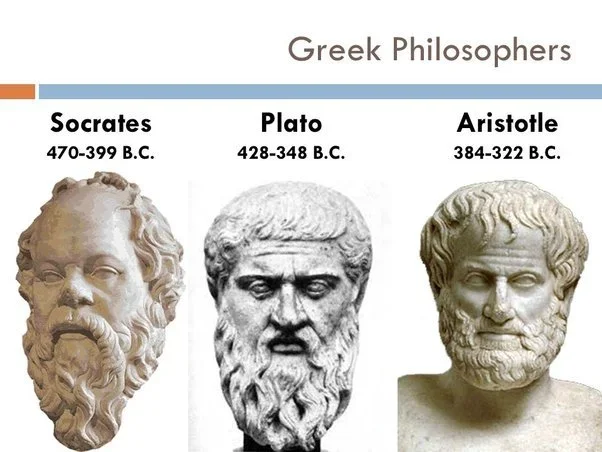
Socrates emphasized awareness of ignorance.
Plato emphasized the proper ordering of the soul.
Aristotle emphasized moderation and practical judgment.
The Stoics later emphasized distinguishing what lies within human control from what does not.
These traditions differ significantly, but all show concern with human limitations.
Is Hubris Always Punished?
Popular modern explanations sometimes suggest that Greek tragedy follows a simple formula:
Hubris → punishment.
The reality is more complicated.
Not every tragic character is punished simply for being proud.
Some are victims of circumstances.
Some make understandable decisions.
Some suffer because of inherited conflicts.
Some are destroyed by ignorance rather than arrogance.
Some tragic characters possess virtues that become dangerous only under extreme circumstances.
The value of hubris as a concept therefore lies not in treating it as a mechanical law but as a lens through which ancient Greeks explored excess, boundaries, power, and responsibility.
Why Hubris Still Matters
The idea remains surprisingly relevant.
Modern societies continue to encounter situations in which individuals or institutions become overconfident.
Political leaders may believe their authority is unlimited.
Businesses may assume growth can continue indefinitely.
Technological organizations may underestimate risks.
Individuals may believe success makes them immune to failure.
The Greek lesson is not simply "never be ambitious."
It is more subtle:
Ambition without judgment can become destructive.
Confidence without self-awareness can become dangerous.
Power without restraint can become abusive.
Knowledge without humility can become arrogance.
Conclusion
Hubris was one of the most powerful concepts through which Greek culture explored the dangers of excess.
Greek tragedy repeatedly placed human beings in situations where their virtues and weaknesses became intertwined.
Courage could become recklessness.
Confidence could become arrogance.
Authority could become tyranny.
Intelligence could become overconfidence.
Ambition could become destruction.
The deepest lesson of hubris is therefore not simply that pride is bad.
It is that human beings exist within limits—and tragedy begins when those limits are ignored.
Greek tragedians transformed that idea into unforgettable stories, ensuring that questions about power, responsibility, humility, and human limitation would remain part of philosophical and literary discussion for thousands of years.