Ancient Greek societies developed some of the most influential legal and political institutions of the ancient Mediterranean.
Athens is particularly famous because its legal and political reforms contributed to the development of democracy.
However, Greek law evolved over centuries.
It did not appear suddenly.
Written Law
Early Greek communities relied heavily on customary law.
Rules were transmitted through tradition and controlled by elites.
This could create resentment because ordinary people had limited access to formal legal knowledge.
Written laws changed this situation.
One famous early lawgiver was Draco, associated with Athens in the seventh century BCE.
His laws became notorious for their severity.
Solon's Reforms
Solon introduced major reforms in Athens during the early sixth century BCE.
He addressed debt problems and reorganized aspects of political participation.
His reforms did not create full democracy, but they helped weaken some older aristocratic structures.
Cleisthenes
The reforms of Cleisthenes around 508/507 BCE were especially important.
He reorganized citizens into new political units and helped establish institutions that reduced the power of traditional aristocratic families.
These reforms became an important foundation for Athenian democracy.
Courts
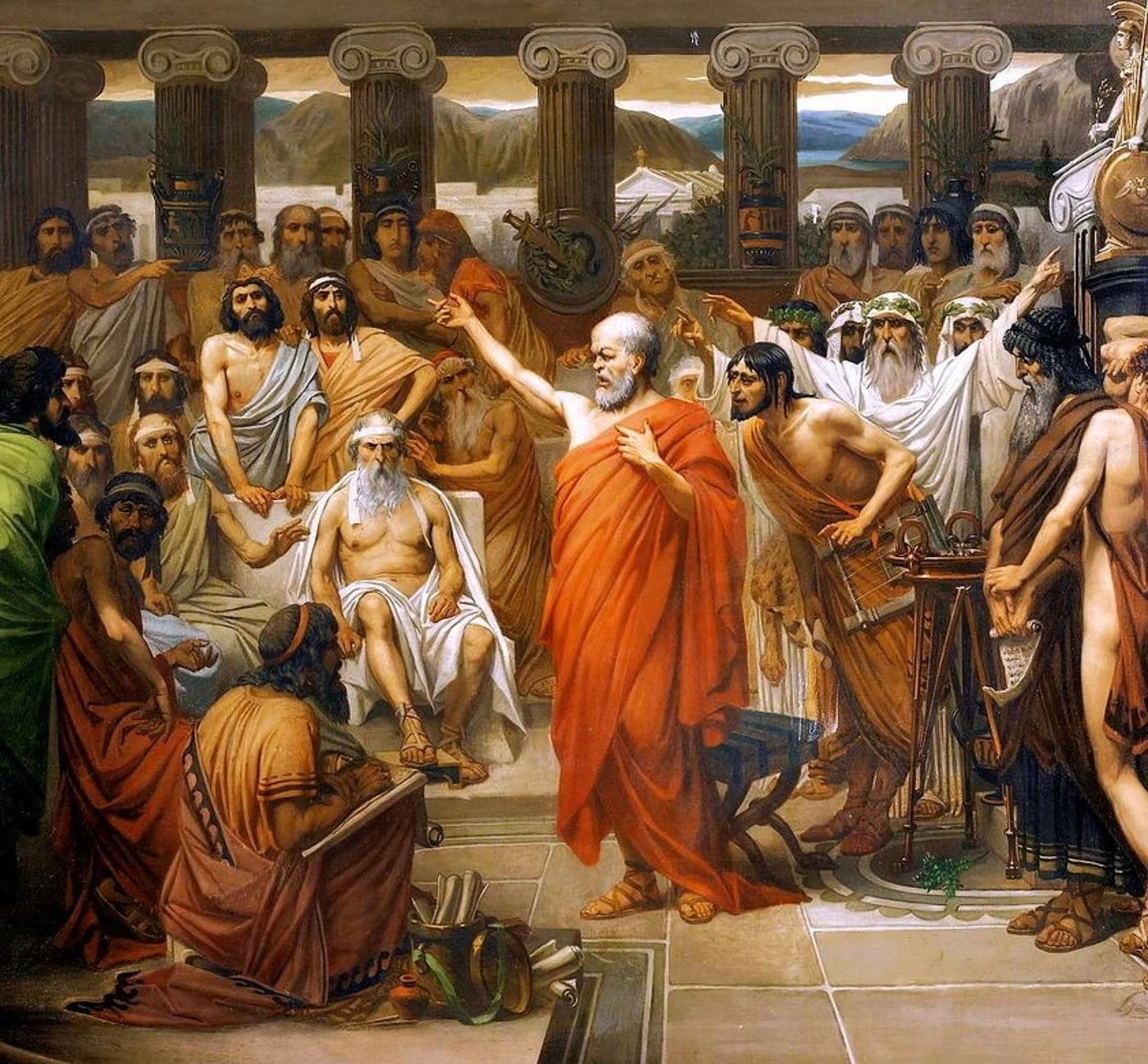
Athenian citizens participated directly in legal institutions.
Large citizen juries could hear cases.
There was no modern professional legal profession in the same form.
Individuals often had to present their own cases.
This made rhetoric extremely important.
Citizen Participation
Law and democracy were closely connected.
Citizens participated in political assemblies and courts.
The system was therefore based heavily on direct participation.
But it was not universal democracy.
Women, enslaved people, and many foreigners were excluded from citizenship.
Different Greek Legal Systems
Other Greek states developed their own systems.
Sparta, Corinth, Thebes, and other communities did not simply copy Athens.
Greek law was therefore diverse.
Religion and Law
Religion could influence legal practice.
Oaths, sacred spaces, family obligations, burial customs, and religious offenses could all have legal consequences.
Conclusion
Greek law did not create modern democracy by itself.
However, Greek communities experimented with ideas about citizenship, written laws, public courts, political participation, and accountability.
Athens became the most famous example.
Its democratic institutions were limited by modern standards, but they introduced political practices that would have an extraordinary influence on later political thought.