Introduction
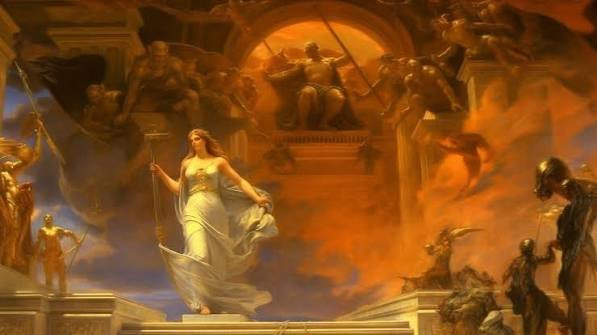
Prometheus is one of the most important figures in Greek mythology.
He is remembered primarily as the Titan who stole fire from the gods and gave it to humanity.
His punishment by Zeus became one of the great stories concerning divine authority, technological knowledge, and human progress.
The title The Secret Flame of Prometheus in Caucasian-Greek Links points toward the geographic dimension of the myth.
In ancient Greek tradition, Prometheus' punishment was associated with the Caucasus.
This provides a genuine mythological connection between Greek storytelling and the Caucasian landscape.
Prometheus and Fire
Fire was transformative.
It allowed humans to cook food, work metals, provide warmth, manufacture tools, and alter their environment.
For ancient societies, fire could therefore symbolize civilization itself.
Prometheus' theft of fire represents the transfer of divine power to humanity.
The Punishment
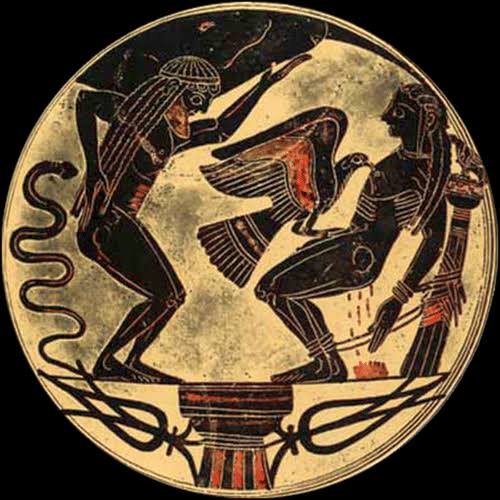
According to the famous myth, Zeus punished Prometheus by having him chained to a mountain.
An eagle repeatedly consumed his liver, which regenerated so that the torment could continue.
Heracles eventually freed him in later traditions.
The story presents Prometheus as a rebellious benefactor of humanity.
The Caucasus
Ancient Greek literary traditions associated Prometheus with the Caucasus.
The mountain chain was distant from the Greek mainland and therefore an ideal setting for a myth involving exile and divine punishment.
The remote location reinforced the sense that Prometheus had been taken far from ordinary human society.
Geography and Myth
Mythological geography does not necessarily correspond to precise physical locations.
Ancient writers could know that a mountain range existed while lacking modern geographic information.
The Caucasus could therefore function as a broad mythological frontier.
It represented distance, danger, and the edge of the known world.
Fire in the Caucasian Landscape
The idea of a sacred flame could also connect naturally with geological phenomena.
The Caucasus contains volcanic and geothermal regions, mineral deposits, and areas where natural geological processes can appear extraordinary.
However, it would be incorrect to claim that a specific natural flame is the literal fire stolen by Prometheus.
The association belongs to mythology.
Greek and Caucasian Cultural Contacts
Greek communities interacted with peoples around the Black Sea and eastern Mediterranean.
Trade colonies, maritime routes, diplomacy, warfare, and migration created cultural connections.
These interactions allowed myths to acquire geographical associations far beyond mainland Greece.
Prometheus' Caucasian setting may therefore have helped integrate distant landscapes into the Greek mythological imagination.
Fire as Technology
Prometheus can also be understood as a myth about technology.
Fire represents knowledge.
Metalworking represents technological mastery.
Cooking represents transformation of food.
Craftsmanship represents humanity's ability to reshape nature.
Prometheus therefore becomes a mythological explanation for the extraordinary capabilities of human civilization.
The Modern Interpretation
Modern readers often interpret Prometheus as a symbol of scientific discovery and intellectual rebellion.
He has become associated with:
innovation,
technology,
scientific progress,
resistance to authority,
creativity,
and human independence.
These meanings developed over many centuries.
They should not automatically be projected backward onto ancient Greek society.
Conclusion
The Secret Flame of Prometheus in Caucasian-Greek Links is rooted in a genuine ancient mythological connection.
Greek tradition really did place Prometheus' punishment in the Caucasus.
But there is no archaeological evidence proving that a literal supernatural flame associated with Prometheus survived there.
The enduring power of the story lies in its symbolism.
Prometheus represents humanity's dangerous but transformative acquisition of knowledge, while the Caucasus provides the remote and dramatic setting for one of antiquity's most powerful stories about rebellion and civilization.